Saint Ursula
Dates unknown; martyred at Cologne
- Evidence
- The inscription of Clematius in the Church of St. Ursula at Cologne, fifth century at the latest and very probably fourth 1
- Historical record
- The encyclopedia says their history "rests on ten lines, and these are open to question" 1
- The legend
- A British princess killed by the Huns at Cologne with eleven thousand companions; both sources call it legend 12
- Patron saint of
- Catholic education (especially of girls), educators, schoolchildren, students, teachers, a holy death, Cologne and the Ursuline order 2
- Namesake
- The Order of Ursulines, founded in 1535 by Saint Angela de Merici 1
Saint Ursula is the name tradition gives to the leader of a group of virgins martyred at Cologne, and the 1912 Catholic Encyclopedia opens its article on her by saying that their history "rests on ten lines, and these are open to question." 1 A stone inscription in the Church of St. Ursula at Cologne is the evidence that the martyrs existed. The voyage, the eleven thousand companions and the Huns belong to a legend that both sources used here set aside. 12 Her day is October 21. 12
The stone at Cologne
Everything solid begins with a Latin text carved on a stone in the choir of the Church of St. Ursula at Cologne. The encyclopedia calls it the inscription of Clematius, says the leading epigraphists accept it without question, and dates it: "It belongs indisputably to the fifth century at the latest, and very probably to the fourth." 1
The Latin is hard, and the encyclopedia admits that no interpretation has been satisfactory. What can be gathered is this: "A certain Clematius, a man of senatorial rank, who seems to have lived in the Orient before going to Cologne, was led by frequent visions to rebuild in this city, on land belonging to him, a basilica which had fallen into ruins, in honour of virgins who had suffered martyrdom on that spot." 1
So there was an older church on the site, built "perhaps from the beginning of the fourth century," and it honored virgins who had been martyred on that spot. The encyclopedia treats the stone as "a guarantee of great value" that the martyrs were real and were venerated early. 1 It is just as plain about what the stone leaves out: "It does not indicate the number of the virgins, their names, or the period of their martyrdom." 1 Catholic Culture draws the same line, saying that all that can be said with certainty is "that they suffered martyrdom at or near Cologne, and were sufficiently well known to have had a church built in their honor during the fourth century." 2
How eleven became eleven thousand
After Clematius the record goes silent for nearly five hundred years. 1 When the martyrs reappear, in martyrologies, calendars and litanies none of which is older than the ninth century, they are named on October 21 and they are few: "now five, now eight, now eleven." One example gives Ursula, Sencia, Gregoria, Pinnosa, Martha, Saula, Britula, Saturnina, Rabacia, Saturia and Palladia. The encyclopedia notes that Ursula comes first in only one of these lists. 1
The oldest written account, a sermon for their feast that seems to date from the ninth century, shows how little Cologne itself knew. It speaks of several thousand virgins killed under Diocletian and Maximian, and it names just one, Pinnosa, who was then thought the most important. 1 Wandalbert of Prüm, about 850, also writes of several thousand. Usuard, about 875, mentions only "Martha and Saula with several others." 1 By the end of that century or the start of the next, "the eleven thousand virgins" was accepted without dispute, and Ursula had taken Pinnosa's place at the head. 1
Nobody knows how the figure was reached. The encyclopedia lists the guesses, among them that the abbreviation XI. M. V., for eleven martyr virgins, was read as eleven thousand virgins, and calls such suppositions "rather gratuitous." It finds it less arbitrary to think that the eleven names in the liturgical books were combined with the "several thousand" of Wandalbert. 1 Catholic Culture says the number "probably resulted from a misreading" of an abbreviation for eleven martyrs, "which a copyist took for a Roman numeral." 2
The legend
The story everyone knows comes from two Passions written at Cologne. The encyclopedia gives the years 969-76 for the first of them, and the excerpt from John Delaney's Dictionary of Saints on Catholic Culture says the legend appeared in the tenth century. 12 The encyclopedia calls it "a pious romance." 1
In it Ursula is the daughter of a Christian king in Britain, asked in marriage by the son of a pagan king. Wishing to remain a virgin, she obtains a delay of three years. She is given ten noble companions, and she and each of the ten are attended by a thousand virgins. They sail for three years in eleven ships. When the time is up a gale carries them far from the shores of England, and they go by water to Cologne and Basle and then by land to Rome. On their return to Cologne they are killed by the Huns "in hatred of the Faith." 1 Delaney's version adds that it happened about 451, when Ursula refused to marry the Huns' chieftain. 2 Catholic Culture's own summary line gives a different date, 238, and the encyclopedia says no document supplies "any probable details" about when the martyrs died. 12
A second version, found in Geoffrey of Monmouth, sends Ursula from Cornwall with 11,000 noble virgins and 60,000 other young women as brides for the settlers of Armorica; a storm drives the fleet to Germany, where they are slain. 1 The encyclopedia finds its "improbabilities, inconsistencies, and anachronisms" obvious. It is equally hard on the scholars who tried to rescue a core of fact by striking out the impossible parts and keeping the rest, a method it calls "anti-scientific." Its verdict on all these texts is one sentence: "No conclusion can be drawn from these texts." 1 Delaney is blunter: "The legends are pious fictions." 2
Bones, visions and a pope who never was
Worse followed. In the twelfth century skeletons were discovered in the Ager Ursulanus, some distance from the church, "not only of women, but of little children, and even of men," together with inscriptions the encyclopedia calls "gross forgeries." 1 Visions attributed to Saint Elizabeth of Schonau and others then supplied names for a great many companions. 1
The most striking was a Pope Cyriacus, said to have received the virgins in Rome, resigned the papacy to follow them, and died with them at Cologne. No list of popes contained him, and the answer given was that the cardinals, displeased at his abdication, had erased his name from all the books. 1 The encyclopedia records these additions only to say that they "are now unhesitatingly rejected by everyone." 1
Relics, painters and the Ursulines
The history is short and obscure, the encyclopedia says, but the cult was "very widespread." From the twelfth century on, relics were sent from Cologne across Western Christendom, "and even India and China." 1 Catholic Culture notes that the Basilica of St. Ursula in Cologne still holds relics of the martyrs. 2
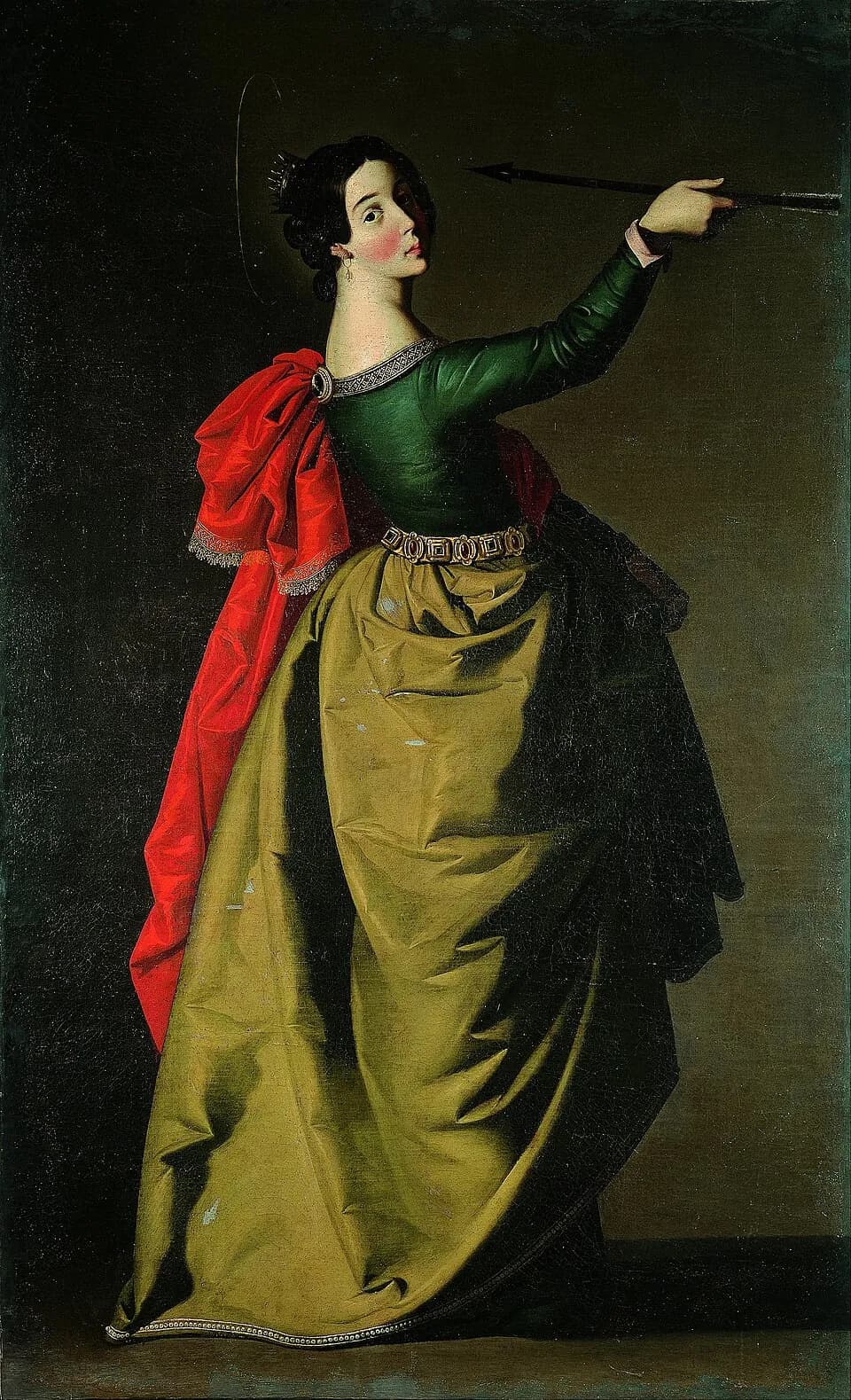
The legend also gave painters one of their great subjects. The encyclopedia singles out the old masters of Cologne, Hans Memling at Bruges and Vittore Carpaccio at Venice. 1 And when Saint Angela de Merici founded an order in 1535 "especially devoted to the education of young girls," it took Ursula's name, and the encyclopedia credits the Ursulines with carrying that name around the world. 12
What is Saint Ursula the patron saint of?
Catholic Culture lists Saint Ursula as patron of Catholic education, "especially of girls," and of educators, schoolchildren, students and teachers, along with the city of Cologne, a holy death and the Ursuline order. 2 The Ursulines, who bear her name, were founded for the schooling of girls. 12 The encyclopedia itself names no patronage. 1
Saint Ursula's feast day
Saint Ursula's feast is October 21. The old martyrologies, calendars and litanies name the virgins of Cologne on that day, according to the encyclopedia. 1 Catholic Culture's calendar lists "Saints Ursula and Companions, Virgins and Martyrs" on October 21 among the day's "Other Commemorations," beneath the weekday that is the day's celebration. 2
Praying with Saint Ursula
Take away the legend and something is still standing: a ruined church at Cologne that a senator rebuilt because virgins had been martyred on the spot. 1 Their number is lost, and so is the year. The encyclopedia cannot even say with confidence that one of them was called Ursula, since the name appears in a list five centuries later and usually not at the top. 1
That is uncomfortable for a page like this one, and it should be said plainly, as it is on the page for Saint Dymphna. The story of the princess, the ships and the Huns is a romance, and the 1912 encyclopedia said so without hedging. 12 The martyrs are a different matter. They were honored early, by people who built a church over the place where they died, and the encyclopedia counts that as evidence. 1
Most martyrs are like these: remembered by a community, then by a stone, then by a name that may not have been theirs. Catholic Culture's calendar still lists the virgins of Cologne on their old day, and the Ursulines have spent nearly five centuries teaching girls under their leader's name. 12
Saint Ursula, pray for us.
Sources
- 1.Albert Poncelet, "St. Ursula and the Eleven Thousand Virgins," The Catholic Encyclopedia, vol. 15 (New York: Robert Appleton Company, 1912).
- 2."Saints Ursula and Companions, Virgins and Martyrs," Liturgical Year, October 21, Catholic Culture; with an excerpt from John J. Delaney, Dictionary of Saints.
Saints to turn to next
Others in this collection who are turned to for some of the same things.