Saint Theodore Graptus
c. 775 - c. 841
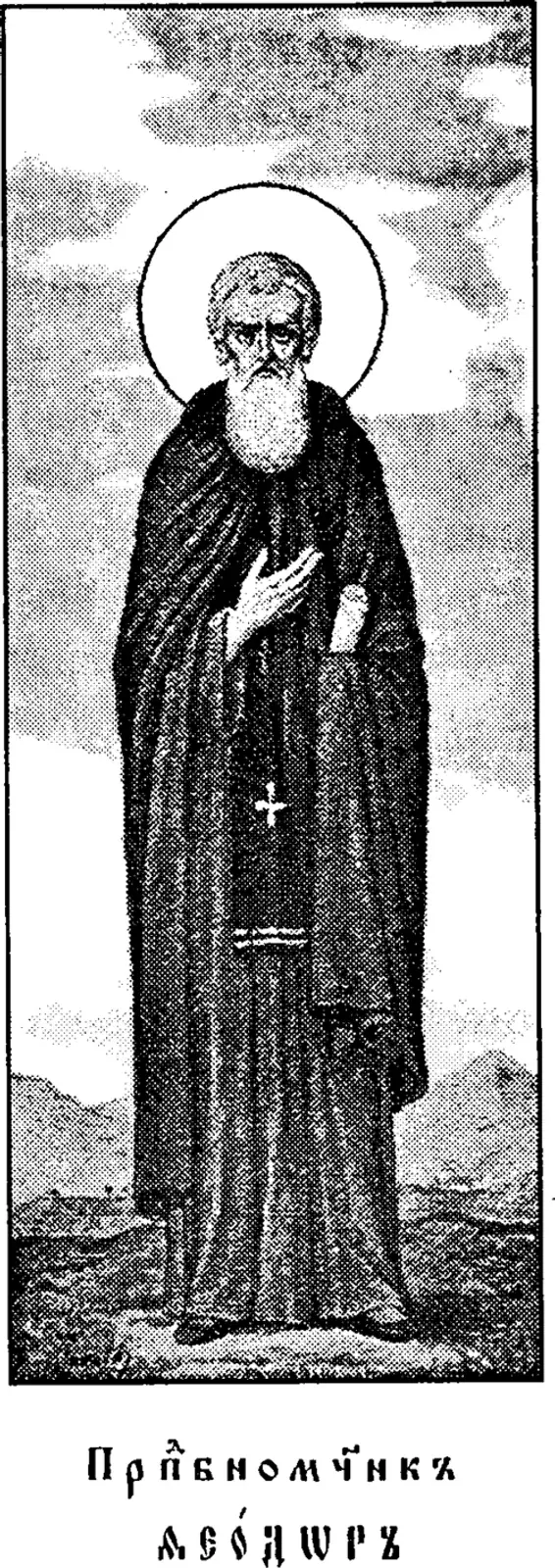
Saint Theodore Graptus was a monk and priest of Mar Saba who, with his brother Theophanes, defended the veneration of holy images through nearly thirty years of iconoclast persecution. 13 In about 836 the emperor Theophilus had twelve lines of insulting verse cut into the faces of both brothers, which is why they are called Graptoi, "the written-on"; Theodore died of his sufferings in prison at Apamea. 123 His feast is December 27. 4
Two brothers at Mar Saba
Butler and katolsk.no say Theodore came from the country of the Moabites, east of the Dead Sea, and that his parents, rich and devout, moved to Jerusalem to give him a good education; katolsk.no names their town as Kerak. 12 Santiebeati says the brothers were born in Palestine late in the eighth century, sons of a priest named Jonas. 3 It gives Theodore's birth as about 775 and Theophanes's about 778. 3
Both became monks while still young at Mar Saba, the great laura of Saint Sabas near Bethlehem. 123 Butler says Theodore quickly became known for learning, purity of life and self-denial, and that the patriarch of Jerusalem made him accept ordination as a priest. 1 Santiebeati adds that both brothers were disciples of Michael, later the syncellus of the patriarch of Jerusalem. 3
To Constantinople
The emperor Leo V, the Armenian, revived iconoclasm, in 814 by katolsk.no's date and in 815 by santiebeati's, and the second period of persecution began. 23 Butler and katolsk.no say the patriarch of Jerusalem sent Theodore to Constantinople to urge the emperor not to disturb the peace of the Church. 12
Santiebeati tells it differently. Michael and his two disciples left Jerusalem for Rome around 812 or 813, sent by the patriarch to support the pope in a dispute over the filioque; on the way they put in at Constantinople, entered a monastery there, and took up the defense of the images. 3
Either way, the outcome was the same. Leo had Theodore scourged and banished him, with Theophanes, to an island at the mouth of the Black Sea, where they suffered badly from hunger and cold. 12
Under three emperors
They were not there long. Butler says the emperor died in 822; katolsk.no says Leo was murdered at morning prayer in the palace chapel in 820. 12 His successor, Michael II, called the Stammerer, was an iconoclast but tried to steer a middle course. 12 Butler says he put Theodore in prison and then sent him into exile; katolsk.no says the brothers were freed and went back to their monastery in the city; santiebeati says they were taken to the monastery of Sosthenes on the Bosporus. 123
Michael's son Theophilus, who came to the throne in 829, was a determined persecutor. 12 He had the two brothers whipped and banished to the island of Aphusia. 12 Two years later, Butler says, they were brought back to Constantinople, struck in the emperor's presence until they fell stunned at his feet, then stripped and publicly scourged. 1 Santiebeati puts their recall in 836 and says Theophilus beat them with his own hand. 3
The twelve lines
After some days in prison they still refused to communicate with the iconoclasts. 12 The emperor then ordered twelve lines of iambic verse, written for the purpose by a courtier, to be put on their foreheads. 12 Butler gives the sense of the verses: "These men have appeared at Jerusalem as vessels of iniquity, full of superstitious error, and were driven thence for their crimes: and having fled to Constantinople they forsook not their impiety. Wherefore they have been again banished from thence, and are stigmatized on their faces." 1
Their wounds from the scourging were still open when they were laid on benches and the letters were cut or pricked into their faces. 12 The work was long; night fell before it was done, and they were sent back to prison with their faces still bleeding. 1 Katolsk.no says it was finished the next day. 2 Butler's note, from the Greek Synaxary, says the verses were written with a red-hot steel stylus, and santiebeati also speaks of branding by fire. 13
From the inscription, Butler says, Theodore is called Graptus, which in Greek means marked or engraved. 1 Katolsk.no and santiebeati give the plural, Graptoi, for both brothers. 23
Death at Apamea
They were exiled again, to Apamea. Butler calls it Apamea in Syria; katolsk.no and santiebeati place it in Bithynia, and the Martyrology names Hisarlik in Bithynia. 1234 There Theodore died of what he had suffered, in prison, about 841. 123
Theophilus died soon afterward, in 842. 12 His widow, Theodora, ruling for her young son, replaced the iconoclast patriarch with Methodius, and the veneration of images was restored. 12 Katolsk.no notes that in 843 the Eastern Church celebrated for the first time the feast it calls the Triumph of Orthodoxy. 2
Theophanes, bishop and poet
Theophanes outlived his brother. He was honored for his confession of the faith and made bishop of Nicaea, Butler says, to help overthrow a heresy over which he had already triumphed. 1 Katolsk.no attributes the bishopric to the Roman Martyrology in use before 1970 and gives his death as October 11, 845. 2 Santiebeati says the patriarch Methodius consecrated him metropolitan of Nicaea in 842, and that he held the see until he died in 845. 3
He was a poet. Butler says the Greeks call him "the poet" for the sacred hymns he composed. 1 Santiebeati counts him, alongside Joseph the Hymnographer, as a principal contributor to the Byzantine book of hymns called the Parakletike, and katolsk.no says one of his poems was written for his brother Theodore. 23
What is Saint Theodore Graptus the patron saint of?
Saint Theodore Graptus's feast day
Saint Theodore Graptus's feast day is December 27. The current Roman Martyrology enters on that day, at Hisarlik in Bithynia, the passion of Saint Theodore, monk of the monastery of Saint Sabas in Palestine, priest and martyr, who with his brother Theophanes defended the cult of holy images at Constantinople, suffered scourging, prison, exile and the cutting of verses on his forehead, from which he was called Graptos, "branded," and died at last in prison. 4
Butler says the Roman Martyrology names Theodore with his brother on December 27, and that the Greeks keep Theodore on that day and Theophanes on October 11. 1 Katolsk.no gives December 27 for both. 2 Santiebeati gives October 11 or 12 for Theophanes in the Byzantine synaxaries. 3
Praying with Saint Theodore Graptus
The emperor meant the verses as a permanent humiliation: a public label, cut where everyone would read it. 1 The Church kept the label and turned it into his name. 14
The persecution was long rather than sudden. Exile, release, prison, the whip, another island, another summons: Theodore went through nearly thirty years of it and did not see the end. 13 His brother did, and spent what was left of his life writing hymns. 13
Theodore and Theophanes went through it together, from the novitiate at Mar Saba to the benches in the prison. 12 One died of it and the other wrote a poem for him. 2
Saint Theodore Graptus, pray for us.
Sources
- 1.Alban Butler, "St. Theodorus Grapt, C.," December 27, in The Lives of the Fathers, Martyrs, and Other Principal Saints, Vol. XII (Derby: Richardson and Son, 1842), Internet Archive.
- 2."De hellige Theodor og Theofanes Graptoi (~775-~841/~778-~845)," Den katolske kirke, katolsk.no (in Norwegian).
- 3."Santi Teodoro e Teofane, Fratelli," Santi, beati e testimoni, santiebeati.it (in Italian).
- 4.Roman Martyrology, entries for December 27, Santo del giorno, Conferenza Episcopale Italiana (in Italian).
Saints to turn to next
Others in this collection who are turned to for some of the same things.