Saint Tarcisius
Died in the third or early fourth century
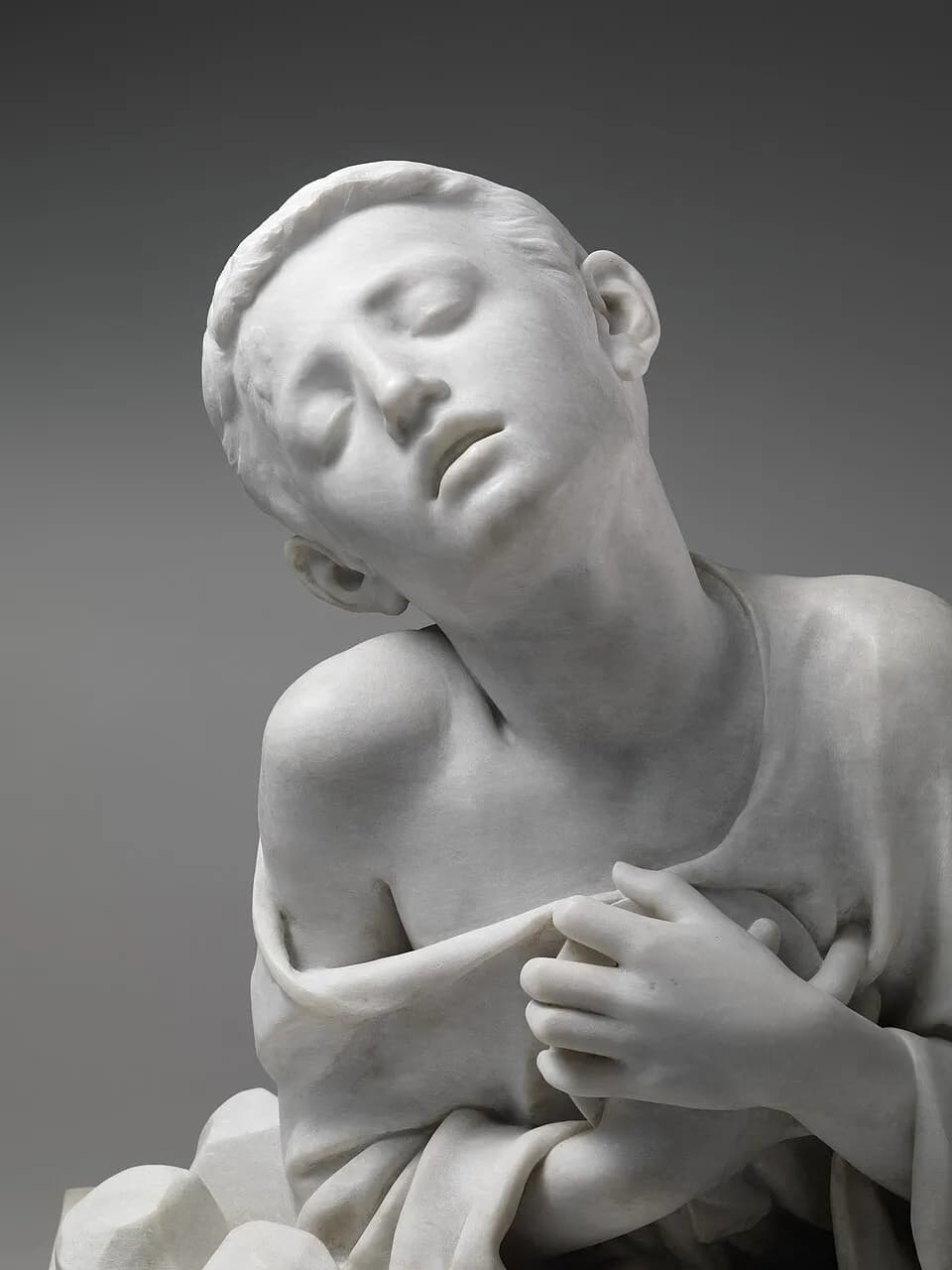
- Patron saint of
- Altar servers, according to Benedict XVI; acolytes, altar servers and First Communicants, according to Catholic Culture 23
Saint Tarcisius was a Roman Christian who was attacked in the street while carrying the Eucharist and died rather than hand it over. 1 The one early witness is a poem that Pope Damasus wrote in the fourth century, and the Catholic Encyclopedia says nothing definite is known about him beyond it. 1 The tradition that grew from that poem remembers him as a boy and an acolyte, and Benedict XVI told his story to a great pilgrimage of altar servers in Rome in 2010 as the story of their patron. 2 His feast is August 15. 12
What Pope Damasus wrote
J. P. Kirsch, who spells the name Tarsicius, opens his Catholic Encyclopedia article bluntly: "The only positive information concerning this Roman martyr is found in the poem composed in his honour by Pope Damasus." 1 Damasus was pope in the fourth century, and the inscription was later placed on the martyr's tomb. 13
In the poem, as Kirsch summarizes it, Damasus compares Tarcisius to Stephen, the first martyr. Stephen was stoned by the people of Judea. Tarcisius, carrying the Blessed Sacrament, was set upon by a pagan crowd, and he suffered death rather "than surrender the Sacred Body [of Christ] to the raging dogs." 1 Catholic Culture gives the same summary and the same last two words. 3
Kirsch treats the core of it as fact. "This tradition so positively asserted by Damasus is undoubtedly historical," he writes. 1 He is just as firm about its limits: "Nothing definite is known concerning the personality of this martyr of the Eucharist." 1
Deacon or acolyte
Two details that everyone knows about Tarcisius are not in the poem as the encyclopedia reports it: that he was a boy, and that he was an acolyte. Kirsch thinks the comparison with Stephen, who was a deacon, points another way. "He may have been a deacon," he writes. 1
The acolyte arrives later. An addition to the sixth-century legend of the martyrdom of Pope Saint Stephen makes Tarcisius an acolyte, Kirsch says, "for some unknown reason," and he adds that the addition is itself based on the poem of Damasus. 1 Catholic Culture, reading the same Passion of Pope Stephen, takes it more generously: Tarcisius is said there to be an acolyte of the pope himself, which would explain the veneration in which he was held and why he was trusted with so difficult an errand. 3
Benedict XVI holds the two together carefully. It is said that he was a boy who came regularly to the Catacombs of Saint Callistus, the Pope told the altar servers, and "various hints lead us to conclude that he was presumably an acolyte, that is, an altar server." 2 Catholic Culture calls him "a twelve-year-old acolyte." 3 Neither the encyclopedia nor Benedict XVI gives an age, and Catholic Culture does not say where the number comes from. 123
The story as Benedict XVI told it
On August 4, 2010, Benedict XVI spoke in Saint Peter's Square to a European pilgrimage of altar servers who had brought a large statue of Tarcisius with them. 2 He began by admitting the gap: "Who was St Tarcisius? We do not have much information about him." 2 Then he told the story as it has come down, and he marked it as tradition with the words "It is said." 2
The setting is the persecution under the emperor Valerian, when Christians met in private houses or in the catacombs, and carrying the Eucharist to prisoners and to the sick had become dangerous. 2 One day the priest asked who would take it. Tarcisius stood up and said, "send me!" 2 He seemed too young for the task, and he answered that his youth "will be the best shield for the Eucharist." 2 The priest gave him the consecrated Bread and asked whether he would guard it faithfully. "I would die," Tarcisius said, "rather than let go of them." 2
On the way he met friends, pagans, who asked him to join them. When he refused they grew suspicious, saw that he was holding something to his chest, and tried to pull it away. The struggle grew worse when they realized he was a Christian. "They kicked him, they threw stones at him, but he did not surrender." 2 Catholic Culture tells it the same way, with boys his own age who knew him as a playmate and who became a mob. 3
In Benedict's account a guard named Quadratus, who had secretly become a Christian, carried the dying boy back to the priest. He was dead when they arrived, still holding a small linen bag with the Eucharist in it. 2 Catholic Culture says only that it is believed a fellow Christian drove off the mob. 3
When he died and where he lies
The sources do not agree on a date. Benedict XVI places the story in the third century, under Valerian, and says the inscription of Damasus on the grave "says that the boy died in 257." 2 Kirsch dates the death no more closely than "one of the persecutions that took place between the middle of the third century and the beginning of the fourth." 1 Catholic Culture says the third century, "probably" under Valerian, and elsewhere on the same page gives "3rd to 4th century." 3
He was buried in the Catacomb of Saint Callistus. 12 Kirsch adds that in the seventh century his remains rested in the same grave as those of Pope Zephyrinus. 1 Catholic Culture notes that his relics are claimed by the Roman church of San Silvestro in Capite. 3
Benedict XVI also passed on what he called "a beautiful oral tradition" recorded in the Roman Martyrology: that the Blessed Sacrament was not found on the body, in his hands or in his clothing, because the Host he had defended "had become flesh of his flesh," forming with his body "a single immaculate Host offered to God." 2 The story reached a wide public in the nineteenth century, Catholic Culture says, when Cardinal Wiseman put it in his novel Fabiola. 3
What is Saint Tarcisius the patron saint of?
Saint Tarcisius is the patron saint of altar servers. Benedict XVI, greeting the servers gathered in Rome, called him "your Patron Saint," and hoped that his statue at the Catacombs of Saint Callistus would become a point of reference for them. 2 Catholic Culture lists his patronage as acolytes, altar servers and First Communicants. 3
Saint Tarcisius's feast day
The feast of Saint Tarcisius is August 15. The Catholic Encyclopedia gives that date, and Benedict XVI says it is the day the Roman Martyrology fixed. 12 Vatican News lists him on its calendar for August 15 as "St. Tarcisius, Roman, Martyr of the Eucharist." 4
August 15 is also the Solemnity of the Assumption of the Blessed Virgin Mary, which is what the Church celebrates that day. Catholic Culture lists Tarcisius among the other commemorations the Martyrology carries for the date. 3
Praying with Saint Tarcisius
The secure part of this life fits in a sentence: a Christian in Rome was carrying the Eucharist, a crowd demanded it, and he let himself be killed before he would give it up. 1 Damasus thought that worth an inscription, and set him beside Stephen. 1
Benedict XVI drew from it a way of regarding the Eucharist. It is, he told the altar servers, "a treasure of incomparable value," and Tarcisius shows "the deep love and great veneration that we must have" for it. 2 He asked the servers not to come into church carelessly, and to prepare themselves inwardly for Mass. 2
He was also plain that the story is not a pattern most people will be asked to repeat. "Martyrdom will probably not be required of us," he said, and what is asked in its place is "fidelity in daily tasks," inner recollection, and going to church out of conviction and for the joy of the Lord's presence. 2
The uncertainty is part of the picture. Nobody now knows his age, his rank or the year. 1 Catholic Culture observes that his story was told again and again to urge others to the same courage, and the telling added the details. 3 The act itself is what the earliest witness recorded. 1
Saint Tarcisius, pray for us.
Sources
- 1.Johann Peter Kirsch, "St. Tarsicius," The Catholic Encyclopedia, vol. 14 (New York: Robert Appleton Company, 1912).
- 2.Pope Benedict XVI, General Audience of 4 August 2010: Saint Tarcisius. The Holy See.
- 3."Solemnity of the Assumption of the Blessed Virgin Mary," Liturgical Year, August 15, 2023, Catholic Culture (section "St. Tarcisius").
- 4."15 August," Saint of the Day, Vatican News.
Saints to turn to next
Others in this collection who are turned to for some of the same things.