Saint Paul the Simple
Died after 330, perhaps about 339
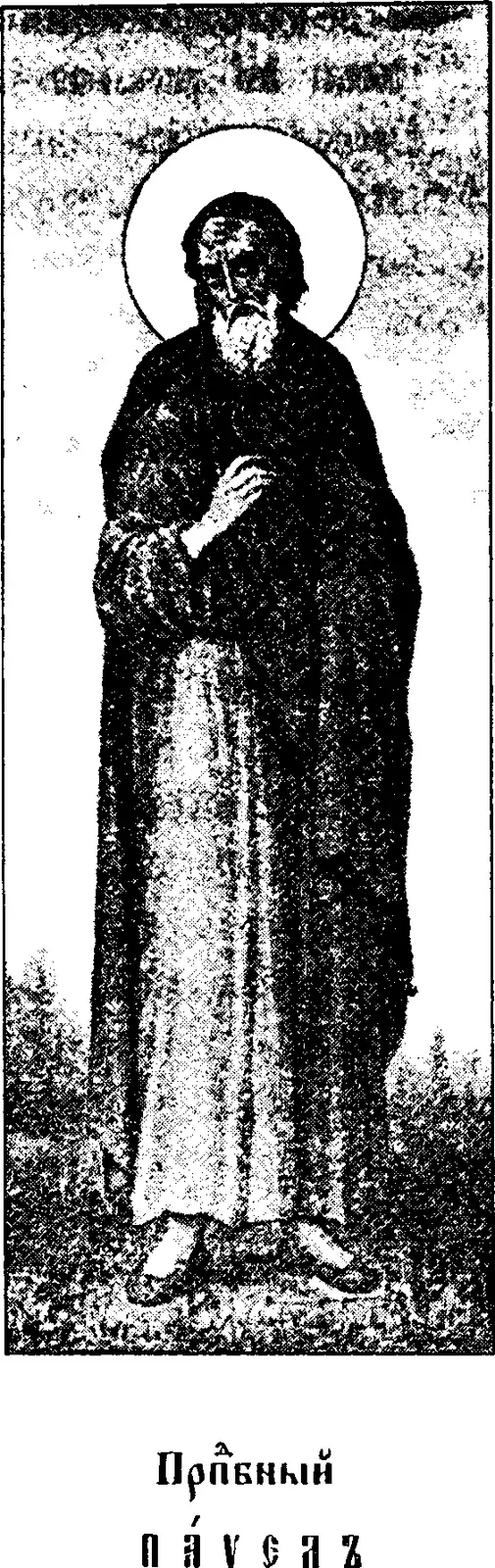
- Also called
- Paul the Anchoret, in Butler 3
Saint Paul the Simple was an Egyptian countryman who, at about sixty, came home and found his wife with another man, left her to him with the children, and walked to the desert to ask Saint Antony to make him a monk. 12 Antony told him he was too old and shut the door on him, but Paul would not go away, and became the disciple Antony held up to all the others. 13 His feast is March 7. 5
"Go, you have her"
Palladius, bishop of Helenopolis, who wrote down the stories of the early desert monks, says he heard this one from Cronius and Hierax. 14 "A certain Paul, a rustic peasant, exceedingly guileless and simple, was wedded to a most beautiful woman of depraved character, who for a very long while concealed her sins from him." 1
One day he came in from work and found her with her lover. Palladius records his answer: laughing quietly, he said, "Good, good. I don't mind, truly. By Jesus, I'll take her no longer. Go, you have her and her children, for I am going to become a monk." 1 Sozomen tells the same story more briefly: he "laughed placidly and affirmed with an oath, that he would live with her no longer," and left her with the adulterer. 2
Saying nothing to anyone, Palladius says, he set off across "the eight stages" to Antony. 1 Butler, who calls him Saint Paul the Anchoret, says the journey took eight days, and that up to that time Paul had served God in the world "in the toils of a poor and laborious country life." 3
At Antony's door
Antony came out and asked what he wanted. "I want to become a monk." 1 "You are an old man, sixty years old; you cannot become a monk here," Antony told him, and advised him to go home, work, and give thanks to God. Paul answered: "Whatever you teach me, I will do it." 1
Antony tried once more. If Paul really wanted to be a monk, he should join a community of brothers who could carry his weakness; Antony lived alone and ate after a five-day fast. Then he shut the door and did not come out for three days. 1 Paul stayed. On the fourth day Antony had to come out, and told him to go away. "It is impossible for me to die elsewhere than here," Paul said. 1
Antony saw that the old man had brought neither bread nor water and had now fasted four days, and took him in "lest perchance you die and stain my soul." 1 Butler adds that Paul spent those days fasting and praying before the door. 3
The testing
Antony set him to weaving palm leaves into mats. Paul worked until the ninth hour and finished ninety feet. Antony looked at it, said it was badly done, and told him to unpick it and weave it again. 1 Palladius says Antony did this hoping the hungry old man would give up and leave. Paul wove the same leaves again, "though it was more difficult, because they were all shrivelled up," and did not complain. 1
At sunset Antony asked whether he would like to eat. "As you please, father," Paul said. 1 Antony set out the biscuits, sang a psalm twelve times and prayed twelve times, and Paul joined in eagerly; Palladius remarks that he would have preferred being eaten by scorpions to living with an adulterous woman. 1 When Antony offered him a second biscuit, Paul said, "If you will eat, I will too; if you do not eat, I will not." Antony said he had had enough, "for I am a monk," and Paul answered, "I too have had enough, for I too want to become a monk." 1
Butler gives the meal slightly differently, with four loaves and each eating one, and gathers further tests from Rufinus and Palladius: Antony had him spill a jar of honey and gather it up without any dust, draw water all day and pour it out, make baskets and pull them apart, sew his clothes and unpick them. 3 Sozomen says Antony "put his strength to the proof by various trials," and found nothing ignoble in him. 2
The Norwegian bishops' saints database (katolsk.no) points out that the two oldest accounts differ in tone. In Palladius, Antony lives entirely alone, is unwilling to take Paul, and shows him exactly what a hermit's life is; in Rufinus, Antony is already a kind of abbot of hermits, invites Paul to become a monk, and puts him through the sort of tests any abbot might give a novice. 4
"Behold, you have become a monk"
After some months, Palladius says, Antony was convinced Paul had a perfect soul, "being very simple and grace co-operating with him," and built him a cell three or four miles away. "Behold, you have become a monk; remain alone in order that you may be tried by demons." 1 Sozomen says he was sent to live alone "as no longer requiring a teacher." 2
Butler says Antony visited him from time to time, preferred his virtue to that of all his other disciples, and held him up to them as a model. 3 Paul had been there a year, Palladius says, when he "was counted worthy of grace over demons and diseases." 1
The demon and the rock
Antony began sending him the cases he could not cure. 13 Palladius tells of one man possessed by a spirit so violent that it cursed heaven itself. Antony said, "This is not my work," took the man to Paul, told him to cast out the demon, and went back to his own cell. 1
Paul prayed and said, "Father Antony has said, 'Go out from the man.'" The demon cursed him. Paul struck the man on the back with his sheepskin coat and said it again. When that failed he threatened to go and tell Christ. 1 At last he climbed onto a rock in the full heat of noon and prayed that he would not come down, eat or drink until he died unless Christ freed the man. 1
Before he had finished, Palladius writes, the demon cried out, "The simplicity of Paul drives me away, and where am I to go?" and left the man in the form of a great dragon that went off toward the Red Sea. 1 "This is the marvellous tale of Paul who was surnamed Simple by all the brotherhood." 1 Sozomen says God showed him to be "greater than even his teacher in vexing and expelling demons." 2
His death and his memory
Butler says he died some time after 330; katolsk.no says about 339. 34 katolsk.no adds that Saint John Climacus, abbot of Sinai, later held him up in The Ladder of Divine Ascent as a clear example and pattern of blessed simplicity, and observes that, whatever its historical value, his story is very characteristic of the earliest monks of the Egyptian desert. 4
What is Saint Paul the Simple the patron saint of?
Saint Paul the Simple's feast day
Saint Paul the Simple's feast day is March 7. The current Roman Martyrology, as the Italian bishops publish it, remembers him that day in the Thebaid in Egypt as "Saint Paul, called the Simple, disciple of Saint Antony." 5 Butler says he was commemorated on March 7 by both the Greeks and the Latins; katolsk.no gives March 7 for the Roman Martyrology and October 4 for the Orthodox. 34
Praying with Saint Paul the Simple
Paul came to the desert because his marriage had been betrayed, and none of the old writers pretends otherwise. 123 He did not take revenge. He laughed, gave her up, and left the same day. 12
He arrived with nothing, was told he was too old, and waited at a shut door for three days. 1 What he offered Antony was not learning or strength but a plain willingness: "Whatever you teach me, I will do it." 1
The tests Antony gave him were meant to make him leave, and some of them look pointless: weaving a mat and unpicking it, pouring out water drawn all day. 13 He did them without complaint. 12
The power the brethren saw in him afterward was put down to the same thing. In Palladius's telling, even the demon named it: the simplicity of Paul. 1
Saint Paul the Simple, pray for us.
Sources
- 1.Palladius, The Lausiac History, chapter 22, "Paul the Simple," trans. W. K. Lowther Clarke (London: SPCK, 1918).
- 2.Sozomen, Ecclesiastical History, Book I, chapter 13, trans. Chester D. Hartranft, Nicene and Post-Nicene Fathers, Second Series, Vol. 2 (1890).
- 3.Alban Butler, "St. Paul, Anchoret," March 7, in The Lives of the Fathers, Martyrs, and Other Principal Saints, Vol. I (New York, 1895), Project Gutenberg eBook #20450.
- 4."Den hellige Paulus den enkle," Den katolske kirke, the saints database of the Catholic Church in Norway, katolsk.no (in Norwegian).
- 5.Roman Martyrology, entry for March 7, "San Paolo, detto il Semplice," Santo del giorno, Conferenza Episcopale Italiana (in Italian).
Saints to turn to next
Others in this collection who are turned to for some of the same things.