Saint Patroclus of Troyes
Died January 21, in 259 or about 275
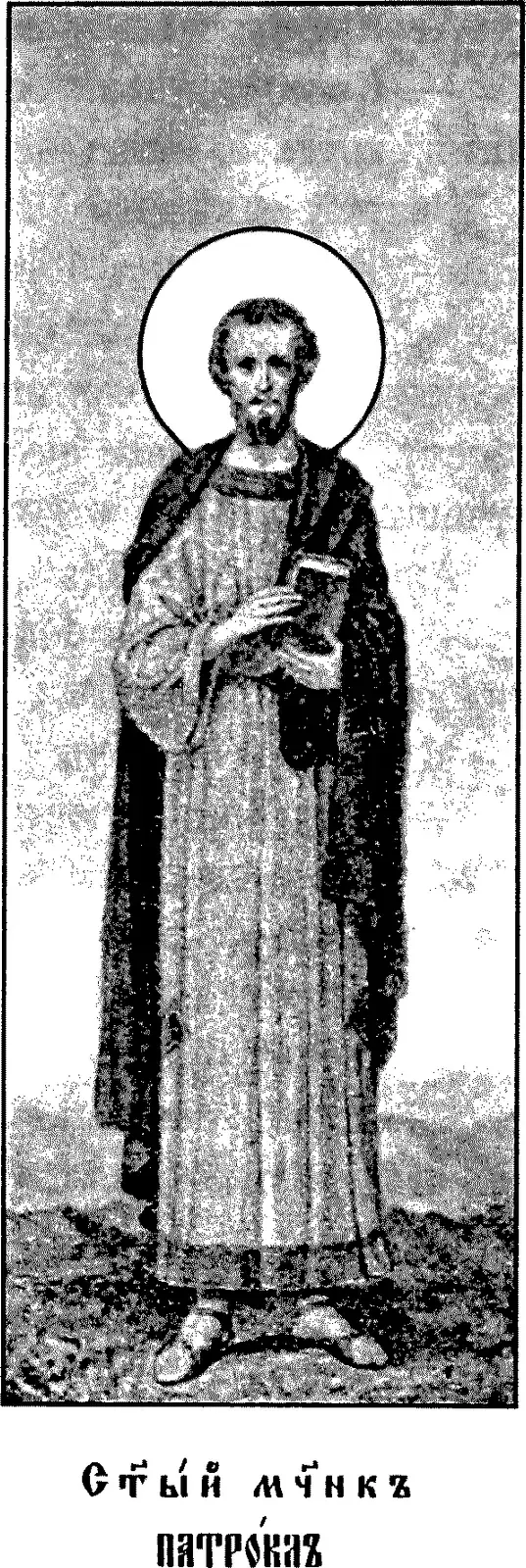
- Also called
- Parre, in French 5
- Home
- An inherited house about two hundred paces outside Troyes, in Roman Gaul, says his Passion 2
- Died
- Beheaded beside the Seine, January 21, under Aurelian 234; in 259 or 275, says katolsk.no 6; the Bollandists argue for 259 2
- Patron of
- The town of Soest, say the Bollandists 2
Saint Patroclus was a Christian of Troyes, in Roman Gaul, who was beheaded beside the Seine for refusing to sacrifice to the gods, in the third century, under a persecutor named Aurelian. 234 Gregory of Tours, writing in the sixth century, tells how his cult almost faded for want of a written account of his death, and how it revived when one turned up. 1 In the tenth century his body was carried from Troyes to Soest in Westphalia, which took him as its patron. 2 His feast is January 21. 3
What we know, and from where
The Roman Martyrology says only that he was a martyr at Troyes, in Lugdunensian Gaul. 3 The 1897 English edition adds that he "under the emperor Aurelian, deserved the crown of martyrdom." 4 Georges Goyau, in the 1912 Catholic Encyclopedia, lists him among the saints of the diocese of Troyes as one of four martyrs under Aurelian, and gives his French name, Parre. 5
Everything else in his story comes from his Passion, which survives in more than one form. 2 The Bollandists, the Jesuit editors of the Acta Sanctorum, printed an older, plainer version from manuscripts of Saint Maximin at Trier and of the abbey of Saint Mary de Ripatorio in the diocese of Troyes, and judged it the text that Gregory of Tours knew. 2 A more polished version, printed by Laurentius Surius, they thought had been reworked after the relics went to Cologne. 2 Bruno Krusch, who edited Gregory for the Monumenta Germaniae Historica, agreed that the older text seems to be the one Gregory had. 1
A rich man outside the walls
According to the older Acts, Patroclus was a man of high birth living in a house about two hundred paces outside the city, with many buildings around it, which his parents had left him. 2 Well educated, he served God day and night, kneeling in prayer at every hour and eating only once a day, at the twelfth hour. 2 He gave away what he had inherited to widows and orphans, so that the Christians of the place thought of him as a steward sent from heaven. 2 The Passion adds that he drove out demons, that many cures were worked through him, and that people honored him as a just man. 2
Before Aurelian
A persecution broke out, the Acts say, and Aurelian, coming from Sens to Troyes, heard of Patroclus and had him found. 2 He told him he had heard that he worshiped one who had been struck by men in the face. Patroclus did not answer. 2 Asked his name and his religion, he said that he worshiped the living and true God, who dwells in heaven, looks on the lowly and knows all things before they happen. 2
Aurelian promised him honor, wealth and a great name if he would serve the gods; Patroclus said he knew no other God than the one who made heaven and earth. 2 He was put in fetters, his hands bound in chains, beaten with rods on the back and shut in a cell for three days, under a guard named Elegius. 2
Brought out again, he offered to give his judge something from his own treasure, since he was poor; when Aurelian protested that he was rich, Patroclus told him that he was poor in faith. 2 He told Aurelian that he had power over his body but not over his soul. 2 Then he mocked the gods Aurelian named, Apollo, Jupiter and Diana, and Aurelian ordered him beheaded in a watery place, so that his body would not rest on dry ground. 2
Across the Seine
He was taken to the bank of the Seine. 2 There, the Passion says, he prayed that his body would not lie in that wet place, and asked to cross the river as Moses and Aaron had crossed the sea. 2 The eyes of the men holding him were darkened, and he walked into the river and out on the other side; although the river was in flood, the water did not reach his knees. 2
His guards were arguing over whether they had seen a phantom when a pagan woman told them she had seen the Christian on the hill across the river, lying face down in prayer. 2 They found him there, still praying, and the leader told him he would not escape again. 2 Asked what kind of God his was, Patroclus answered with a short creed, from the creation to the sending of the Holy Spirit. 2
Elegius ordered him bound and struck with the sword. 2 Kneeling, he said, "Into your hands I commend my spirit," and was beheaded; his head was thrown away from his body. 2 The older Acts date it to the twelfth day before the Kalends of February, a Friday, which is January 21. 2
Under Aurelian, but when?
The martyrologies say only that he died under Aurelian. 34 Aurelian was emperor from 270 to 275, and the Bollandists report dates of 273 and 275 in older writers. 2 They point out a problem: the older Acts call Aurelian "praeses," a governor, and not emperor, and in no January of his reign as emperor did the twenty-first fall on a Friday. 2 So they suggest that the martyrdom happened in 259, while Aurelian was still a general campaigning in Gaul. 2 katolsk.no gives his death as "259 or 275." 6
The lost Passion
Two old men who had looked to him for alms watched over the body until evening. 2 That night Eusebius, the archpriest of the place, came with Liberius, a deacon, wrapped the body in linen and buried it by the light of a small lamp, for fear of the pagans; the two old men kept vigil there all night. 2 When the persecution ended, Eusebius built a small cell over the grave, and when he was dying he asked to be buried near the place where Patroclus's blood had been shed. 2
Gregory of Tours picks up the story some three centuries later. 1 Patroclus, buried at Troyes, had shown himself a friend of God by many miracles, he writes, but his tomb had only a little oratory served by one cleric, and the local people paid the martyr little honor because no account of his passion was at hand. 1 Country people, Gregory explains, venerate more attentively the saints whose struggles they hear read. 1
Then a traveler from far away brought a little book of the martyr's contest and gave it to the cleric to read, who copied it through the night by lamplight and took it to his bishop. 1 The bishop did not believe him. He thought the cleric had written it himself, had him beaten and sent him away. 1 Long afterward, Gregory says, an army that had gone into Italy brought back the same history of the Passion, just as the cleric had written it out. 1 The bishop was confounded, the people began to honor the martyr more, and they built a basilica over him and kept his feast every year. 1
From Troyes to Soest
In the tenth century the body left Troyes. 12 The account the Bollandists print from the life of Archbishop Bruno of Cologne, brother of the Emperor Otto the Great, says that Bruno, sent into Gaul as a peacemaker, restored Ansegisus, bishop of Troyes, to the see from which he had been driven out. 2 On his way home, after many requests, he obtained from Ansegisus the body of Patroclus. 2
Bruno sent Everaclus, bishop of Liège, with clergy and monks to collect it. 2 When they prayed and began to dig, the account says, the church filled with a fragrance sweeter than anything any of them had known, growing stronger until they reached the stone coffin. 2 The relics were taken to Cologne, and from there Bruno had them carried to Soest, a rich and crowded town in Saxony that the account says was still nearly ignorant of the faith, and laid in a church he had founded. 2
The Bollandists date the translation to about 960. 2 They report that the Cologne calendars kept the arrival of Patroclus at Soest on December 9, that Soest had a great collegiate church of canons dedicated to him, and that a description of the town by a Dominican of Soest, quoted in Georg Braun's Theatrum urbium, calls him the glorious patron of the city. 2
What is Saint Patroclus the patron saint of?
Saint Patroclus's feast day
Saint Patroclus's feast day is January 21. 36 The current Roman Martyrology, as the Italian bishops print it, enters him that day at Troyes in Lugdunensian Gaul, in present-day France, as a martyr. 3 The 1897 English Martyrology gives the same day. 4 The Bollandists report that he was already in the oldest martyrologies, those that go under the names of Jerome and Bede, and in Usuard and Ado. 2
His relics' arrival at Soest was kept in the Cologne calendars on December 9. 2 The Eastern Churches keep a Martyr Patroclus on August 17, and the Russian plate shown here comes from the August volume of their Lives of the Saints.
Praying with Saint Patroclus
What the Passion remembers of his life before his arrest is ordinary for a holy man of means: prayer at every hour, one meal a day, and an inheritance given away to widows and orphans. 2 The Christians around him called him a steward sent from heaven. 2
Before his judge he is given the usual choice between honors and chains, and he answers by turning the judge's wealth back on him: Aurelian, rich in everything else, is the poor one. 2 Even the escape across the river ends with him on his face in prayer, where the guards find him. 2
Gregory's story is about something else, about how a martyr can be forgotten in his own town. 1 The grave was there all along, with one cleric to keep it, and what brought the people back was hearing his story read. 1 A copy made overnight by lamplight, and a bishop who saw that he had been wrong, were enough to give Troyes its basilica. 1
Saint Patroclus of Troyes, pray for us.
Sources
- 1.Gregory of Tours, Liber in gloria martyrum, chapter 63, "De Patroclo martyre," ed. Bruno Krusch, with the editor's notes, Monumenta Germaniae Historica, Scriptores rerum Merovingicarum I (Hanover, 1885), pp. 531-532, Internet Archive (in Latin).
- 2."De S. Patroclo martyre Trecis in Gallia," commentary, Acts and history of the translation, January 21, Acta Sanctorum, Ianuarii tomus II (Antwerp, 1643; reprinted Paris: Victor Palmé, 1863), pp. 706-712, Internet Archive (in Latin).
- 3.Roman Martyrology, entry for January 21, "San Patroclo, martire," Santo del giorno, Conferenza Episcopale Italiana (in Italian).
- 4.The Roman Martyrology, January 21 (Baltimore: John Murphy Company, 1897), Internet Archive.
- 5.Georges Goyau, "Troyes," The Catholic Encyclopedia, Vol. 15 (New York: Robert Appleton Company, 1912).
- 6."Den hellige Patroclus (-259 eller 275)," Den katolske kirke, the saints database of the Catholic Church in Norway, katolsk.no (in Norwegian).
Saints to turn to next
Others in this collection who are turned to for some of the same things.