Saint Ignatius of Loyola
1491 - July 31, 1556
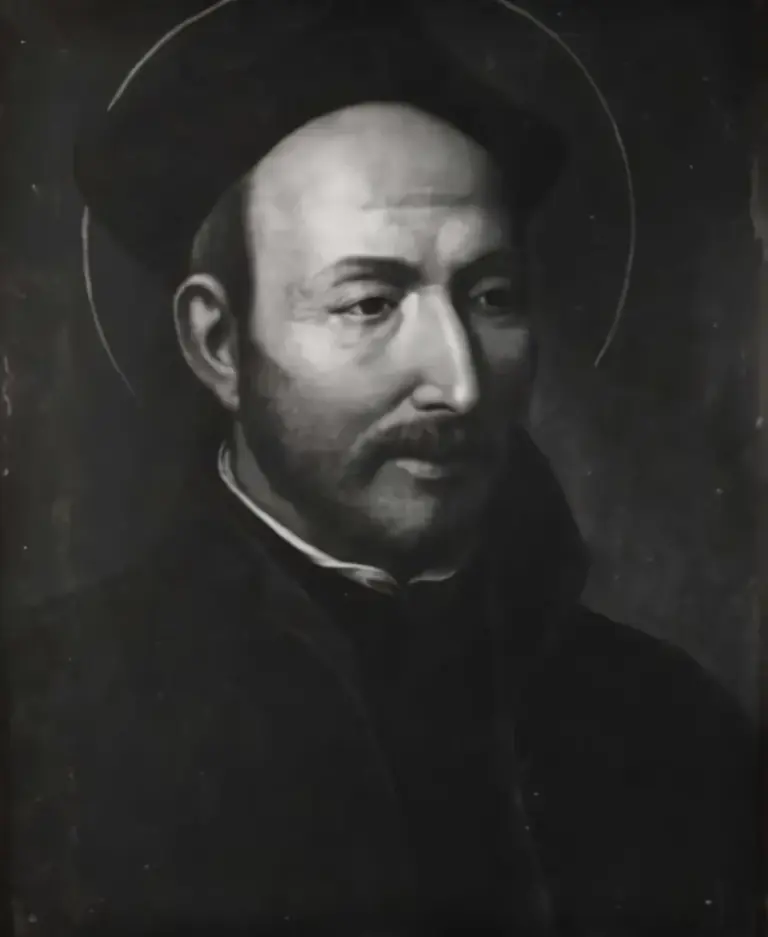
- Patron saint of
- Retreats 2
- Feast day
- July 31 2
- Born
- The castle of Loyola, above Azpeitia in Guipuzcoa, 1491 1
- Died
- Rome, July 31, 1556 1
- Founded
- The Society of Jesus, approved by Paul III on September 27, 1540 1
- Wrote
- The Spiritual Exercises, begun at Manresa 1
- Canonized
- May 22, 1622, by Pope Gregory XV 1
Saint Ignatius of Loyola was a soldier whose legs were destroyed by a cannonball, and who converted because the castle he was recovering in had run out of adventure novels. What he built out of that accident - the Spiritual Exercises, and a method for telling which of your interior movements are actually from God - is the reason anyone who has ever made a retreat or tried to discern a decision is in his debt.
Pamplona
Ignatius was born in 1491 at the castle of Loyola, above Azpeitia in Guipuzcoa. 1 He was a soldier, and at the siege of Pamplona in 1521 "a cannon ball, passing between Ignatius' legs, tore open the left calf and broke the right shin." 1 The military career was finished in an instant, and the long convalescence that followed is where everything else begins.
The books that were not there
Recovering, he asked for tales of chivalry to pass the time. There were none in the house, so he was given lives of the saints and a life of Christ instead. 1 He read them the way he had read the romances, comparing what the saints had done with what knights did.
Then he noticed something that became the foundation of everything he later taught: daydreams of worldly glory left him dry afterwards, while thoughts of following Christ left him with a lasting contentment. Paying attention to that difference - not to the feelings themselves but to what they left behind - is the seed of the discernment of spirits.
Manresa and the Spiritual Exercises
After vowing to make a pilgrimage, he withdrew to a cave near Manresa, where he developed the meditative practices later set down as the Spiritual Exercises. 1 The Exercises are not a book to read so much as a program to be taken through, usually over thirty days, and they remain the structure behind most Catholic retreats. It is why Franciscan Media names him patron of retreats. 2
Paris, Montmartre, and the Society of Jesus
He went back to school as an adult, studying in Paris from 1528 and taking his master's degree on 14 March 1535. 1 On 15 August 1534, at Montmartre, he and his companions took vows of poverty and chastity and bound themselves to a journey to the Holy Land once their studies were done. 1
The Holy Land plan failed. What came of the group instead was the Society of Jesus, approved by Pope Paul III in the bull Regimini militantis Ecclesiae on 27 September 1540, with Ignatius elected superior the following April. 1 He died in Rome on 31 July 1556 and was canonized by Gregory XV on 22 May 1622. 1
What is Saint Ignatius the patron saint of?
Saint Ignatius of Loyola is the patron saint of retreats. 2 Given that the Spiritual Exercises are the source of the retreat as most Catholics experience it, the patronage is less a devotional label than a statement of fact.
Saint Ignatius' feast day
The feast of Saint Ignatius of Loyola is celebrated on July 31. 2
Praying with Saint Ignatius
A cannonball ended the only career Ignatius wanted, and the house he convalesced in had no adventure stories left, only lives of the saints. 1 He read them the way he had read the romances and noticed something: daydreams of glory left him flat afterward, and thoughts of following Christ did not.
That noticing is his whole contribution. Not the intensity of a feeling but what it leaves behind once it passes. Anyone sitting with a decision they cannot settle is working with the tool he made.
The Spiritual Exercises came out of a cave near Manresa and became the shape of the Catholic retreat. 1 He did not think people should have to improvise their interior lives, which is why Franciscan Media calls him the patron of retreats. 2
He went back to school in his late thirties and sat with boys to learn the Latin he lacked. 1 Beginning again in public, at the wrong age, is a thing he actually did rather than a thing he recommended.
Saint Ignatius of Loyola, pray for us.
Sources
Saints to turn to next
Others in this collection who are turned to for some of the same things.
- Saint Agnes of Montepulcianoc. 1268 - April 1317PrayerWork and vocationDiscernment
- Saint Andrew Avellino1521 - November 10, 1608DiscernmentWork and vocationPrayer
- Saint Benedict of Anianec. 750 - February 11, 821DiscernmentPrayerWork and vocation
- Saint Benedict of Nursiac. 480 - March 21, 547PrayerWork and vocationDiscernment