Saint Ursula Ledóchowska
1865 - May 29, 1939
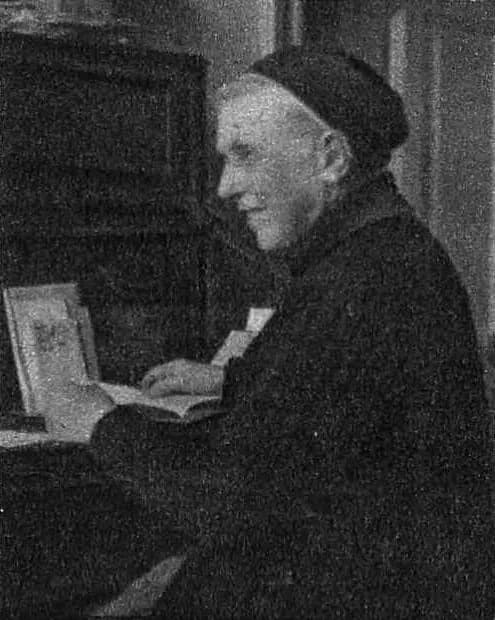
- Founded
- The Ursulines of the Agonizing Heart of Jesus, known in English as the "Grey Ursulines," in 1920 34
- Patronage
- Polish girls, orphans and educators, according to the National Catholic Register 11
Saint Ursula Ledóchowska was a Polish Ursuline nun who ran a school in secret in St. Petersburg, where religious life was forbidden, spent the First World War in exile in Sweden and Denmark, and in 1920 brought her sisters home to found a new congregation, the Ursulines of the Agonizing Heart of Jesus, known in English as the "Grey Ursulines." 14 John Paul II, canonizing her in 2003, said that "with the message of God's love she crossed Russia, the Scandinavian countries, France and Italy," and called her "an apostle of the new evangelization." 2
A family of soldiers and religious
She was born Julia Ledóchowska in 1865 at Loosdorf, in Lower Austria. 4 Her father, Antoni, was a Polish officer in the Austrian army whose family had left Poland after the failed November Uprising; her mother, Josephine, came from the Swiss family of Salis-Zizers. 5 The Holy See biography says both sides of the family were full of "politicians, military men, ecclesiastics and consecrated people," and that hers was a large household where "affectionate and disciplined love was dominant." 1
The sources count the children differently. The congregation calls her the second of seven; the National Catholic Register, the fifth of ten. 411 They agree on the siblings who mattered most to her story. Her older sister, Maria Teresa, founded the Missionary Sisters of St. Peter Claver and was beatified in 1975; her younger brother Włodzimierz became superior general of the Jesuits. 15 Their uncle, Cardinal Mieczysław Ledóchowski, was Primate of Poland and was imprisoned during the Kulturkampf. 5
The congregation dates the family's move to Lipnica Murowana, near Kraków, to 1883, and her father's death to 1885. 45 The Register says the move came after his death, which it puts in 1883. 11
Twenty-one years in Kraków
In August 1886 she entered the Ursuline convent in Kraków, and at her profession she took the name Maria Ursula of Jesus. 16 The Holy See biography opens with a line she wrote at 24, before taking her vows: "If only I knew how to love, to burn and consume oneself in love." It says those words "became the guide lines of her entire life." 1
She taught in the sisters' school, qualified as a teacher, took painting lessons and decorated the convent chapel with murals. 6 In 1904 the community elected her superior. 46 When women won the right to study at universities, she opened what the Holy See calls "the first boarding-house in Poland for female students," where they could live, study and receive a religious formation. 1 The congregation adds that she founded the first Sodality of Mary in Poland in the same years, and that she went to Rome on the order's business and was received by Pius X. 6
In secret in St. Petersburg
In 1907, with the blessing of Pius X, she left for St. Petersburg to run a residence for girls attached to the Polish school of St. Catherine. 47 The Holy See biography says she went in civilian dress with one other sister; the congregation says two went with her. 17 Religious life was forbidden in the Russian Empire. 17 The sisters lived in secret and, the Holy See says, "under constant surveillance by the secret police." 1
The work grew anyway. She learned Russian and passed a state examination, and in 1908 the little community became an autonomous Ursuline house with its own novitiate and with her as superior. 7 In 1910 she opened a boarding school for girls at Merentähti, Finnish for Star of the Sea, on the Gulf of Finland, and its chapel became a place where Finns could worship in their own language. 7 The Holy See biography says the work was aimed in part at "the encouragement of relationships between Polish and Russians." 1
Exile in Scandinavia
When war broke out in 1914 she was an Austrian citizen in Russia, and she had to leave. 7 She went first to Stockholm, where the congregation says she earned her living teaching languages and gradually brought her sisters out of Russia to join her. 8 In 1917 the community moved to Denmark and opened an orphanage for the children of Polish immigrants. 8 She also started a Catholic monthly, Solglimtar, and a Sodality of Mary. 8
She lectured across Scandinavia to raise money for Henryk Sienkiewicz's committee for the war victims in Poland, learning the languages as she went. 48 The congregation preserves a passage from a lecture she gave in Copenhagen in 1917: "now, when I am concerned about the fate of thousands of Polish children, the people must understand me. That is why I decided, two month ago, to learn the Danish language and like a child sat at a school desk." 8
Her house became a meeting place for people of different politics and religions, and the Holy See biography says her work there included ecumenical work alongside teaching and war relief. 18 Asked once about her own political views, she answered, in the biography's words, "My policy is love." 1
A new congregation
Poland regained its independence in 1918. 9 In 1920 she bought a property at Pniewy, near Poznań, with money given by the Norwegian consul Stolt-Nielsen, and in August of that year she came home with about forty sisters and a group of orphaned children. 9 The Holy See then turned the community from St. Petersburg into a new congregation, the Ursulines of the Agonizing Heart of Jesus. 1910 Its constitutions were first approved on June 4, 1923, and definitively on November 21, 1930. 10
It spread quickly through Poland and its poor, mixed eastern borderlands, to Rome in 1928 and to France in 1930, where the sisters went with young Polish women looking for work. 1410 They ran kindergartens, schools, orphanages and residences, and taught catechism in state schools. 10 She brought the Eucharistic Crusade to Poland in 1925, and the congregation says it reached almost 200,000 children by the end of her life. 910 She wrote children's stories and articles for the magazines her sisters published. 110
She died in Rome on May 29, 1939. 14 The Holy See biography records what people said of her: "She died a saint." 1 One congregation page counts about 780 sisters in 44 communities at her death; another, 800. 910 Her body, which the congregation describes as incorrupt, was moved from Rome to the motherhouse at Pniewy in 1989. 4 John Paul II beatified her at Poznań on June 20, 1983, the first beatification held on Polish soil, and canonized her in Rome on May 18, 2003. 24
What is Saint Ursula Ledóchowska the patron saint of?
The National Catholic Register calls her the patron of Polish girls, orphans and educators. 11 It is the only source consulted for this page that names a patronage; the Holy See biography, the canonization homily and her congregation do not. 124 The life fits the first two well enough: her first works were for girls and young women, and she brought orphans with her out of Denmark. 19 This page tags her under teachers, for the educators, and leaves the rest as the Register has it.
Saint Ursula Ledóchowska's feast day
Praying with Saint Ursula Ledóchowska
John Paul II's homily dwells on the Eucharist, and quotes her at length: "I must love my neighbour as Jesus loved me. Take and eat.... Take and eat my time, may it be at your disposal.... I am yours, as Jesus the Host is mine." 2 She wrote to her sisters, "Love Jesus in the tabernacle! Always leave your heart there, even if you are busy at work." 2 In both passages the adoration and the day's work are spoken of in the same breath, and the homily says it was from the Eucharist that she drew "the inspiration and strength for the great work of her apostolate." 2
Very little of her life went as she planned it. She went to St. Petersburg, the Holy See says, not knowing "that the Holy Spirit would lead her upon roads she had not foreseen," and a war then sent her through three countries before she could go home. 1 Looking back, she wrote that she had been "only a pawn on a chessboard that was being moved, controlled and sent from one place into another, from one country into another one by a higher hand." 10
Her congregation remembers her teaching that a smile, serenity and kindness were the most credible witness a sister could give, and that holiness lay in ordinary duties done with love. 49 John Paul II said the same of her in his own terms: "What was ordinary, she made extraordinary; what was part of daily life, she transformed so that it became eternal; what was banal, she made holy." 2
Saint Ursula Ledóchowska, pray for us.
Sources
- 1."M. Orsola (Giulia) Ledóchowska (1865-1939)," biography published by the Holy See for the canonization of May 18, 2003.
- 2.John Paul II, Homily for the Canonization of Four New Saints (Joseph Sebastian Pelczar, Ursula Ledóchowska, Maria De Mattias and Virginia Centurione Bracelli), May 18, 2003.
- 3.Saint of the Day, May 29: "St. Ursula Ledóchowska, Foundress of the Congregation of the Ursuline Sisters of the Agonizing Heart of Jesus," Vatican News.
- 4."Stations of St. Ursula's life," Ursuline Sisters of the Agonizing Heart of Jesus.
- 5."Family roots," Ursuline Sisters of the Agonizing Heart of Jesus.
- 6."The Ursulines in Cracow 1886 - 1907," Ursuline Sisters of the Agonizing Heart of Jesus.
- 7."St. Petersburg and the Finnish Bay," Ursuline Sisters of the Agonizing Heart of Jesus.
- 8."An exile in Scandinavia," Ursuline Sisters of the Agonizing Heart of Jesus.
- 9."Returning to the Fatherland," Ursuline Sisters of the Agonizing Heart of Jesus.
- 10."History," Ursuline Sisters of the Agonizing Heart of Jesus.
- 11.Jim Graves, "St. Julia Maria Ledóchowska, Pray For Us!," National Catholic Register, May 29, 2023.
Saints to turn to next
Others in this collection who are turned to for some of the same things.
- Saint Ephremc. 306 - June 9, 373Study and teachingPrayerWork and vocation
- Saint Madeleine Sophie BaratDecember 12, 1779 - May 24 or 25, 1865Study and teachingWork and vocationPrayer
- Saint Peter Chrysologusc. 406 - c. 450Study and teachingPrayerWork and vocation
- Saint Aelred of Rievaulx1109 - January 12, 1166 (or 1167)PrayerWork and vocationStudy and teaching