Saint Titus Brandsma
February 23, 1881 - July 26, 1942
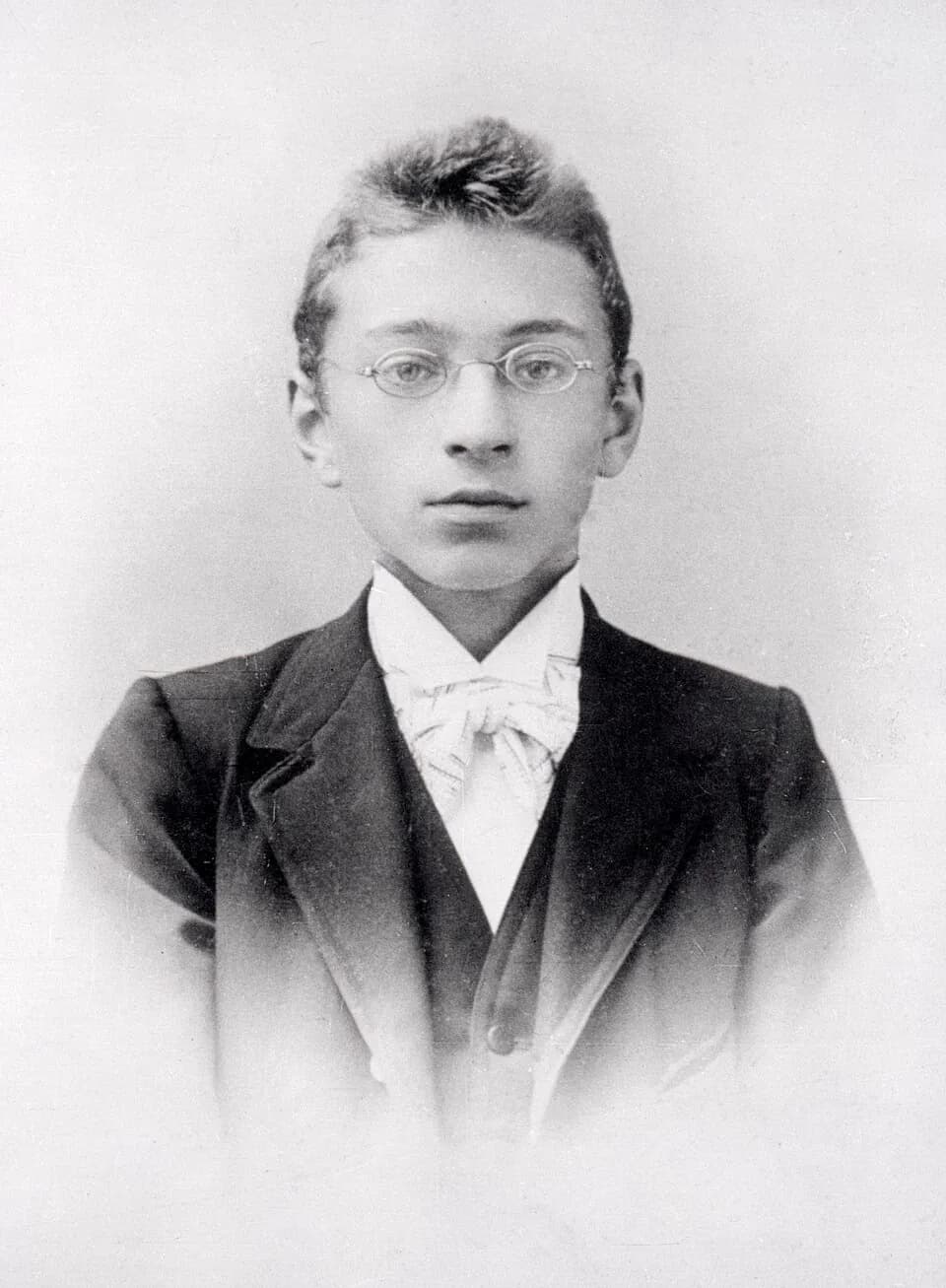
- Patron saint of
- Catholic journalists; Friesland; the International Union of Catholic Esperantists; tobacconists 1
- Feast day
- July 27; an obligatory memorial in the Carmelite Order, and a feast in Germany, the Philippines and Colombia 123
- Arrested
- January 19, 1942 4
- Beatified
- November 3, 1985, by Pope John Paul II 2
Saint Titus Brandsma was a Dutch Carmelite priest, a professor of philosophy and mysticism at Nijmegen and the Dutch bishops' adviser to Catholic journalists, who was arrested in January 1942 for urging Catholic newspapers to refuse Nazi material and died by lethal injection at Dachau that July. 124 Vatican News reported him described at the time of his canonization as a "journalist-martyr of the 20th Century." 5 Pope Francis canonized him on May 15, 2022, and his feast is kept on July 27. 127
A Frisian farm
He was born Anno Sjoerd Brandsma on February 23, 1881, and grew up on his parents' dairy farm near Bolsward, in the Frisian countryside of the northern Netherlands. 14 The family were devout Catholics among mostly Calvinist neighbors, and the Carmelite chronology records that five of the six children entered religious life. 14
At eleven he went to a Franciscan minor seminary, in September 1892. 14 In 1898 he joined the Carmelites at Boxmeer and took the religious name Titus, which was his father's name. 14 Cardinal Willem Eijk, a later Archbishop of Utrecht, describes him as "a frail man, not big," with "weak health his whole life." 6
Priest, scholar and teacher
He was ordained in 1905 and spent the next four years in Rome on a doctorate in philosophy, which he finished in 1909. 14 The Dutch ambassador to the Holy See said in 2022 that the Centro Internazionale Sant'Alberto in Rome, where the symposium before his canonization met, was where he "had lived while studying at the Gregorian University." 5 He also began a project to translate the works of Teresa of Avila into Dutch. 1
Back in the Netherlands he taught school in Oss from 1909, became a head teacher, and helped found several Catholic schools. 4 Franciscan Media counts him among the founders of the Catholic University of Nijmegen, where he became professor of philosophy and of the history of mysticism. 14 The Carmelite chronology says he took up the chair in 1923 and was later rector "for many years"; Cardinal Eijk says he was rector magnificus from 1932 to 1933. 46 He chaired the association of Catholic secondary schools from 1925, and the chronology says his defense of Catholic schools was one of the things that drew the German government's attention to him. 4
He was not remembered chiefly as a scholar. Franciscan Media says he was known "more for his availability to faculty and students than for his academic achievements." 1 Cardinal Eijk calls him "a practical mystic" and "an incredible organizer," who promoted the Frisian language, his mother tongue. 6
Adviser to Catholic journalists
In 1935 the Dutch bishops appointed him their ecclesiastical adviser to Catholic journalists. 24 The Carmelites call him "a noted writer and journalist." 2 He argued for the professional training of journalists and for paying them a just wage, according to the order's chronology. 4 At the 2022 symposium in Rome, a Carmelite who had studied him described him as "a self-made journalist and press scientist" for whom "the role of a journalist was about truth telling and truth loving." 5
He opposed National Socialism before the war and during the occupation, and the Carmelites say he based his stand on the Gospels. 2 Their chronology puts his objection at its view of the human person: people made subservient to an all-powerful strong man and stripped of their creativity. 4 He also defended freedom in education and a free Catholic press. 2
The bishops' letter and the arrest
Germany invaded the Netherlands in 1940. 1 Franciscan Media says the Dutch bishops then sent a letter ordering Catholic editors not to print Nazi propaganda, and that he was arrested in January 1942 while delivering it by hand. 1 The Carmelite chronology says he refused to place Nazi advertisements in the Catholic papers, and Cardinal Eijk tells it the same way: at the instigation of Cardinal Johannes de Jong, he went to the editors with the message, "Do not accept advertisements of the Nazis." 46 The Gestapo found out, Eijk says, and he tried to hide, but not for long. 6
He was arrested on January 19, 1942. 4 According to Vatican News, he was told he could live quietly in a monastery if he announced that Catholic newspapers should publish Nazi propaganda, and he refused. 5
Scheveningen, Amersfoort and Dachau
In Scheveningen prison he wrote seven chapters of a biography of Teresa of Avila. 4 On March 12 he was moved to the camp at Amersfoort, where the chronology says he looked after a sick prisoner, Jan Hoffmann, with little concern for his own suffering. 4 On Good Friday, under cover of a lecture on Dutch literary history, he gave the prisoners a meditation on the mysticism of suffering. 4
He was sentenced to deportation on May 6, held at Kleve from May 16, and sent to Dachau on June 16, 1942. 14 There he was befriended by Brother Raphael Tijhuis, a Carmelite from Mainz who survived and wrote down what they went through. 4 Franciscan Media says that in his short time at Dachau he was known for his kindness and his spiritual support of the other prisoners. 1 Cardinal Eijk says he was beaten and badly mistreated, which broke what health he had. 6
The Carmelite chronology quotes a woman named Tizia who nursed him in his last days: "Whenever you came into the infirmary there was a group of sick people, all stooped and bent by fatigue and pain, standing around Titus' bed." 4
His death
He died on July 26, 1942, at sixty-one, from a lethal injection given in the camp's "hospital." 35 Franciscan Media says his death was the result of the Reich's program of medical experimentation on prisoners. 1 Vatican News says the injection was carbolic acid; Cardinal Eijk says phenol, given by a nurse on a doctor's orders. 56
He gave the nurse who injected him a wooden rosary, according to Franciscan Media, and she later became a Catholic and testified to his holiness. 1 A Dutch human rights ambassador, speaking at the 2022 symposium, said the rosary had been made and given to him by another prisoner who was executed. 5 Cardinal Eijk, telling the same story, says: "Like Jesus forgave the people who killed Him at the Cross, Father Brandsma did the same." 6
John Paul II beatified him as a martyr on November 3, 1985, and Pope Francis canonized him in St. Peter's Square on May 15, 2022, with nine others, among them Charles de Foucauld. 257 Vatican News describes him as killed "in hatred of the faith." 5
What is Saint Titus Brandsma the patron saint of?
Franciscan Media lists Saint Titus Brandsma as a patron of Catholic journalists, of Friesland, of the International Union of Catholic Esperantists, and of tobacconists. 1 The Carmelites add that their provinces in Germany and the Philippines and their general delegation in Colombia have him as their patron. 23
Saint Titus Brandsma's feast day
Saint Titus Brandsma's feast is July 27, the day after his death, as both Franciscan Media and the Carmelites print it. 12 The Carmelites asked for it to be raised from an optional to an obligatory memorial for their whole order, and the Dicastery for Divine Worship agreed by a letter of May 25, 2023; the order's provinces in Germany and the Philippines and its delegation in Colombia keep it as a feast. 23
Praying with Saint Titus Brandsma
Most of his life was ordinary work: teaching school, running committees, translating Teresa, lecturing, advising editors. 14 Cardinal Eijk says there were no visions in it, only "this simple life of prayer, of speaking in your inner soul with Jesus without others hearing it," and that this was what gave him his courage. 6 He was, Eijk says, a martyr "because he was already a saint." 6
What brought him to Dachau was a refusal about newspapers. 15 The sources disagree on whether it was propaganda or advertisements the editors were told to refuse. 146 He was offered a quiet monastery for one public statement and would not give it. 5
In the camps he went on doing what he had done at the university, listening to people and looking after whoever was nearest. 146 The sick gathered around his bed in the infirmary, the woman who nursed him said, because "there was in him something that gave people confidence." 4 He gave his rosary to the nurse who killed him. 1
At the canonization Pope Francis did not single him out, but he said of all ten: "That was how our fellow travellers canonized today lived their holiness," and that holiness "does not consist of a few heroic gestures, but of many small acts of daily love." 7
Saint Titus Brandsma, pray for us.
Sources
- 1."Saint Titus Brandsma," Saint of the Day, July 27, Franciscan Media.
- 2."St. Titus Brandsma, priest and martyr," Order of Carmelites (O.Carm.), General Curia, Rome.
- 3."St. Titus memorial approved as obligatory," Order of Carmelites (O.Carm.), General Curia, Rome, 2023.
- 4."Chronology of His Life," Saint Titus Brandsma, Carmelite, Order of Carmelites (O.Carm.), General Curia, Rome.
- 5."Titus Brandsma: Journalist, martyr, saint of the 20th Century," Vatican News, May 2022.
- 6."Cardinal Eijk on the courage of answering Nazis' hate with God's love," interview with Cardinal Willem Jacobus Eijk, Archbishop of Utrecht, Vatican News, July 2023.
- 7.Pope Francis, Homily at the Holy Mass and Canonization of Blesseds Titus Brandsma and nine others, St. Peter's Square, May 15, 2022.
Saints to turn to next
Others in this collection who are turned to for some of the same things.
- Saint Aelred of Rievaulx1109 - January 12, 1166 (or 1167)PrayerWork and vocationSuffering and illnessStudy and teaching
- Saint Hugh of Grenoble1053 - April 1, 1132Work and vocationCouragePrayerSuffering and illness
- Saint Józef BilczewskiApril 26, 1860 - March 20, 1923Study and teachingWork and vocationCouragePrayer
- Saint Maximus the Confessorc. 580 - August 13, 662CourageSuffering and illnessStudy and teachingPrayer