Saint Theodotus of Ancyra
Martyred at Ancyra, c. 303
- Died with
- Seven virgins: Thecusa, Alexandra, Claudia, Phaina, Euphrasia, Matrona and Julitta, drowned a few days before him 345
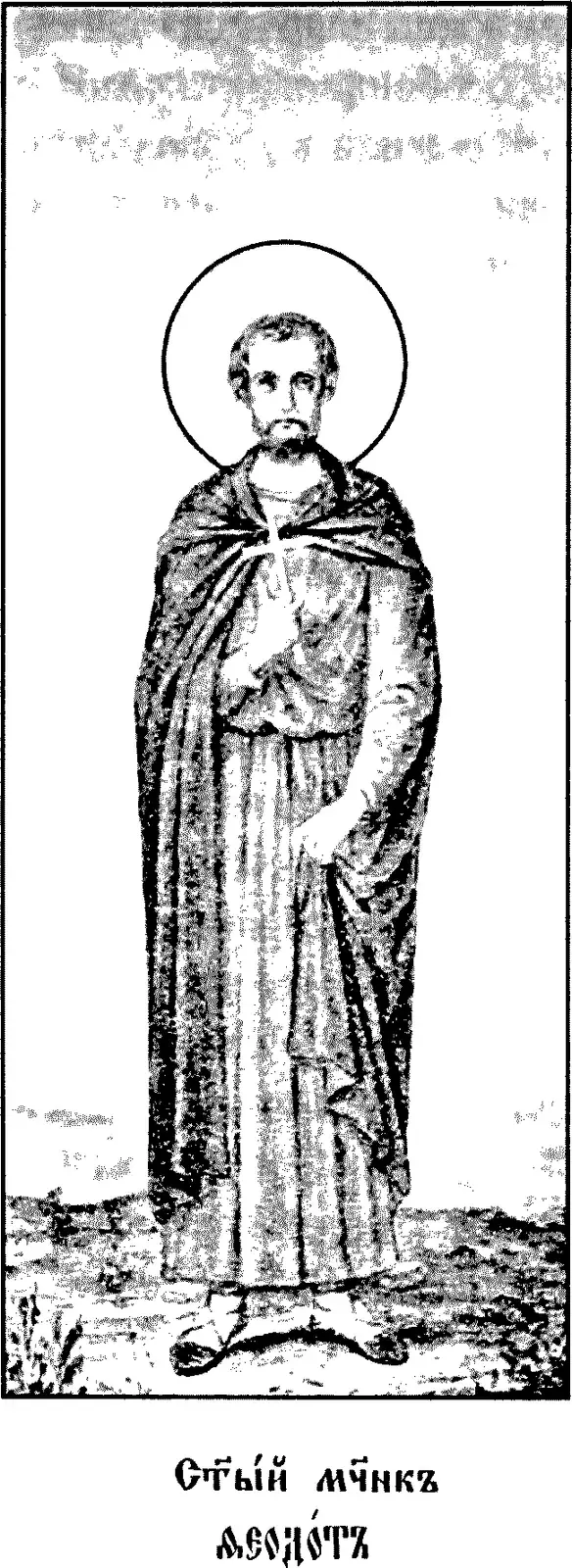
Saint Theodotus of Ancyra was a married innkeeper and wine-seller in what is now Ankara, who during the persecution of Diocletian turned his inn into a storehouse, a hospital and a hidden church for the Christians of the city. 13 After pulling the bodies of seven martyred virgins out of the water where they had been drowned, he was arrested, tortured and beheaded, about the year 303. 14 The Church keeps him and the seven together on May 18. 4
An innkeeper at Ancyra
Everything known of Theodotus comes from one account, the Acts of his martyrdom, written by a man named Nilus who said he had lived with him and seen much of what he describes. 13 Alban Butler, writing in the eighteenth century, took them as authentic. 3 Later scholars were less sure, as the last section of this page explains, and the story here is the Acts' story, told on their word.
Theodotus was a citizen of Ancyra, the capital of the Roman province of Galatia. 13 Butler says he was brought up from childhood by a devout virgin named Thecusa; both Martyrologies call her his aunt. 345 He married, kept an inn and sold wine, and Butler says that, "what is very rare to be found in that profession," he "was just, abstemious, and zealous in the practice of all the duties of religion." 3
The Norwegian bishops' saints database, katolsk.no, puts it another way: under the innkeeper's clothes, so to speak, a bishop was hidden, giving counsel to the wronged, food and drink to the sick and needy, and alms to the poor, and bringing pagans, Jews and dissolute men into the Church through his conversation. 2
An inn in a time of persecution
The edicts of Diocletian, issued at Nicomedia in 303, reached Galatia under a governor whom the 1912 Catholic Encyclopedia calls Theoctenus and Butler Theotecnus. 13 katolsk.no says he had promised the emperor to bring every Christian in the province to apostasy, and began by tearing down the churches and jailing the priests. 2
The governor ordered that all food offered for sale in the city should first be offered to the idols. 13 Theodotus had laid in a large stock of grain and wine, and Butler says he sold it to the Christians at cost, so that they could eat without sacrificing and the altars had pure bread and wine. 3 His trade covered it. In the encyclopedia's words, "his house became a refuge for the Christians, a hospital for the sick, and a place for Divine worship." 1
He visited Christians in prison and buried the bodies of martyrs, though the burial of martyrs was forbidden on pain of death. 23 At Malos, a village the encyclopedia puts about five miles from Ancyra, he recovered the body of the martyr Valens and gave it Christian burial. 13
The ring left at Malos
On that journey, Butler says, Theodotus and some companions stopped near Malos to eat and sent to the village for its priest, Fronto, to bless the meal. 3 Sitting in the open, Theodotus told him the place would be a good one for relics. Fronto answered, in Butler's telling: "Yes, but we must have them before we can think of building a place for their reception." 3 Theodotus told him to build, and that the relics would come. Then he took the ring from his finger and left it with the priest as a pledge. 23
The seven virgins
Back in Ancyra, the governor had seven Christian women brought before him, all of them old; Butler says Thecusa, the eldest, was over seventy. 3 The current Martyrology names them Thecusa, Alexandra, Claudia, Faina, Euphrasia, Matrona and Julitta, and says that the governor first tried to force them into prostitution. 4 Butler says he handed them over to a crowd of young men, and that Thecusa threw herself at the feet of the one who seized her: "My son, what designs can you have on such as us, quite worn out as you see with fasting, sickness, torments, and old age?" 3 The young men wept with them and left them alone. 3
The governor then tried to make them priestesses of Diana and Minerva, and had them carried in open carts at the head of the procession that went each year to wash the goddesses' statues. 3 They refused the crowns and white robes the priestesses offered them, and he had them drowned with stones tied to their necks. 345 The sources do not agree on the water. The Catholic Encyclopedia says the sea; the 1897 Martyrology says a lake; Butler and katolsk.no say a pond; the current Martyrology says a marsh. 12345
Guards were posted by the water so that the bodies could not be taken. 23 According to the Acts, Thecusa appeared to Theodotus in a dream, rebuked him for leaving them to the fish, and warned him to beware of a traitor. 3
The next night, Butler and katolsk.no tell, he went out with a few companions in a storm. 23 Butler reports from the Acts a light in the form of a cross, and a shining armed figure whom the guards fled, though katolsk.no says simply that the guards had left their post to shelter from the rain. 23 The wind drove back the water, they cut the ropes that held the stones, lifted the seven bodies onto horses, and buried them near the church of the Patriarchs. 23
Arrest and death
Polychronius, one of the men who had helped, went to the market in disguise and was recognized, beaten and threatened, and he told where the bodies lay. 23 Butler says he was a relative of Thecusa; katolsk.no that some call him Theodotus's brother. 23 The virgins were dug up and burned. 23 Theodotus could have fled, katolsk.no says, and gave himself up instead, hoping to spare the others. 2
The governor offered him the priesthood of Apollo if he would deny Christ, and when he refused had him racked, torn with iron hooks, his wounds washed with vinegar and burned with torches. 23 His teeth were knocked out with a stone. 23 Walking back to prison, he showed the crowd his wounds. "It is but reasonable," Butler has him say, "that we should offer to Him such sacrifices who was pleased to set us the example, and submit to be sacrificed for us." 3
Five days later he was racked again and laid on red-hot tiles, and then condemned to die by the sword, his body to be burned so that the Christians could not bury it. 23 At the place of execution he told the Christians who had followed him not to weep, and promised to pray for them in heaven. 23 Then he was beheaded. 134
The soldiers set to guard the body that night were joined by Fronto, the priest of Malos, who had come to town with a donkey laden with wine. 23 He shared it, the soldiers drank and slept, and he laid the body on the donkey and let it go. 23 It went home to Malos, where Fronto buried him and kept his word about the ring. 23 The encyclopedia says only that the body "was miraculously brought to Malos," where Fronto buried it and a chapel was built over the grave. 1 katolsk.no calls this perhaps the oldest example of a story often told later, of relics carried home by an animal left to find its own way. 2
Is the story true?
The Catholic Encyclopedia sets out the scholarly history plainly. 1 Thierry Ruinart included the Acts among his "Acta sincera," the genuine acts of the martyrs. 1 Pio Franchi de' Cavalieri, who made a critical edition of them in 1901, first judged them trustworthy and then changed his mind. 1 The Bollandist Hippolyte Delehaye went further: "The kernel of the legend is a tale narrated by Herodotus, while the existence of the hero of the narrative is not vouched for by any historic document." 1 The tale he meant, katolsk.no adds, is the Greek historian's, and Delehaye thought the Acts a moral fable falsely ascribed to an eyewitness; katolsk.no grants that it is better written than most such pieces. 2
katolsk.no says the names entered the Roman Martyrology only when Cardinal Caesar Baronius revised it at the end of the sixteenth century, though they were long found in Byzantine calendars. 2 It also warns that another seven virgins with almost the same names, martyred at Amisus in Pontus and kept on March 20, are a different group. 2
What is Saint Theodotus the patron saint of?
Saint Theodotus's feast day
Saint Theodotus's feast day is May 18, which he shares with the seven virgins. 4 The current Roman Martyrology, as the Italian bishops print it, commemorates on that day at Ankara the holy martyrs Theodotus and Thecusa, his aunt, with Alexandra, Claudia, Faina, Euphrasia, Matrona and Julitta, virgins. 4 The 1897 Martyrology gives the same day and the same names, and Butler and katolsk.no agree. 235
The Catholic Encyclopedia adds that Theodotus has a feast of his own on June 7 in the Eastern calendars, and katolsk.no mentions June 7 as well. 12
Praying with Saint Theodotus
Most of what Theodotus did in the Acts was ordinary work done at the wrong time. 13 He sold bread and wine, as he always had, to people who could not buy it anywhere else without sacrificing to idols, and he let the inn be used for Mass. 13
The seven women he buried were old, and the governor's first plan for them was humiliation. 34 Thecusa answered it by pointing to her gray hair. 3 The Acts remember her as the one who raised him, and they have her come back in a dream to ask that the bodies not be left in the water. 3
His end came because a friend broke under the whip and told where the bodies were. 23 Butler calls Polychronius "weak and base"; katolsk.no says the pain overwhelmed and confused him. 23 Both record that Theodotus then went to the court himself. 23
Whether he lived as the Acts say is a question the Church's own scholars have answered differently. 12 The Martyrology still keeps his name, and the virgins', on May 18. 4
Saint Theodotus of Ancyra, pray for us.
Sources
- 1.Francis Mershman, "St. Theodotus of Ancyra," The Catholic Encyclopedia, Vol. 14 (New York: Robert Appleton Company, 1912).
- 2."Den hellige Theodotus av Ancyra og syv ledsagere (d. 304)," Den katolske kirke, the saints database of the Catholic Church in Norway, katolsk.no (in Norwegian).
- 3.Alban Butler, "St. Theodotus, Vintner, and Seven Virgins, Martyrs," May 18, The Lives of the Fathers, Martyrs, and Other Principal Saints, Vol. V (Derby: Richardson and Son), via the Internet Archive.
- 4.Roman Martyrology, entry for May 18, "Santi martiri Teódoto e Tecúsa, Alessandra, Claudia, Faina, Eufrasia, Matrona e Giulitta," Santo del giorno, Conferenza Episcopale Italiana (in Italian).
- 5.The Roman Martyrology, May 18 (Baltimore: John Murphy Company, 1897), Internet Archive.
Saints to turn to next
Others in this collection who are turned to for some of the same things.
- Saint Andrew Kim TaegonAugust 21, 1821 - September 16, 1846CourageSuffering and illnessWork and vocation
- Saint Blandina and the Martyrs of Lyond. 177CourageSuffering and illnessWork and vocation
- Saints Cosmas and DamianMartyred c. 287, or in the early fourth centuryWork and vocationSuffering and illnessCourage
- Saint Damien of MolokaiJanuary 3, 1840 - April 15, 1889Suffering and illnessCourageWork and vocation