Saint Ranieri of Pisa
1117 - 1161
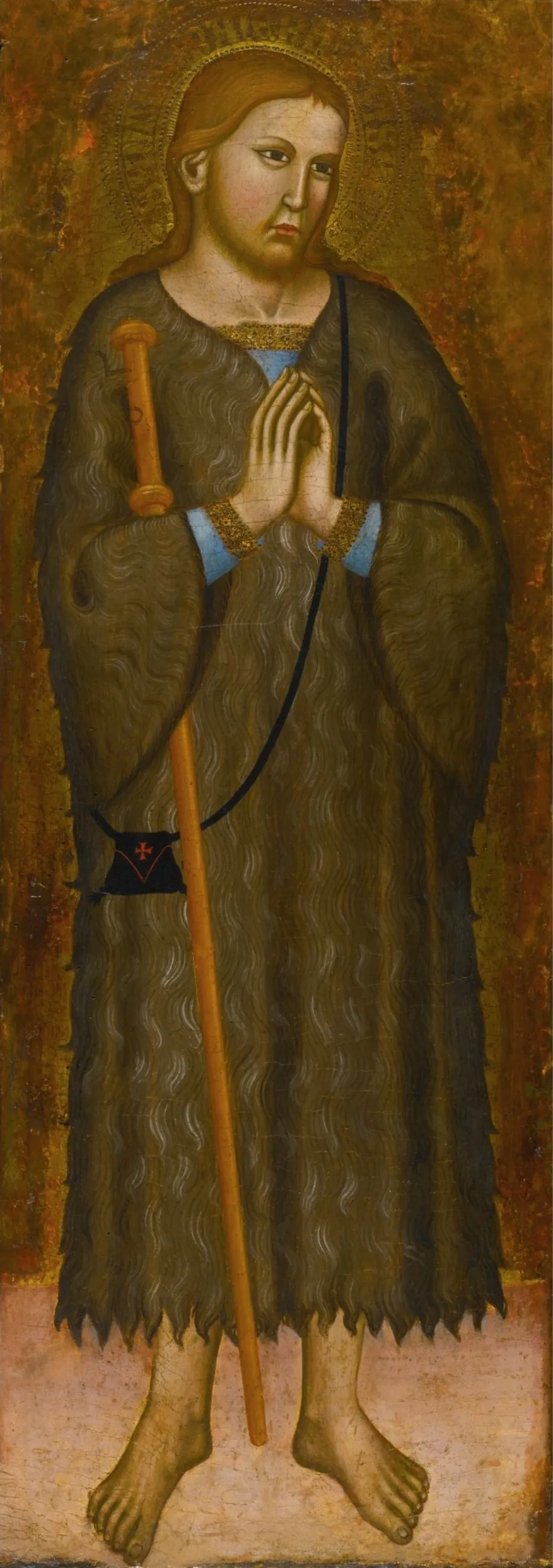
- Born
- Pisa, 1117, the only son of the merchant Gandulfo Scacceri 3
Saint Ranieri of Pisa was a rich merchant's son who spent his youth playing music, gave it all up after meeting a hermit, and lived for years as a beggar and penitent in the Holy Land before coming home to preach. 35 He died in 1161 and was never a priest or a monk. 37 The Roman Martyrology calls him simply a poor man and a pilgrim for Christ. 1 Pisa has kept him as its principal patron since 1632. 3
A merchant's son in a rich city
Pisa in the twelfth century was at the height of its power, as Archbishop Saverio Cannistrà reminded his people on the feast in 2025: the center of a commercial empire, with a fleet to be feared. 4 Ranieri belonged to that world. Catholic.net gives his birth there in 1117 and names his parents: Gandulfo Scacceri, a prosperous merchant, and Mingarda, of the noble Buzzacherini family. 3 He was their only son, and they wanted him well educated, so they put him in the care of a priest, Don Enrico of San Martino. 3
Ranieri had other plans. He had a gift for music, played the lyre and sang, and preferred amusement and idleness to his books; neither his parents nor his tutor could do anything with him. 3 Notre Dame's account puts it more bluntly: he spent his time as a young man "eating and drinking and socializing," and as a musician "played through the night at parties." 7 Archbishop Giovanni Paolo Benotto, preaching at Vespers on his feast in 2021, was gentler about it. It was, he said, the ordinary life of the well-off young men of the time, the kind of life that skims across the surface of things. 5
The hermit and the tears
At nineteen, Catholic.net says, his life changed. He met Alberto, a hermit living at the monastery of San Vito in Pisa, listened to his advice and took him as his model. 3 Benotto tells the same meeting and stresses what came out of it. The liturgical texts for Ranieri's feast speak again and again of weeping, and the old Latin hymns describe his tears at his conversion. 5 Benotto read them as more than remorse. Ranieri saw how far he was from what God wanted of him, and the tears that followed were tears of joy and of a life made new. 5
Notre Dame tells the conversion a little differently: performing for a crowd in a castle, Ranieri met a monk from a nearby monastery and was "captivated by the witness of his life of prayer and dedication to God." 7 In that version he went on to build a successful business trading between ports, as his father had taught him, and it was on his voyages that he reached the Holy Land. 7 Cannistrà's homily agrees on that much: Ranieri turned a business trip into a pilgrimage. 4
Beside the Holy Sepulchre
About 1140, four years after meeting Alberto, Catholic.net says, he sailed for the Holy Land, meaning to follow Christ in the places where Christ had lived and died. 3 He begged for everything he ate, ate only twice a week, and went again and again to the holy places, lingering most of all at Calvary near the Holy Sepulchre. 3 There a priest gave him the shaggy hair tunic of a hermit, the garment in which art has shown him ever since. 3 Notre Dame adds that he gave away even his shoes, that his friends mocked him and his parents feared he had lost his mind. 7
Cannistrà described those years as a pilgrimage through the mysteries of Christ's life more than through a map, from the nativity to the temptation in the desert to the Transfiguration and finally to the death and resurrection, and he placed Ranieri at the tomb of Christ, weeping like Mary Magdalene. 4 What he wept for, the archbishop said, was the Church, which had lost its way in the world. He stayed seven long years, until he heard God tell him that he had made satisfaction for his Christian people. 4
Seven is also the figure Notre Dame gives. 7 Catholic.net gives thirteen, and has him come home in 1153. 3
Home to Pisa
He came back with a reputation for holiness and for the miracles worked through him abroad, and the canons of the cathedral and the people of Pisa received him as someone they had already heard about. 3 He lived for a year as an oblate at the monastery of San Andrea in Kinzica, then moved to San Vito, where he had first met Alberto. 3 With the clergy's permission he preached, still a layman, and brought many people to conversion. 3 Notre Dame notes that "he never joined a monastery, though he lived among monks for much of his life." 7
Stories of wonders gathered around him. Notre Dame tells that he tamed wild beasts with the sign of the cross, multiplied the loaves of a woman who fed the poor, and healed many of the sick with holy water. 7 Benotto, preaching, chose a plainer summary: the man who came back to Pisa became a reference point for everyone in the city, a living icon of Christ. 5 John Paul II, speaking to the people of Pisa in 1989, said that in difficult times Ranieri passed among them helping the needy and announcing peace, in a city he loved intensely. 6
He died on June 17, 1161, according to Catholic.net, and was acclaimed a saint at once. 3 Notre Dame, and the Martyrology line Catholic.net prints above its account, give the year as 1160. 37
What is Saint Ranieri the patron saint of?
Saint Ranieri is the patron saint of the city and the Archdiocese of Pisa. 34 In 1632 the archbishop, the clergy and the magistrates of Pisa, with the approval of the Sacred Congregation of Rites, chose him as principal patron of both. 3 Cannistrà, in 2025, called the choice entirely logical: the faithful of Pisa had understood that a humble, poor man, whose story was much like that of any other Pisan, had been given by God the mission of bringing the Gospel back to his own Church. 4
In 1689, Catholic.net says, his remains were solemnly placed above the high altar of the cathedral. 3 The 1911 Catholic Encyclopedia lists "the urn of St. Ranieri" among the cathedral's notable objects, beside its pulpit and the lamp under which Galileo studied the pendulum; Notre Dame says the relics rest "in the reliquary chapel." 27
Saint Ranieri's feast day
Saint Ranieri's feast day is June 17, the day he died. 3 The Roman Martyrology enters him on that date. 1 Catholic.net says the day was made a holy day of obligation in Pisa from the start, and the archbishop of Pisa celebrates it in the cathedral; Cannistrà preached there on June 17, 2025, and Benotto at Vespers for the feast in 2021. 345
Praying with Saint Ranieri
The collect of his feast, as Cannistrà prayed it in 2025, calls him a shining example of penance and of prayer, and the archbishop agreed that both are obvious in his life. 4 What he wanted his people to see was where the penance and prayer came from and where they led. Ranieri did what the rich young man of the Gospel could not, Cannistrà said, not because he was more virtuous or more ascetic, but because he had already found the treasure in heaven, which is to know oneself loved by God. 4
Benotto kept returning to the tears. He warned his listeners about the faith that stays on the surface, that does what everyone else does and justifies it, and that moves nobody. 5 Ranieri's tears, as the hymns remember them, were what it looked like when that surface broke: grief for a life lived carelessly, and then joy. 5
The life itself is simple to describe. A young man with money and a gift for music walked away from both, begged his bread in Jerusalem for years, and then came back to the same streets to share, in Cannistrà's words, what he had come to know of Jesus. 34 More than eight centuries later, John Paul II asked him to bless every generous effort in the city he had loved, and for which, the pope said, he has not stopped praying. 6
Saint Ranieri of Pisa, pray for us.
Sources
- 1.Roman Martyrology, entry for June 17, "San Raniero, eremita," as printed in "Santo del giorno," Conferenza Episcopale Italiana (in Italian).
- 2.Umberto Benigni, "Pisa," The Catholic Encyclopedia, Vol. 12 (New York: Robert Appleton Company, 1911).
- 3."Raniero de Pisa, Santo," Catholic.net (in Spanish).
- 4.Saverio Cannistrà, Archbishop of Pisa, "Omelia di San Ranieri 2025," Cathedral of Pisa, June 17, 2025, Arcidiocesi di Pisa (in Italian).
- 5.Giovanni Paolo Benotto, Archbishop of Pisa, homily at Vespers of Saint Ranieri, June 17, 2021, Arcidiocesi di Pisa (in Italian).
- 6.John Paul II, Address to the citizens of Pisa, September 22, 1989 (in Italian).
- 7."St. Rainerius," Saints, Campus Ministry, University of Notre Dame.
Saints to turn to next
Others in this collection who are turned to for some of the same things.
- Saint Aidan of Lindisfarnec. 590 - August 31, 651Poverty and simplicityPrayerConversion
- Saint Bernard of CorleoneFebruary 6, 1605 - January 12, 1667ConversionPrayerPoverty and simplicity
- Saint Charles de FoucauldSeptember 15, 1858 - December 1, 1916ConversionPrayerPoverty and simplicity
- Saint Francis of Assisic. 1181 - October 3, 1226Poverty and simplicityConversionPrayer