Saint Peter Julian Eymard
February 4, 1811 - August 1, 1868
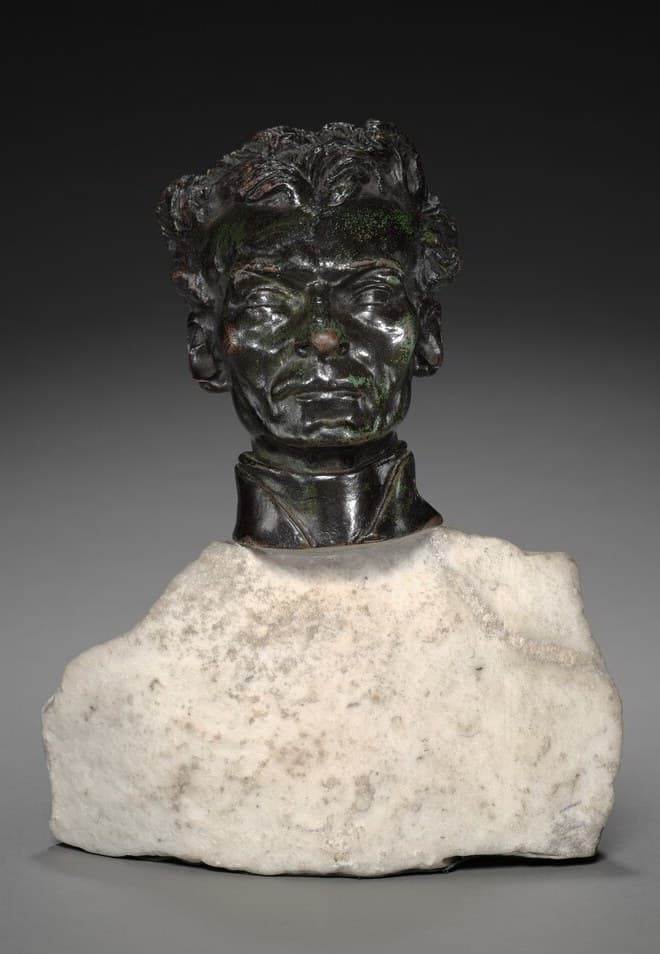
- Founded
- The Congregation of the Blessed Sacrament, Paris, 1856 23; the Servants of the Blessed Sacrament, with Marguerite Guillot 13
- Called
- The Apostle of the Eucharist 2
Saint Peter Julian Eymard was a French priest who founded the Congregation of the Blessed Sacrament, a community of men whose first work was to keep Christ in the Eucharist exposed and adored. 12 Vatican News calls him the Apostle of the Eucharist and the inspirer of the Eucharistic Congresses. 2 He began as a priest of the Diocese of Grenoble, became a Marist, and in middle age founded something new, working against poverty, illness and a long struggle for approval. 3 John XXIII canonized him in 1962. 2
A sickly boy from La Mure
Pierre-Julien Eymard was born on February 4, 1811, at La Mure d'Isère in the Diocese of Grenoble, in southeastern France. 123 Vatican News says he was the last of ten children, eight of whom died in infancy, and that his own health was poor too, poor enough that he had to give up a wish to be a missionary. 2
The Eucharist was there from the start. The 1913 Catholic Encyclopedia says that from early childhood he showed "most tender devotion to the Blessed Sacrament". 1 Vatican News places his decision to become a priest on the day of his First Communion. 2
His father opposed it firmly. 23 The encyclopedia records a first attempt at religious life in 1829, when he entered the novitiate of the Oblates of Mary and was sent home by illness. 1 He was twenty before he entered the major seminary at Grenoble, and he was ordained a priest on July 20, 1834. 12 Franciscan Media lists what he had to work through on the way: poverty, his father's opposition, serious illness, and "a Jansenistic overemphasis on sin". 3
A Marist preaching the Forty Hours
He served first as a diocesan priest, and in 1839 he joined the Marist Fathers, then a new congregation in Lyon. 123 Vatican News and Franciscan Media both say he became a provincial leader among the Marists. 23 The encyclopedia, whose account of these years runs the two congregations together, says he was appointed Provincial "of the Oblates of Mary" in 1845. 1
These were the years in which the Eucharist moved to the middle of everything. Franciscan Media says his devotion deepened especially through preaching the Forty Hours in parish after parish. 3 The encyclopedia says his whole spiritual life "was centred round the Eucharist": it was the subject of his sermons, the object of his prayer, and the thing he taught those he directed to fix their attention on. 1 Vatican News singles out a Eucharistic procession in 1845, in which, carrying the Blessed Sacrament, he asked God for the apostolic zeal of Saint Paul. 2
Franciscan Media notes a change in the devotion itself. At first he was drawn by the idea of reparation for indifference toward the Eucharist; over time he was attracted to "a more positive spirituality of Christ-centered love." 3
The Congregation of the Blessed Sacrament
In 1849, as Marist provincial, he went to Paris. 2 There, Vatican News says, he met members of the Nocturnal Adoration movement, Marie-Thérèse Dubouche, foundress of the Sisters of Adoration and Reparation, and a diocesan priest, Fr. Raymond de Cuers. 2 In January 1851, the encyclopedia says, he made a pilgrimage to the shrine of Our Lady of Fourvière and there promised Mary that he would give his life to founding a congregation of priests whose chief duty would be to adore the Blessed Sacrament. 1
Franciscan Media and Vatican News date the founding of the Congregation of the Blessed Sacrament to 1856, Vatican News to May of that year, with Fr. de Cuers beside him. 23 The encyclopedia tells it as a small house in Paris shared with a single companion, where on January 6, 1857, the Blessed Sacrament was exposed and "the nascent community of two members" began adoration under their rule. 1 Pius IX blessed the work in a brief that same year. 1
It was not easy. Franciscan Media counts the difficulty of getting first diocesan and then papal approval among the trials of his life. 3 Not until 1862, the encyclopedia says, did he have enough members to open a regular novitiate; after that the congregation spread quickly, and by the time the encyclopedia was written it had houses in Rome, Belgium, Holland, Spain, Canada, the United States and South America. 1
The men of the community alternated between active apostolic work and contemplating Christ in the Eucharist. 3 For Eymard, Vatican News says, adoration was the heart of the charity he did among the poor of the Paris suburbs and toward aged priests and priests in difficulty. 2 He also prepared adults and young workers for their First Communion. 2
The Servants, the League, and the books
With Marguerite Guillot he founded a women's congregation, the Servants of the Blessed Sacrament. 23 The encyclopedia dates it to 1858 and describes the sisters as cloistered women who keep perpetual adoration in their convents. 1 He also founded the Priests' Eucharistic League, and the encyclopedia credits him with the Archconfraternity of the Blessed Sacrament for lay people. 12
Vatican News says he insisted that the celebration of the Eucharist belonged at the center of every Christian life, defended the Roman rite, and urged frequent attendance at Mass. 2 It quotes his book on the Blessed Sacrament: "Society dies when it no longer has a center of truth and charity, when it no longer has family life." 2 His writings were gathered into four volumes, one of them translated into English as The Real Presence, and the encyclopedia notes that they had received the approval of the Holy See. 1
Death at fifty-seven
He died at La Mure, where he was born, on August 1, 1868, at fifty-seven. 12 Vatican News says his health had been worn down by every kind of difficulty, though he never lost his apostolic zeal. 2
He was declared Venerable on August 11, 1908. 1 Pius XI beatified him in 1925, and John XXIII canonized him in 1962. 23 Franciscan Media places the canonization one day after the first session of the Second Vatican Council ended. 3 Forty-six years later, at Lourdes, Benedict XVI quoted him to a crowd gathered for the Blessed Sacrament procession: "The holy Eucharist is Jesus Christ, past, present and future." 4
What is Saint Peter Julian Eymard the patron saint of?
None of the sources consulted for this profile names a patronage for Saint Peter Julian Eymard, so this page does not claim one. 123 What they agree on is the work he gave his life to: adoration of Christ in the Blessed Sacrament, and the congregations and associations he founded to carry it on. 123
Saint Peter Julian Eymard's feast day
Vatican News remembers Saint Peter Julian Eymard on August 2 each year, the day after his death. 2 In the United States the bishops' liturgical calendar lists him on August 2 as an optional memorial, shared with Saint Eusebius of Vercelli. 5 Franciscan Media runs him as its Saint of the Day for August 3. 3
Praying with Saint Peter Julian Eymard
Vatican News opens his story with words of his own: "I have always sought remedies for the universal indifference that afflicts so many people, and I have found only one: the Eucharist, love for Jesus in the Eucharist." 2 He was not describing a feeling. He was describing a diagnosis, and he spent the second half of his life building houses where the remedy would be kept exposed day and night.
His vocation took a long time to arrive at its final form. He was refused by his father, sent home by illness, ordained for a diocese, received by the Marists, made a provincial, and only in his mid-forties set out to found the community he is remembered for. 123 Nothing in the sources suggests the earlier stages were wasted. The Forty Hours he preached as a Marist are where Franciscan Media locates the deepening of the devotion that later became a congregation. 3
He also changed his mind about the devotion itself. Franciscan Media describes a man who began with reparation for neglect and moved toward a spirituality of love, and who had to work free of an overemphasis on sin to get there. 3 That is a slower and less tidy story than a founder who knew from the start, and the sources tell it that way.
For him adoration did not end at the altar rail. The same Paris years that produced the congregation produced First Communion classes for young workers and care for old and struggling priests, and Vatican News treats these as one work rather than two. 2 Benedict XVI took his line about Jesus Christ "past, present and future" and spoke it over a crowd at Lourdes, some of whom, he said, could not yet receive the Sacrament but could still contemplate it. 4
Saint Peter Julian Eymard, pray for us.
Sources
- 1.Arthur Letellier, "Venerable Pierre-Julien Eymard," The Catholic Encyclopedia, vol. 5 (New York: Robert Appleton Company, 1909).
- 2."St. Peter Julian Eymard, priest founder of the Sacramentini," Saint of the Day, Vatican News.
- 3."Saint Peter Julian Eymard," Saint of the Day, Franciscan Media.
- 4.Benedict XVI, Meditation during the Blessed Sacrament Procession in the Prairie, Lourdes, September 14, 2008.
- 5.Liturgical Calendar for the Dioceses of the United States of America 2027, United States Conference of Catholic Bishops, Secretariat of Divine Worship.
Saints to turn to next
Others in this collection who are turned to for some of the same things.