Saint Magdalene of Canossa
March 1, 1774 - April 10, 1835
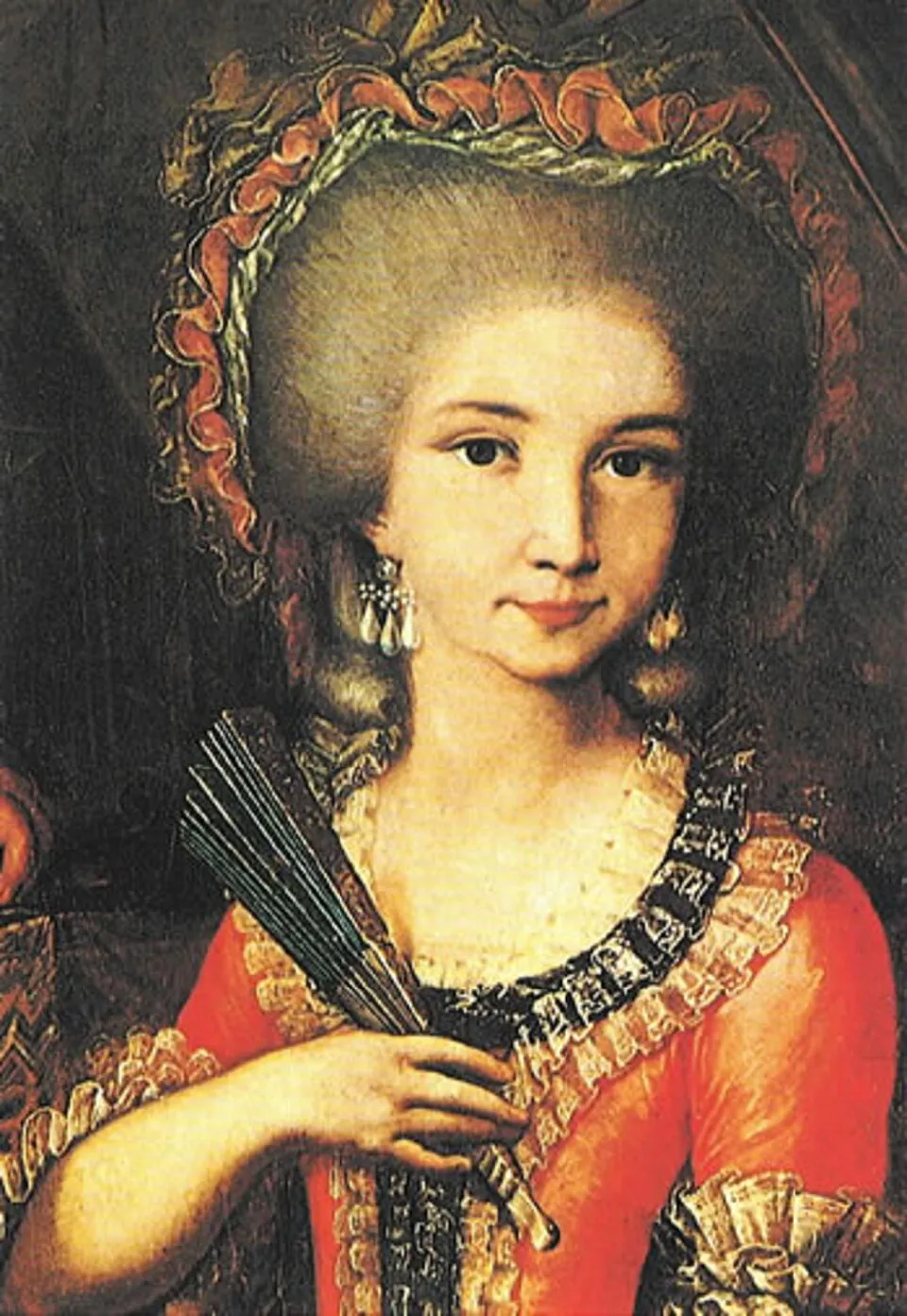
- Founded
- The Daughters of Charity (Canossian Sisters), Verona, 1808; the Sons of Charity, Venice, 1831 12
- Rule approved
- December 23, 1828, by Pope Leo XII, with the brief Si Nobis 1
- Died
- April 10, 1835, in Verona, aged 61 1
Saint Magdalene of Canossa was a noblewoman of Verona who twice tried to become a Carmelite nun, was sent home both times, ran her family's estate for years, and in 1808 walked out of the family palace to open a school for poor girls in the poorest district of the city. 12 The sisters who joined her became the Canossian Daughters of Charity. 2 She died on April 10, 1835, and April 10 is her feast. 14
Palazzo Canossa
She was born in Verona on March 1, 1774, in the palace of the Marquises of Canossa. 12 The Holy See's biography calls the family "noble and wealthy" and says she was the third of six children. 1 Vatican News adds that she descended from the famous Matilda of Canossa and that the palace looked out on the river Adige. 3
The childhood was not a happy one. Her father, the Marquis Ottavio, died in 1779, when she was five. 23 Two years later her mother remarried and left the children behind in the palace. 23 Magdalene and her sister Laura were handed to a French governess, whom Vatican News describes as severe, unable to understand the girl, and too hard on her. 23
Then she fell gravely ill. The Canossians date the illness to 1788; Vatican News says she was fifteen and lists a mysterious fever, a violent sciatica and a bad case of smallpox, which left her with chronic asthma and a painful contraction in her arms that grew worse with age. 23 Both sources say the wish to give herself to God came out of that convalescence. 23
Two attempts at Carmel
At seventeen she planned to consecrate her life to God, and in the words of the Vatican biography she "twice tried her vocation at a Carmel." 1 The Canossian timeline dates the two stays to 1791 and 1792, with the Discalced Carmelite nuns of Verona and then of Conegliano. 2 According to Vatican News each ended within a few months, with Magdalene judged unsuited to the enclosed life and sent home. 3
Vatican News preserves what the prioress in Verona wrote to her afterward: that if God had plainly shown he did not want her as a Carmelite, he was not for that reason refusing her as his bride. The prioress also recommended a new spiritual director, who urged her toward a service of charity in her own family and in the world. 3 Even while she had longed for the convent, the same account says, she had been held back by the thought of the poor who crowded the entrance hall of her father's house and whom she helped. 3
Running the house
So she went home, and home was a great deal of work. In 1793, at her uncle Gerolamo's request, she took over the direction of the Canossa household. 2 The Vatican biography says she went on with life at the palace "shouldering the burden of running her family's large estate," while she "nurtured her true vocation in the depth of her heart." 1 In 1796, as French troops entered Verona, she took refuge with her family in Venice. 2
Verona had been marked by the aftermath of the French Revolution, by foreign occupation and by an uprising, and the Vatican biography says she found the poor in its suburbs "hungry for food, instruction, understanding and the Word of God." 1 Vatican News records a first step in 1799, when she took two girls in off the street and settled them for the time being in an apartment in the rough San Zeno quarter. 3
Vatican News also tells a story the other two sources leave out. In 1804 Napoleon Bonaparte, passing through Verona, was a guest at Palazzo Canossa. He came to know Magdalene and her zeal, thought well of her, and obtained for her a former convent of Augustinian nuns, which became her first house. 3
The Daughters of Charity
In 1808, the Vatican biography says, she "overcame her family's opposition and left Canossa Palace once and for all" to begin her work in the poorest district of Verona. 1 The Canossians give the day as May 8 and the form it took: a school for poor girls. 2 A second community opened in Venice in 1812, where the sisters began visiting hospitals, and houses followed in Milan, Bergamo and Trent. 12
The Vatican biography lists five works she set her sisters to. Charity schools came first, then catechesis, "with special attention to those most ignorant of the Faith." The sisters supported women patients in the hospitals. They ran residential courses "to train young teachers for rural areas." And every year they gave the Spiritual Exercises to ladies of the nobility, to deepen their faith and draw them into works of charity; later these were opened to anyone who wanted them. 1 Vatican News places the first seminary for country schoolmistresses at Bergamo. 3
She did not want a grim house. Vatican News says every kind of sadness and melancholy was banished from the congregation and that she counseled a quiet abandonment to the will of God in place of excessive rigor. It also reports the nickname her determination earned her, which comes out in English as Napoleon in a skirt. 3
Approval came in stages, and the sources date it differently. Vatican News says Pius VII approved the congregation in 1816. 3 The Vatican biography says the Institute received ecclesiastical approval in its several dioceses between 1819 and 1820, and that Pope Leo XII approved the Rule with the brief Si Nobis on December 23, 1828. 1 The Canossians add that an order of Secular Tertiaries was approved in 1823. 2 Vatican News describes it as open to married women and widows and occupied mainly with training nurses and teachers. 3
The Sons of Charity
From the start she had planned a branch for men. Attempts to begin it with Antonio Rosmini and with Antonio Provolo came to nothing. 1 Near the end of her life she managed it: on May 23, 1831, in Venice, she opened the first Oratory of the Sons of Charity, "for the Christian formation of boys and men," and entrusted it to a Venetian priest, Francesco Luzzo, with two laymen from Bergamo, Giuseppe Carsana and Benedetto Belloni. 1
April 10, 1835
Her last years brought more frequent attacks of asthma and severe pain in her legs and arms. Vatican News says the cell she lived in was bare and had no kneeler; the steps under the window, she said, were enough to pray on. 3
She died in Verona on April 10, 1835, at sixty-one, "surrounded by her Daughters." It was, the Vatican biography notes, the Friday of Passion Week. 1 Vatican News gives the scene as it has been handed down. She asked them to hold her on her feet so that she could say three Hail Marys to Our Lady of Sorrows, to whom she was especially devoted. At the third she lifted her arms with a cry of joy, joined her hands, and let her head fall on a sister's shoulder. 3
The Vatican biography sums up what she left in a line from her letters: "Above all make Jesus Christ known!" 1 Her Daughters left for the Far East in 1860. 1 Pope Pius XII beatified her in 1941, and Pope John Paul II canonized her in 1988. 23
What is Saint Magdalene of Canossa the patron saint of?
None of the sources read for this page names Saint Magdalene of Canossa as patron of any group, place or cause, and the page does not supply one. 123 The Roman Martyrology remembers her for giving up her inheritance to follow Christ and for founding two institutes for the Christian formation of the young. 4
Saint Magdalene of Canossa's feast day
Praying with Saint Magdalene of Canossa
Her vocation came by subtraction. She wanted Carmel and was told no, twice, and the Vatican biography says she set out on the paths that followed "tentatively." 1 Some sixteen years passed between the first Carmel and the school in Verona. 12
Those years were spent running an estate and a household that her uncle had asked her to take on. 12 The biography does not treat them as wasted. It says she carried out her daily tasks "with complete dedication" and that the Spirit "gradually moulded her heart" while she did. 1
She was never well. The asthma and the pain in her arms dated from her teens and got worse, and the congregation she founded was told to be cheerful. 3
The Vatican biography says what she left the palace to do: to serve "the neediest persons with the heart of Christ." 1 The work itself was plain: schools, catechism, hospital wards, training country teachers. 1
Saint Magdalene of Canossa, pray for us.
Sources
- 1."Magdalena of Canossa (1774-1835)," biography, the Holy See (vatican.va).
- 2."Saint Magdalene of Canossa," Canossian Daughters of Charity (Figlie della Carità Canossiane).
- 3."Santa Maddalena di Canossa, vergine, fondatrice dei Figli e delle Figlie di Carità," Santo del giorno, 10 aprile, Vatican News (in Italian).
- 4.Roman Martyrology, April 10, as printed in "Santo del giorno," Conferenza Episcopale Italiana (in Italian).
Saints to turn to next
Others in this collection who are turned to for some of the same things.
- Saint Agnes of Bohemiac. 1200-1205 - March 1281 or 1282Poverty and simplicityDiscernment
- Saint Albert ChmielowskiAugust 20, 1845 - December 25, 1916Poverty and simplicityDiscernment
- Saint Alexander Sauli1533 or 1534 - October 11, 1592Poverty and simplicityStudy and teaching
- Saint Angela MericiMarch 21, 1474 - January 27, 1540Study and teachingDiscernment