Saint Laurence O'Toole
c. 1128 - November 14, 1180
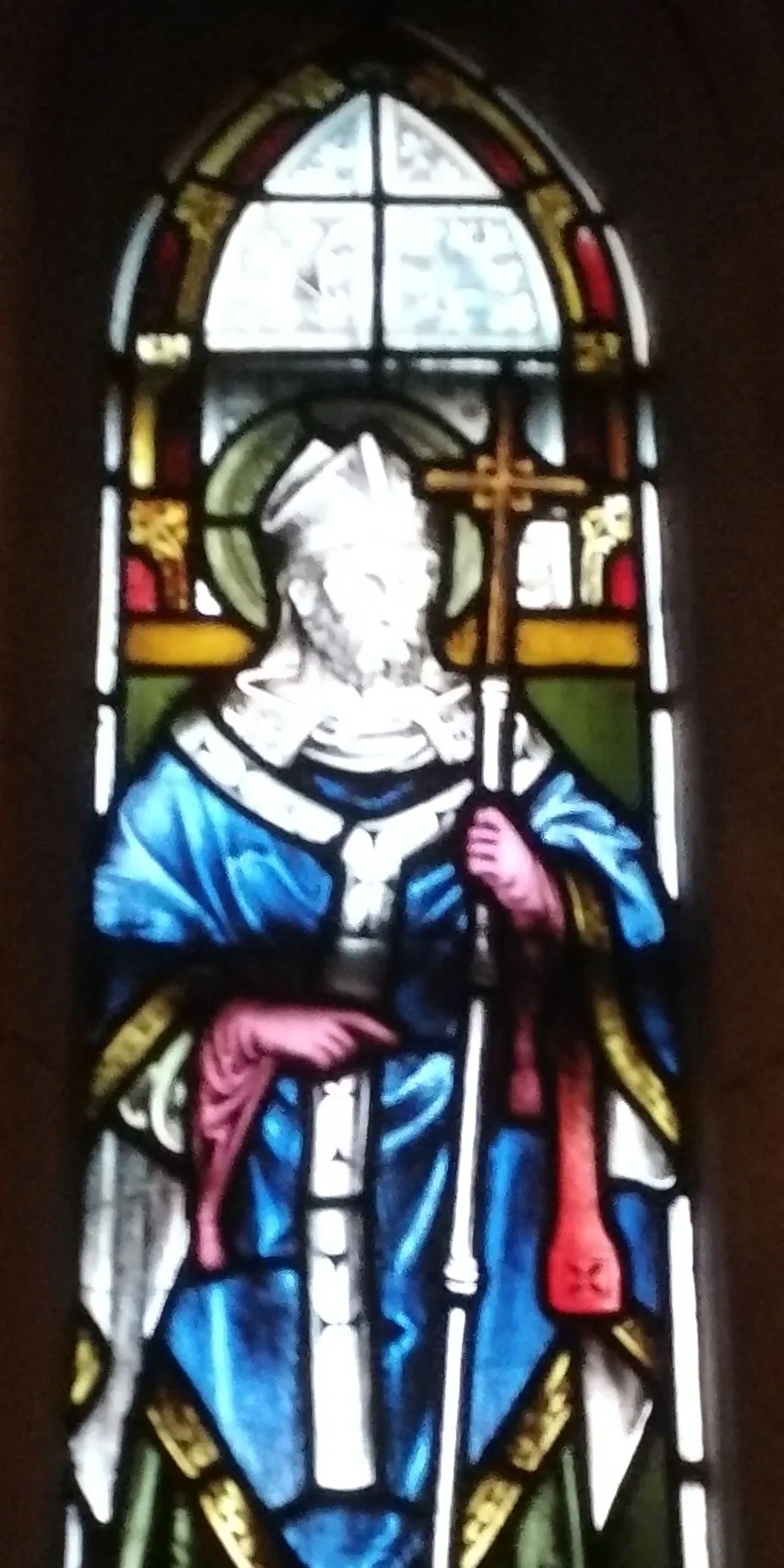
- Archbishop of Dublin
- Chosen after October 8, 1161; consecrated early in 1162 at Christ Church Cathedral 12
- Patron of
- The Archdiocese of Dublin 2
Saint Laurence O'Toole was the Irish abbot of Glendalough who became Archbishop of Dublin in 1162 and spent the last ten years of his life trying to keep the peace between the Irish and the Normans. 12 He was a hostage at ten, a monk by choice, and he died in 1180 at Eu in Normandy, having followed Henry II across the sea to plead for an Irish king. 12 FaithND calls him "a great force for peace during a tumultuous time." 4
A king's son held hostage
He was born Lorcán Ua Tuathail about 1128, in what is now County Kildare. 1 The Archdiocese of Dublin and Kevin Doran, writing as parish priest of Glendalough, both name the place as Castledermot. 23 His father was chief of Hy Murray, by the 1913 Catholic Encyclopedia's account, and his mother came from the O'Byrnes. 1 The archdiocese and Doran call the father Maurice O'Toole, King of Hy Murray; FaithND calls him Murtagh, chieftain of the Murray clan. 234
At ten he was handed over as a hostage to Dermot McMurrough, King of Leinster. 12 The archdiocese says Dermot treated him "with great harshness": the boy was sent in chains to a remote place, ill-housed, ill-clothed and ill-fed, and for two years "learned what it was to experience real poverty and oppression." 2
The sources differ on how it ended. The archdiocese says Dermot was forced to release him to the monastery at Glendalough, where his father could collect him. 2 FaithND says the father threatened vengeance unless the boy was handed to the Bishop of Glendalough, and that when his father proposed casting lots to choose which of his sons would serve the Church, Laurence laughed and said he had already decided. 4 The encyclopedia says simply that in 1140 he obtained permission to enter the monastic school of Glendalough. 1
Dermot later married Laurence's sister Mor. Though his character "has been painted in dark colours by the native annalists," the encyclopedia calls him a great friend to the Church. 1
Abbot of Glendalough
He studied in the valley for thirteen years, the encyclopedia says, and was known for his piety and learning. 1 When Abbot Dunlaing died early in 1154 the community chose him unanimously to lead the abbey of Saint Kevin. 1 The archdiocese dates his election to 1153 and says he was only 25. 2
The archdiocese credits him with encouraging learning, building new churches and bringing monks from the continent to renew the monastic life. 2 During a famine he sold the monastery's treasures to feed the hungry, it says; FaithND places the famine in his first four months as abbot. 24
In 1160, out of humility, he declined to become Bishop of Glendalough. 1
Archbishop of a Danish city
Gregory, Archbishop of Dublin, died on October 8, 1161, and Laurence was chosen to succeed him. 1 He was consecrated in Christ Church Cathedral early in 1162 by Gelasius, Primate of Armagh. 1 The encyclopedia reads a great deal into that ceremony: a native-born Irishman consecrated by the successor of Saint Patrick marked the end of Scandinavian supremacy in the city and of the canonical obedience to Canterbury that Dublin's Danish bishops had owed. 1 The archdiocese puts it more plainly. He was the first Irish archbishop of the Danish city of Dublin. 2
Many of his people, the archdiocese says, were no more than nominal Christians. 2 In 1163 he turned the secular canons of Christ Church into canons regular following the reform of Arrouaise, and he joined their community himself. 12 FaithND describes him eating with the clergy in a common dining room and keeping their hours of silence and prayer. 4 Under his vestments, according to the encyclopedia, he wore a hair shirt. 1
He shared a meal with the poor every day, FaithND says, and the archdiocese and Doran both mention homeless children whom he took into his own house. 234
He also kept going back to Glendalough. The encyclopedia says he made an annual retreat of forty days in Saint Kevin's cave there. 1 The archdiocese describes him rising in the early hours to sing the office, walking and praying in the graveyard as the city woke, and slipping away when he could to a lakeside hermitage reachable only by boat. 2
The Normans and the siege of Dublin
Doran dates the Norman landing to 1169 and their siege of Dublin, under Strongbow, to the following year; the encyclopedia, which calls it the second siege of Dublin, also dates it to 1170 and says he was active in ministering there. 13 Laurence met Strongbow to arrange a peace, and the Normans attacked while the talks were still going on. 23 They took the city, killed its citizens and looted their houses. 2 FaithND says he could not keep the Normans out but did stop the massacre they had begun. 4 The archdiocese says he saved many by the sheer force of his presence and carried the bodies of others in his own arms to be buried. 2
When Henry II of England came to Dublin, the encyclopedia says Laurence showed "political foresight" by paying him due deference. 1 For the rest of his life he went back and forth to England, trying to make peace between the two countries, and the archdiocese records that more than one of his ships was caught in a violent storm. 2 "Travellers believed that when he was on board, they had nothing to fear," it says. 2 In 1175 he was one of the signers of the Treaty of Windsor between Henry and Roderic O'Connor, the High King of Ireland. 23 The encyclopedia goes further and says he negotiated it, securing good terms for Roderic. 1
FaithND tells of one visit to England in which he went to the tomb of Thomas Becket, and the next day, while he was saying Mass, a man struck him on the head, hoping to make a martyr of him. 4 He came to, bandaged the wound, finished the Mass and asked for the man to be pardoned. 4 None of the other sources tells the story.
Legate, and the last journey
In 1178 he received the papal legate, Cardinal Vivian, who presided at a synod in Dublin. 1 The next year he went to Rome for the Third Lateran Council; the archdiocese says he led the six Irish bishops who attended. 12 Pope Alexander III made him papal legate for Ireland, with the task, as the archdiocese and Doran put it, of reforming the Irish Church. 123 On his return he called a council at Clonfert. 2
He left Dublin for the last time in 1180, to settle a new dispute between the English king and the Irish. 23 The encyclopedia says he went "impelled by a burning charity in the cause of King Roderic." 1 Both the archdiocese and Doran describe Henry II as the king who had Thomas Becket murdered, and both say he received Laurence badly and forbade him to go back to Ireland. 23 The encyclopedia records three weeks of detention at Abingdon Abbey. 1 Then Henry crossed to Normandy, and Laurence, already sick, followed him. 12 "As long as there was a chance of peace," Doran writes, "he would not give up trying." 3
He was taken ill at the abbey of Eu and nursed there by Abbot Osbert and the canons. 1 He died on November 14, 1180; Doran gives his age as 52. 13 The two older accounts end differently. The encyclopedia says that before he died he learned the king had granted his request; the archdiocese says he died without having met the king at all. 12 FaithND tells it a third way, saying he fell sick on his way to England and returned to Ireland in very critical condition, and it gives his answer when asked about a will: "God knows I have not a penny in the world." 4
His tomb at Eu quickly drew pilgrims, the archdiocese says, and many miracles were attributed to his intercession. 2 He was canonized in 1225 by Honorius III. 12 Doran writes that people still go to pray at his tomb in the crypt of the collegiate church at Eu. 3
What is Saint Laurence O'Toole the patron saint of?
Saint Laurence O'Toole's feast day
Praying with Saint Laurence O'Toole
He came to the monastery out of captivity. The archdiocese says those two years as a hostage taught a king's son what poverty and oppression were, and Doran says that afterward he understood wealth and power were not important. 23 What the sources then record is a man who went on feeding the poor and housing homeless children as an abbot and as an archbishop. 234
He kept to prayer in the middle of a crowded public life. Forty days a year in a cave at Glendalough, by the encyclopedia's account; the night office and the graveyard walk in Dublin, by the archdiocese's. 12 None of the sources treats this as a retreat from his work in the city. It went on alongside it.
His peacemaking did not always hold. The Normans attacked Dublin while he was still talking with them, and his last mission ended with an ill man following a hostile king into Normandy. 23 The sources do not agree on whether he got what he went for, and this page does not pretend to know. 12
What they agree on is that he kept going. The encyclopedia calls it "a burning charity in the cause of King Roderic," and Doran says he would not give up while there was a chance of peace. 13
Saint Laurence O'Toole, pray for us.
Sources
- 1.W. H. Grattan-Flood, "St. Lawrence O'Toole," The Catholic Encyclopedia, vol. 9 (New York: Robert Appleton Company, 1910).
- 2."The Story of St. Laurence O'Toole," Archdiocese of Dublin (Liturgical Resources, Feast Days), based on Desmond Forristal, The Man in the Middle (Veritas).
- 3.Kevin Doran, "St Laurence O'Toole: a spiritual leader for difficult times," CatholicIreland.net, November 30, 1999.
- 4."St. Laurence O'Toole," Explore the Saints, FaithND, University of Notre Dame.
- 5.National Proper for Ireland, Irish Catholic Bishops' Conference, approved by the Congregation for Divine Worship and the Discipline of the Sacraments (Prot. No. 816/07/L, July 10, 2007), November 14.
Saints to turn to next
Others in this collection who are turned to for some of the same things.
- Saint James the LessFirst centuryPrayerPoverty and simplicityCourage
- Saint Katharine DrexelNovember 26, 1858 - March 3, 1955Poverty and simplicityPrayerCourage
- Saint Louis de MontfortJanuary 31, 1673 - April 28, 1716PrayerPoverty and simplicityCourage
- Saint Peter Damian1007 - February 21, 1072PrayerCouragePoverty and simplicity