Saint François de Laval
April 30, 1623 - May 6, 1708
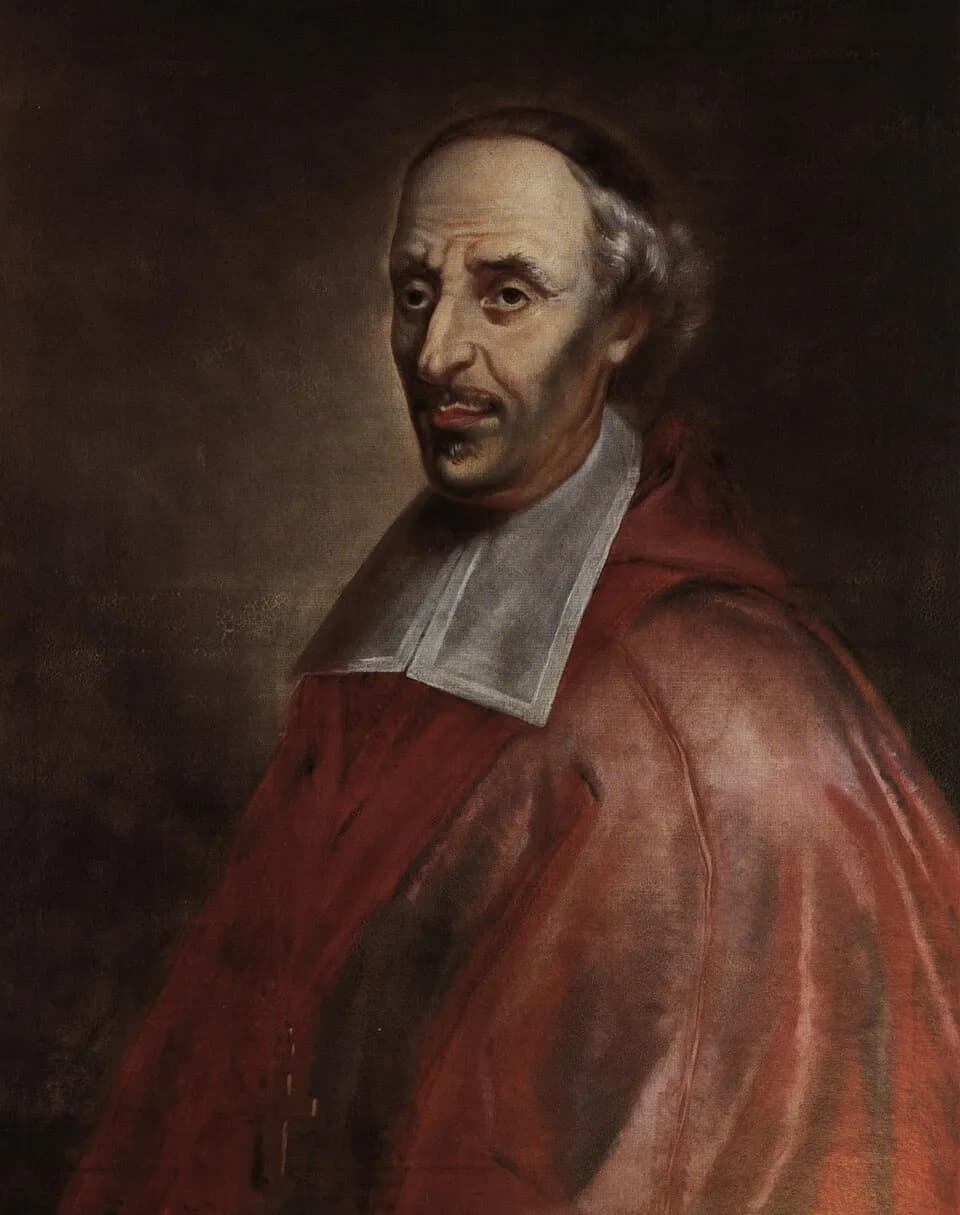
Saint François de Laval landed at Quebec in 1659 as vicar apostolic of New France, a colony of fewer than 2,500 people, and became the first Bishop of Quebec. 125 He founded the Seminary of Quebec and gave it everything he owned, and he fought the governors of the colony for years over the sale of liquor to Native peoples. 12 Pope Francis declared him a saint on April 3, 2014, and his feast is May 6. 2
An heir who gave up the estate
He was born on April 30, 1623, at Montigny-sur-Avre, in the diocese of Chartres, the son of Hugues de Laval and Michelle de Péricard. 12 The family was old nobility; the Catholic Encyclopedia traces it to an ancestor baptized with Clovis at Reims. 1 He studied with the Jesuits at La Flèche, where, the Canadian bishops say, his interest in the missions of Canada began, and then at their college of Clermont in Paris. 12 There he joined a group of fervent young men directed by a Father Bagot, a circle the encyclopedia calls the germ of the Seminary of Foreign Missions. 1
His two older brothers died, in battle according to the encyclopedia, and François inherited the family title and estate. 12 His mother pressed him to take up the life that went with it, and he held to his vocation. 1 He was ordained a priest in 1647. 2 As archdeacon of Évreux he visited more than 150 parishes and set about reforming them in the spirit of the Council of Trent, while caring for the sick and seeing to the schooling of abandoned children. 2
The Jesuit missionary Alexander de Rhodes had obtained from Rome the appointment of three vicars apostolic for the East, and Laval was chosen for Tonkin. The Portuguese court blocked the plan. 1 In 1653, the bishops say, he resigned his archdeaconry, gave up the pension that went with it, and handed his inheritance and his rights as heir to his brother. 2
He went to Caen and lived at the hermitage of Jean de Bernières, whom the bishops call one of the great mystics of his time. 2 The encyclopedia dates these years 1655 to 1658. 1 He prayed, did works of charity, oversaw the reform of a monastery and looked after the affairs of a community of Hospitaller sisters. 2
Vicar apostolic of New France
On June 3, 1658, he was named apostolic vicar for Canada, over the ambitions of the Archbishop of Rouen, who wanted New France under his own jurisdiction. 2 He received the title of Bishop of Petrea and was consecrated on December 8, 1658, by the papal nuncio in the abbey church of Saint-Germain-des-Prés in Paris. 1 The bishops add that the consecration was done in secret. 2
He landed at Quebec on June 16, 1659. 12 The town then had hardly 500 inhabitants, and the encyclopedia puts the whole French population of Canada at no more than 2,200; the bishops count five parishes and fewer than 2,500 people. 12 Marie of the Incarnation, the Ursuline who had come to Quebec twenty years before him, wrote at his arrival that he was a man of great merit and outstanding virtue who lived like a saint and an apostle, a judgment John Paul II repeated when he beatified the two of them together. 4
His authority was contested from the start. Most of the colonists came from the province of Rouen, the court favored its archbishop's claims, and Laval insisted that his jurisdiction came directly from Rome. 1 The bishops add that Rouen was backing the superior of the Sulpicians in Montreal, and that Laval also had to contend with the promoters of Gallicanism in the colony. 2 Louis XIV named him Bishop of Quebec in 1663, and the matter was settled in 1674, when Pope Clement X erected Quebec as a diocese depending solely on Rome. 12 It took in all of North America except New England, the Atlantic seaboard and the Spanish colonies, a territory that had been divided into about a hundred dioceses by the time the encyclopedia was written. 1
The fight over the liquor trade
The encyclopedia calls his struggle against the liquor traffic with the Native peoples the trial of a lifetime. 1 The trade in brandy was a source of revenue for the colony and also, the bishops write, a source of murder, rape and other violence. 2 After trying persuasion and consulting the theologians of the Sorbonne, Laval forbade the traffic under pain of excommunication. 1
The civil authorities pleaded the interests of commerce. Governor d'Avaugour relaxed the prohibition and, through Laval's influence at court, was recalled. His successor de Mésy owed his appointment to the bishop, turned violently against him, and in the end died repentant in his arms. Later governors obtained a milder law from the king. 1 There were quarrels over precedence as well, and Frontenac claimed the right to bring clerics before his own tribunal and to make missionaries carry a passport for each change of residence. 12
The encyclopedia does not hide that Laval "has been accused of attachment to his own authority and disregard for the rights of civil authority", and it answers the charge at length, arguing that he was protecting his people from officials for whom material interests came first. 1 It also credits his influence with the creation of the Sovereign Council, in place of the Company of New France, to govern the colony. 1
The Seminary of Quebec
In 1663 he founded the Seminary of Quebec, which the bishops describe as meant to be the heart of the Church in Canada. 12 There were no regular parishes yet, so the clergy belonged to the seminary and went out from it to parish and mission work, as far as the Illinois country. 1 The tithes, fixed after much argument at the twenty-sixth bushel of grain, were paid to the seminary, which supplied the priests in return. 1
A minor seminary followed in 1668, and a school of arts and trades, which the encyclopedia places at Saint-Joachim in 1678. 12 He gave the seminary all his possessions, including the seigniory of Beaupré and Isle Jésus. 1 The university that grew out of it bears his name. 14
He traveled constantly, by land and water, to reach a scattered flock. 1 "His heart is always with us", wrote the Jesuit Dablon. 1 He confirmed settlers and Indigenous Christians alike, saw the Iroquois chief Garakontie solemnly baptized, recalled the Franciscan Recollets to Canada in 1670, and encouraged devotion to the Holy Family and to Saint Anne, whose shrine at Beaupré was rebuilt in 1673. 12 During his years in New France the parishes grew from 5 to 15, the priests from 25 to 102 and the women religious from 32 to 97. 2
Old age at the seminary
He made his last pastoral visitation in 1681. 2 The bishops say he submitted his resignation in 1684 and returned to Quebec in 1688; the encyclopedia says he resigned in 1688, worn out by thirty years of work and convinced a younger man would do more good. 12 He could have retired in France and chose to go back. 1 His successor, Bishop de Saint-Vallier, did not share all his views on how the diocese should be run. 1
He lived at the seminary, praying and caring for the poor. 2 Saint-Vallier was away for many years, five of them as a prisoner in England, and the old bishop stood in for him in spite of illness. 12 The seminary burned in 1701 and again in 1705, and both times he helped rebuild it. 1 He died at Quebec on May 6, 1708. 12
The cause for his canonization was introduced in 1890. 1 John Paul II beatified him on June 22, 1980, and Pope Francis canonized him by decree on April 3, 2014, by what Vatican Radio calls an equipollent or equivalent canonization. 245 On October 12, 2014, Francis celebrated a Mass of thanksgiving in the Vatican Basilica for him and for Marie of the Incarnation, telling the Canadian pilgrims, "The world was full of Canadian missionaries like François de Laval and Marie de l'Incarnation." 3
What is Saint François de Laval the patron saint of?
None of the sources used for this page names Saint François de Laval as the patron of anything, and the page does not supply a patronage. 123 Pope Francis described him and Marie of the Incarnation as the two missionaries who, in a manner of speaking, founded the Church in Quebec, and asked for their intercession that Quebec might again give the world many missionaries. 3
Saint François de Laval's feast day
Praying with Saint François de Laval
He gave up a fortune twice. The first time he signed his inheritance over to his brother before he had any mission to go to; the second time he gave the seminary all his possessions. 12 Between the two came the years at Caen with nothing to show for them except prayer and small works of charity, years the encyclopedia calls a fitting preamble to what followed. 12
He was not an easy man to govern alongside, and the sources do not pretend otherwise. The fights with governors over brandy and over the standing of the Church filled decades. 12 The encyclopedia's judgment, after going through the accusations one by one, is that "His sole ambition was to be a bishop according to God's heart." 1
The end of his life was quiet. He handed the diocese to a successor who did things differently, went back to Quebec anyway, and spent what the encyclopedia calls his last three years "in greater retirement and humility". 1 He still filled in when the bishop was absent, and he died while doing so. 2
Pope Francis gave the pilgrims who came to Rome to thank God for him a line from the Letter to the Hebrews: "Remember your leaders, those who spoke the word of God to you; consider the outcome of their way of life, and imitate their faith". 3 Remembering such people, he said, sustains the Church at a time when laborers for the Gospel are scarce. 3
Saint François de Laval, pray for us.
Sources
- 1.Lionel Lindsay, "François de Montmorency Laval," The Catholic Encyclopedia, vol. 9 (New York: Robert Appleton Company, 1910).
- 2."Saint François de Laval (1623-1708)," Canada's Saints and Blesseds, Canadian Conference of Catholic Bishops.
- 3.Pope Francis, Homily at the Mass of thanksgiving for the equivalent canonization of two Canadian saints, Vatican Basilica, October 12, 2014.
- 4.Pope John Paul II, Homily at the beatification of five Servants of God, June 22, 1980 (the paragraph on Laval is in French).
- 5."Pope invites Quebecers to honour missionary heritage," Vatican Radio, October 12, 2014.
Saints to turn to next
Others in this collection who are turned to for some of the same things.
- Saint BarnabasFirst centuryCourageWork and vocationPoverty and simplicity
- Saint Clement Mary HofbauerDecember 26, 1751 - March 15, 1820Work and vocationCouragePoverty and simplicity
- Saint Frances Xavier CabriniJuly 15, 1850 - December 22, 1917CouragePoverty and simplicityWork and vocation
- Saint Ivo of KermartinOctober 17, 1253 - May 19, 1303Work and vocationPoverty and simplicityCourage