Saint Dominic Savio
April 2, 1842 - March 9, 1857
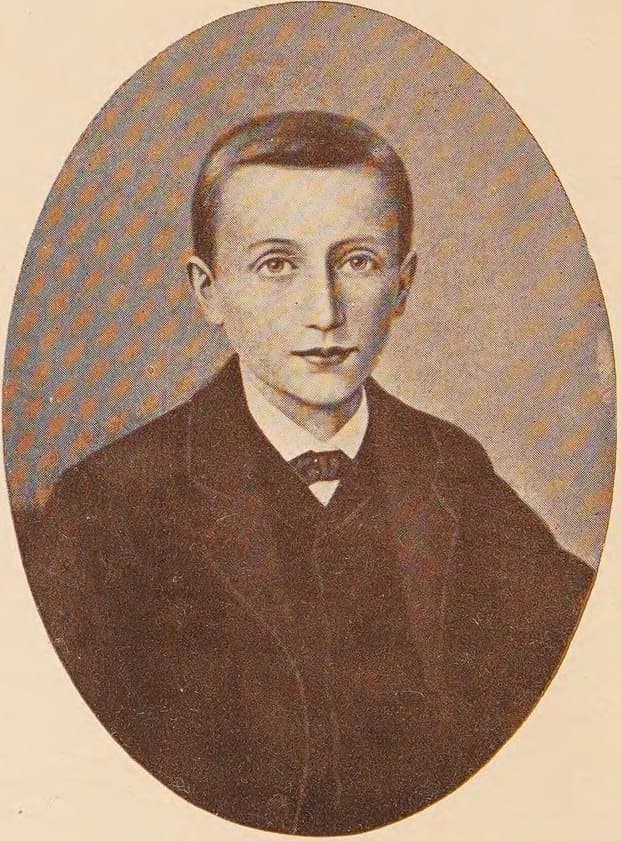
- Feast day
- March 9, the day he died 1
- Born
- Into a peasant family at Riva, Italy, April 2, 1842 1
- At twelve
- He joined Don Bosco as a student at the Oratory in Turin 1
- He founded
- The Company of the Immaculate Conception. All its members but him became Salesians in 1859 1
- Died
- At fourteen, after being bled for a lung complaint, which made it worse 1
Saint Dominic Savio died at fourteen, and people argued that he was too young to be canonized. 1 Pius X "declared that just the opposite was true, and went ahead with his cause." 1 Savio's own account of himself is one sentence: "I can't do big things. But I want all I do, even the smallest thing, to be for the greater glory of God." 1
A peasant boy at the Oratory
He was born into a peasant family at Riva in 1842 and joined Don Bosco as a student at the Oratory in Turin at twelve. 1 "He impressed Don Bosco with his desire to be a priest and to help him in his work with neglected boys." 1
Franciscan Media calls him "a peacemaker and an organizer" - which is not the usual description of a devout child - and records what he organized: "young Dominic founded a group he called the Company of the Immaculate Conception which, besides being devotional, aided John Bosco with the boys and with manual work." 1
There is a quiet fact about that company. "All the members save one, Dominic, would, in 1859, join Don Bosco in the beginnings of his Salesian congregation. By that time, Dominic had been called home to heaven." 1 He founded the group that became the first Salesians and was the only one who did not live to be one.
"My distractions"
"As a youth, Dominic spent hours rapt in prayer. His raptures he called 'my distractions.'" 1 A boy who could lose hours to prayer described it as getting distracted.
What he was actually worried about is more recognizable than the mysticism. "Even in play, he said that at times, 'It seems heaven is opening just above me. I am afraid I may say or do something that will make the other boys laugh.'" 1 He was afraid of being laughed at.
Franciscan Media makes the point directly in its reflection: "Like many a youngster, Dominic was painfully aware that he was different from his peers. He tried to keep his piety from his friends lest he have to endure their laughter." 1
And then the sentence he is remembered for, which is a policy rather than a feeling: "I can't do big things. But I want all I do, even the smallest thing, to be for the greater glory of God." 1
Bled
His health was "always frail", and lung problems sent him home to recover. 1 What happened next was standard medicine and it killed him: "As was the custom of the day, he was bled in the thought that this would help, but it only worsened his condition." 1
"He died on March 9, 1857, after receiving the Last Sacraments." 1 He was fourteen.
"Saint John Bosco himself wrote the account of his life." 1 The biography that made him known was written by the priest who had taught him, about a boy who had been dead a year.
Then the objection. "Some thought that Dominic was too young to be considered a saint. Saint Pius X declared that just the opposite was true, and went ahead with his cause." 1 He was canonized in 1954, by Pius XII, at a Mass in St Peter's Square on June 12 that also raised Peter Chanel, Gaspar del Bufalo, Joseph Pignatelli and Maria Crocifissa Di Rosa. 12
What is Saint Dominic Savio the patron saint of
Franciscan Media names two patronages and the second is unexpected: choirboys, and juvenile delinquents. 1
The second follows from where he lived. Don Bosco's Oratory existed for the boys of Turin nobody else wanted, and Dominic's company was formed to help with them. 1 He is patron of the boys he was working alongside.
He is more broadly a patron of children and of young students, and of anyone who is the only one in the room who cares about something.
Saint Dominic Savio's feast day
The feast of Saint Dominic Savio is March 9, the day he died in 1857. 1 Franciscan Media states it: "His liturgical feast is celebrated on March 9." 1
Its own column runs him on March 10, a day later, which is a publishing slot rather than the feast. He is kept in the Salesian calendar rather than the General Roman Calendar, which is why the universal day-by-day calendars do not carry him.
Praying with Saint Dominic Savio
The fear of being laughed at is the most useful thing here, and it is the detail most accounts leave out. 1 He was not serene about being different. He was a boy at school who did not want the other boys to see what was happening to him, and he said so.
"I can't do big things." 1 He was right - he was twelve, and then he was fourteen, and then he was dead. The sentence is not false modesty; it is an accurate assessment followed by a decision about what to do with the situation.
Then the company. 1 He could not found an order, but he could start a group, and the group did devotional work and helped Don Bosco with the neglected boys and with the manual labor. Every one of its other members became a Salesian. The smallest thing he could do turned out to be the beginning of something, which he did not live to see and had no way of predicting.
And the bleeding. 1 He was sent home to get better and the treatment killed him. There is no meaning to extract from that and the account does not try. He received the Last Sacraments and died, and forty years later a pope had to tell people that fourteen was old enough.
Saint Dominic Savio, pray for us.
Sources
Saints to turn to next
Others in this collection who are turned to for some of the same things.
- Saint Claude de la Colombiere1641 - February 15, 1682PrayerSuffering and illnessCourage
- Saint Ignatius of Antiochc. 50 - c. 107CourageSuffering and illnessPrayer
- Saint Josephine Bakhitac. 1869 - February 8, 1947Suffering and illnessCouragePrayer
- Saint Kateri Tekakwitha1656 - April 17, 1680PrayerSuffering and illnessCourage