Saint José Gregorio Hernández
October 26, 1864 - June 29, 1919
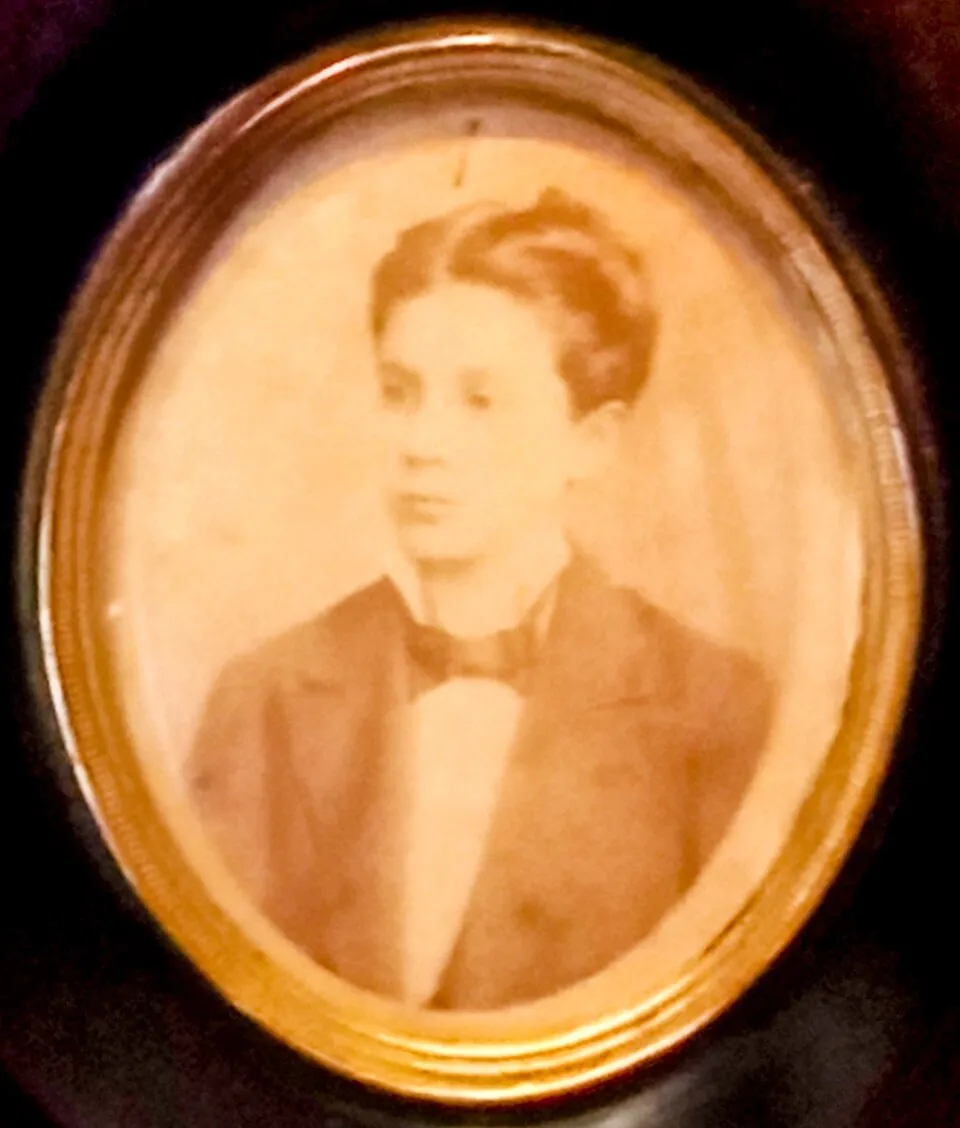
Saint José Gregorio Hernández was a Venezuelan physician and university professor who brought the first chairs of histology, physiology and bacteriology to Caracas, treated the poor for nothing, and was killed by a car in 1919 while on an errand of medicine for a patient. 45 In Venezuela he is known as the doctor of the poor. 34 Twice he tried to leave medicine for religious life, and twice his health sent him back. 45 Leo XIV canonized him in 2025 and named him among the new saints who were "benefactors of humanity." 1
A boy from Isnotú
He was born on October 26, 1864, at Isnotú, in the Venezuelan state of Trujillo, the second of seven children. 56 Francis, who gave a whole general audience to him in 2023, said he learned the faith above all from his mother, and quoted him: "My mother taught me virtue from the time I was in a crib, made me grow in the knowledge of God and gave me charity as my guide." 3
The Dicastery for the Causes of Saints says he spent four years at the only private school in Isnotú and in 1878 moved to the Colegio Villegas in Caracas, where he stood out for intelligence and application. 5 After a bachelor's degree in philosophy he entered the Faculty of Medicine of the University of Caracas. 5 The canonization booklet says it was his father who suggested medicine. 4
Physician, scientist and teacher
He defended his doctoral thesis in 1888; the decree dates his graduation to June 29 of that year. 45 In 1889 the Venezuelan authorities chose him to complete his studies abroad. 4 The Dicastery says the President of Venezuela designated him to take courses in microbiology, bacteriology, histology and experimental physiology in Paris, subjects the University of Caracas did not yet teach; the decree adds Berlin to Paris. 5
Back in Venezuela at 27, he founded the chairs of histology, physiology and bacteriology and began his university career. 45 The booklet says he dedicated himself to teaching, even inviting his weakest students to his home, that he set up the Colegio de Médicos de Venezuela, and that he was a founding member of the National Academy of Medicine. 4 He kept studying embryology and histology and published on several areas of medicine throughout his career. 4
He did not hide his faith in the lecture hall. The Dicastery says he went to Mass and received Communion every day and made the sign of the cross before each lesson. 5 He joined the Franciscan Third Order and kept its rule. 5 Francis called him "a physician, a university professor, and a scientist," and added: "But he was first and foremost a doctor close to the weakest, so much so that he was known in his homeland as 'the doctor of the poor'." 3
The doctor of the poor
The name came from how he practiced. He treated the poor without charge, and the Holy See biographies agree that he often gave them the money for their medicines as well. 45 The booklet describes him as silent, prudent and full of charity, urging his patients to trust in God and to come to the sacraments, above all the Eucharist. 4 When the Spanish flu struck Caracas in 1918, it says, he gave himself entirely to the sick as a doctor and an apostle of charity. 4
Francis said the people gave him the recognition he never went looking for, and still do, calling him "saint of the people", "apostle of charity", "missionary of hope". 3 The Dicastery adds that devotion to him reaches well beyond Venezuela: into Colombia and Ecuador, much of Latin America and the Iberian peninsula, and onto the backs of buses. 5
Farneta and Rome
At the height of his career he tried to give it up. On July 16, 1908, with the consent of his spiritual director, Archbishop Castro of Caracas, he entered the Charterhouse of Farneta, near Lucca in Italy. 5 On August 20 he received the habit and the name Brother Marcello. 5 After nine months his health forced him back to Venezuela, still hoping, the Dicastery says, to be readmitted once he recovered. 5
The Dicastery records a short time in the Caracas diocesan seminary, which he soon left to return to teaching and practice. 5 Then, in 1913, he entered the Pio Latin American College in Rome to study for the priesthood. He lasted eight months before dry pleurisy and the beginning of tuberculosis sent him home again. 5 The booklet counts the two Italian attempts and says that both times his frail health made him return to Caracas. 4
Francis described what came next without pretending it was what he had wanted: "he tried to become a religious and a priest several times, but various health problems prevented him from doing so." 3 His frailty, Francis said, made him more sensitive to others, until he came to accept medicine as "the priesthood of human pain". 3 From 1914, the decree says, he gave himself entirely to teaching and medicine. 5
June 29, 1919
His death is tied in the sources to the end of the First World War. The canonization booklet says that some months before it he had told a friend he had offered his life to God for the peace of the world. 4 The Dicastery's decree and Francis put the conversation on the day itself: a friend found him very happy on June 29, 1919, because he had heard that the treaty ending the war had been signed. 35
Francis says he had been at Mass that morning, as usual. 3 Later he went out with medicine. The booklet says he had just bought it for a sick child; the Dicastery says he was taking it to a sick person, and Francis to "a person who was sick". 345 Crossing the street, he was struck by a car. 35 "He was taken to hospital and died saying Our Lady's name," Francis said. 3
The Dicastery reports that Dr. Razzetti, a nonbeliever called urgently to the emergency room, said on seeing the body that this man had been a saint. 5 A competition was held for the epitaph on his tomb, and the winning text called him an eminent doctor and an exemplary Christian whose death had taken on the proportions of a national misfortune. 5
The road to canonization
The Archbishop of Caracas opened his cause in 1949. 58 John Paul II recognized his heroic virtues on January 16, 1986. 5 The miracle for his beatification was the healing of a ten-year-old girl shot in the head during a robbery in 2017; the Dicastery's decree, signed June 19, 2020, records that her mother, her sister and the anesthesiologist prayed to him and that within days she was neurologically unharmed. 5 Francis beatified him on April 30, 2021. 45
In 2024 the Archbishop of Caracas and the Venezuelan bishops asked for his canonization, joined by bishops in Spain, Colombia, Argentina, the United States and elsewhere, and Francis authorized a special procedure for it. 5 In February 2025, Vatican News reported, Francis approved the cardinals' and bishops' favorable vote. 6 Leo XIV canonized him in St. Peter's Square on October 19, 2025, World Mission Sunday, with six others, among them his fellow Venezuelan Carmen Rendiles and Bartolo Longo of Pompeii. 17 Vatican News reported that at a thanksgiving Mass the next day Cardinal Pietro Parolin told the Venezuelan pilgrims that their country now had its first saints, two of them. 9
What is Saint José Gregorio Hernández the patron saint of?
None of the sources consulted names a patronage for him, so this page does not claim one. 1345 The Dicastery for the Causes of Saints does say that he is venerated in health centers and hospitals, and that the case for his canonization set out the importance of his intercession for the needs of the poorest and of the sick. 5 Leo XIV, speaking to the Venezuelan pilgrims, spoke of the charity he and Carmen Rendiles lived, which calls for "service, whether to the sick, the poor, or the little ones." 2
Saint José Gregorio Hernández's feast day
His liturgical memorial is October 26, the day he was born in 1864. 58 The Venezuelan bishops' conference says the date was set during his beatification and that the memorial was celebrated for the first time on October 26, 2021. 8
He died on June 29, 1919. 45 No source consulted gives that day as his feast.
Praying with Saint José Gregorio Hernández
The center of his story is a door that kept closing. He went to a Carthusian monastery in Italy, then to a seminary in Caracas, then to a college in Rome, and each time his health sent him back to teaching and medicine in Caracas. 45 Francis says plainly that health problems prevented him, and that he came, over time, to see the work in front of him as the place God had put him. 3
The work itself was ordinary in its parts: lectures, research, patients, medicine paid for out of his own pocket and carried to the sick. 45 The sources describe a scientist who made the sign of the cross before class and a doctor who asked nothing of the patients who had nothing, and they do not treat the two as separate lives. 5
The sources do not make his death tidier than it was. He had offered his life for peace, the booklet and Francis both say, and he was killed crossing a street with medicine in his hand. 34 Francis simply says his earthly journey ended "on a road while performing a work of mercy". 3
Leo XIV, speaking to Venezuelans the day after the canonization, asked them to see in him and in Carmen Rendiles "people very similar to ourselves, who lived confronting problems that are not unfamiliar to us." 2 The bishops of Venezuela, he said, hoped the canonization would help their people come together and recognize one another as children and brothers and sisters of the same homeland. 2
Saint José Gregorio Hernández, pray for us.
Sources
- 1.Leo XIV, Homily for the Holy Mass and Canonization of Ignazio Choukrallah Maloyan, Peter To Rot, Vincenza Maria Poloni, Maria del Monte Carmelo Rendiles Martínez, Maria Troncatti, José Gregorio Hernández Cisneros and Bartolo Longo, St. Peter's Square, October 19, 2025.
- 2.Leo XIV, Address to Pilgrims Who Have Come to Rome for the Canonizations, October 20, 2025.
- 3.Francis, General Audience, September 13, 2023: "Catechesis. The passion for evangelization: the apostolic zeal of the believer. 20. Blessed José Gregorio Hernández Cisneros, doctor of the poor and apostle of peace."
- 4."José Gregorio Hernández Cisneros (1864-1919)," biographical profile in the booklet for the Mass and canonization of October 19, 2025, Office of the Liturgical Celebrations of the Supreme Pontiff (Italian and Spanish).
- 5."José Gregorio Hernández Cisneros (1864-1919)," Dicastery for the Causes of Saints: biography, history of the cause, and decree on the miracle of June 19, 2020 (Italian).
- 6."Pope Francis paves the way for new saints," Vatican News, February 25, 2025.
- 7.Devin Watkins, "Pope at Canonization Mass: Saints keep light of faith in Christ burning," Vatican News, October 19, 2025.
- 8."26 de octubre: Memoria litúrgica del Beato José Gregorio Hernández, el 'Médico de los pobres'," Conferencia Episcopal Venezolana, October 26, 2021 (Spanish).
- 9.Johan Pacheco, "Parolin to Venezuelan faithful: Build on the foundations of justice," Vatican News, October 20, 2025.
Saints to turn to next
Others in this collection who are turned to for some of the same things.
- Saint Albert ChmielowskiAugust 20, 1845 - December 25, 1916Poverty and simplicityDiscernmentWork and vocation
- Saint André BessetteAugust 9, 1845 - January 6, 1937Suffering and illnessWork and vocationPoverty and simplicity
- Saint Carmen RendilesAugust 11, 1903 - May 9, 1977DiscernmentSuffering and illnessWork and vocation
- Saint Eugene de MazenodAugust 1, 1782 - May 21, 1861Poverty and simplicityDiscernmentWork and vocation