Saint John the Silent
452 or 454 - c. 558
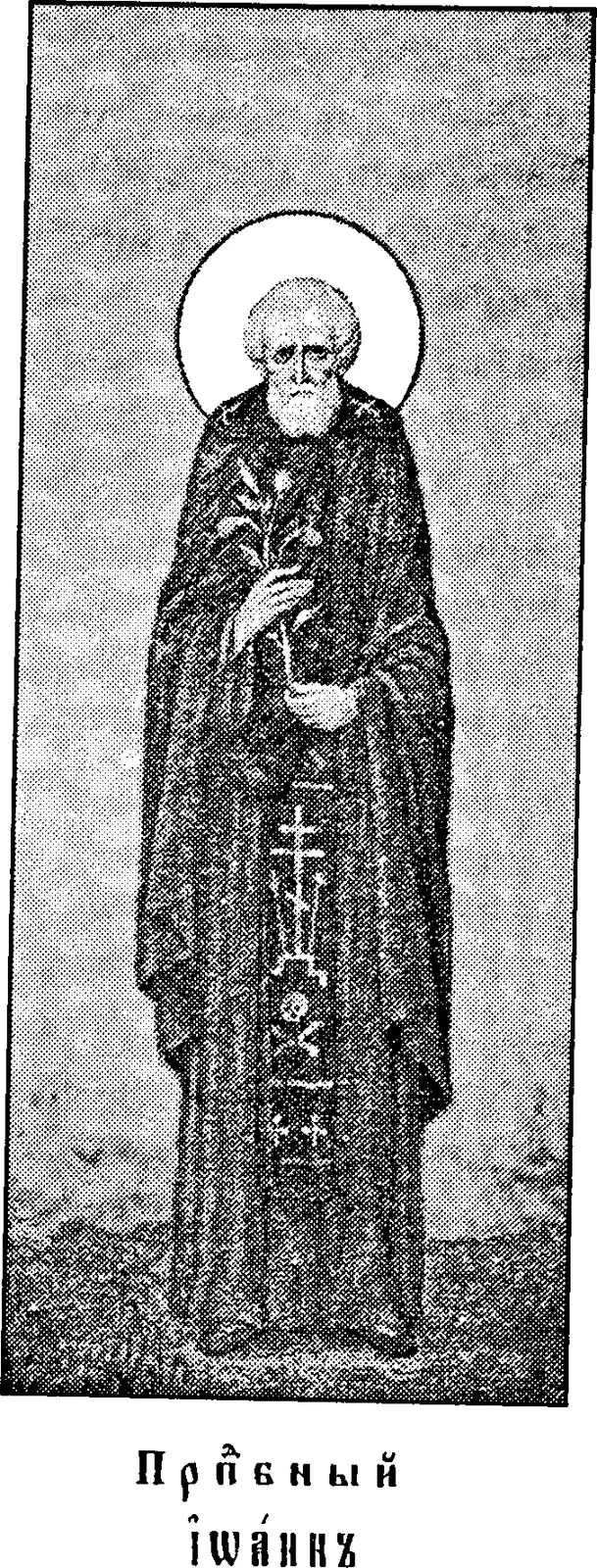
Saint John the Silent was a bishop in Armenia who, after nine years in office, slipped away to Palestine and joined the laura of Saint Sabas as an unknown novice, fetching water and carrying stones for the builders. 12 He spent most of the rest of a very long life in a desert cell, keeping a silence that gave him his name, and died around 558 at about a hundred and four. 12 The current Roman Martyrology keeps him on December 7. 3
A rich young man of Nicopolis
John was born at Nicopolis in Armenia, on January 8, 452, according to Francis Mershman in the Catholic Encyclopedia, or in 454 according to Alban Butler, who tells his story from the Life written by his disciple Cyril of Scythopolis. 12 His parents, Encratius and Euphemia, were wealthy, and both their families had given the empire generals and governors. 2 They were also, Mershman says, good Christians who gave their son a holy education. 2
They died in 471. 2 John gave most of his inheritance to his relatives and kept back only enough to build a church and a monastery. 2 Butler says the church was dedicated to the Blessed Virgin, and that John shut himself up in the monastery with ten companions when he was eighteen. 1
Butler describes the young abbot's program in detail: humility first, a steady denial of his own will, bodily austerity, and work to fill every hour not given to prayer. He also spoke as little as he could. "If necessity obliged him to open his mouth, it was always in very few words, and with great discretion." 1
Bishop of Colonia
The bishop of Sebaste drew him out of the monastery and made him bishop of Colonia, in Armenia, against his will: in 481, Mershman says, or in 482, when he was twenty-eight, by Butler's reckoning. 12 He kept the monk's way of life as far as the office allowed. 12
His family was a mixed blessing. His brother and nephew, who held places at the imperial court, were moved by his example to live devoutly in the middle of it. 1 His brother-in-law, whom Mershman names as Pasinius and Butler calls governor of Armenia, oppressed the church so badly that John had to appeal to the emperor Zeno, who gave him protection. 12 For nine years, Butler says, he preached, gave away everything he had to the poor, and comforted the afflicted. 1
Then he wanted out. Butler admits the difficulty frankly: by the Church's rule a bishop was bound to his flock and not free to abandon it, and John prayed over the thought a long time. 1 According to his biographer, one night at prayer he saw a bright cross in the air and heard a voice: "If thou desirest to be saved, follow this light." 1 It led him, in Butler's telling, to the laura of Saint Sabas. 1 Mershman says only that once matters at Colonia had been put right, John left his see and went to the laura near Jerusalem. 2
An unknown novice at Saint Sabas
He arrived at thirty-eight, Butler says, and the laura then held a hundred and fifty monks. 1 He did not say who he was. 2 Sabas put him under the steward, "to fetch water, carry stones, and serve the workmen in building a new hospital." 1 Then he was set to receive guests. 1 Mershman says Sabas tried him with "all kinds of trials" and found him ready for even the most menial work. 2
Satisfied, Sabas gave him a hermitage of his own. 1 Butler says he ate nothing for five days a week and left his cell only for worship on Saturdays and Sundays; after three years he was made steward of the laura, and held the office for four. 1
Sabas then judged him worthy of the priesthood and took him to the Patriarch Elias of Jerusalem for ordination. 12 At the church on Calvary John asked to speak to the patriarch alone, and, having obtained a promise of secrecy, told him: "Father, I have been ordained bishop; but on account of the multitude of my sins have fled, and am come into this desert to wait the visit of the Lord." 1 Elias told Sabas only that he could not ordain this man because of what he had disclosed. 12
Sabas went home afflicted, Butler says, fearing that John had once committed some grave crime. 1 Mershman says he was comforted by a vision that showed him the truth; Butler, that God revealed it to him when he asked. 12 John, discovered, wanted to leave the laura, and stayed only on Sabas's promise to keep the secret. 1
Silence
For four years more, Butler says, he lived in his cell without speaking to anyone except the brother who brought him what he needed. 1 In 503 a faction among the monks forced Sabas out of his own laura, and John, wanting no part of the quarrel, went into the neighboring wilderness, where he lived for six years on wild roots and herbs. 1 When Sabas returned, he went looking for John and brought him back in 510. 1
Mershman describes his last home as a hut built against the face of a rock, where he spent the rest of his days "in seclusion and perpetual silence, whence his surname." 2 Butler says he stayed in his cell for forty years after his return, though he did not refuse to advise those who came to him. 1
One who came was Cyril of Scythopolis, at about sixteen, when John was about ninety. 1 John told him to enter the monastery of Saint Euthymius; Cyril went instead to a small monastery by the Jordan and fell ill with a fever. 1 In a dream, Butler relates, John reproved him gently and told him he would recover if he went where he had been sent. He did, and was well. 1 Cyril wrote the Life when John was a hundred and four, and found him still clear in mind and gentle. 1
Butler adds that John blessed a possessed child brought to him by a man named George and freed him, and that a nobleman from Constantinople came over from Eutychianism after John refused him a blessing. 1 He died, Butler says, soon after 558, having spent seventy-six years in the desert apart from his nine as a bishop; Mershman gives his death as 558. 12
What is Saint John the Silent the patron saint of?
Saint John the Silent's feast day
Saint John the Silent's feast day is December 7 in the current Roman Martyrology, as the Italian bishops publish it, which remembers him in Palestine as the bishop of Colonia who left his see for a life of humble service, solitude and silence at the laura of Saint Sabas. 3
The older Roman date was May 13. Mershman gives that day as his feast, Butler tells his life under it, and the 1897 English edition of the Roman Martyrology enters him there: "In Palestine, of St. John the Silent." 124
Praying with Saint John the Silent
His silence was not the quiet of someone with nothing to say. He had run a monastery, governed a diocese and taken a dispute to the emperor. 12 He chose silence after all of that, and Butler, who admired it, also admits that the way John left his diocese was an exception that the Church's ordinary rule did not allow. 1
What the story shows most clearly is a man content to be overlooked. A bishop fetched water for builders and waited on guests, and when his secret came out his first thought was to leave rather than be honored for it. 12
Butler's own advice drawn from the life is modest: a habit of thinking about God is not acquired all at once, and straining after it can do harm; it grows from short prayers repeated through the day, from the Our Father and the Psalms. 1
And the silence was not closed. The old man in the hut still sent a sixteen-year-old where he ought to go, and the young man became, in Butler's words, "one of the ablest writers of antiquity." 1
Saint John the Silent, pray for us.
Sources
- 1.Alban Butler, "St. John the Silent, B. C.," The Lives of the Fathers, Martyrs, and Other Principal Saints, Vol. V, May 13 (Derby: Richardson and Son, 1842), via the Internet Archive.
- 2.Francis Mershman, "St. John the Silent," The Catholic Encyclopedia, vol. 8 (New York: Robert Appleton Company, 1910).
- 3.Roman Martyrology, entry for December 7, "San Giovanni Silenziario o l'Esicasta," Santo del giorno, Conferenza Episcopale Italiana (in Italian).
- 4.The Roman Martyrology, May 13 (Baltimore: John Murphy & Co., 1897), Internet Archive.
Saints to turn to next
Others in this collection who are turned to for some of the same things.