Saint Giuseppe Moscati
July 25, 1880 - April 12, 1927
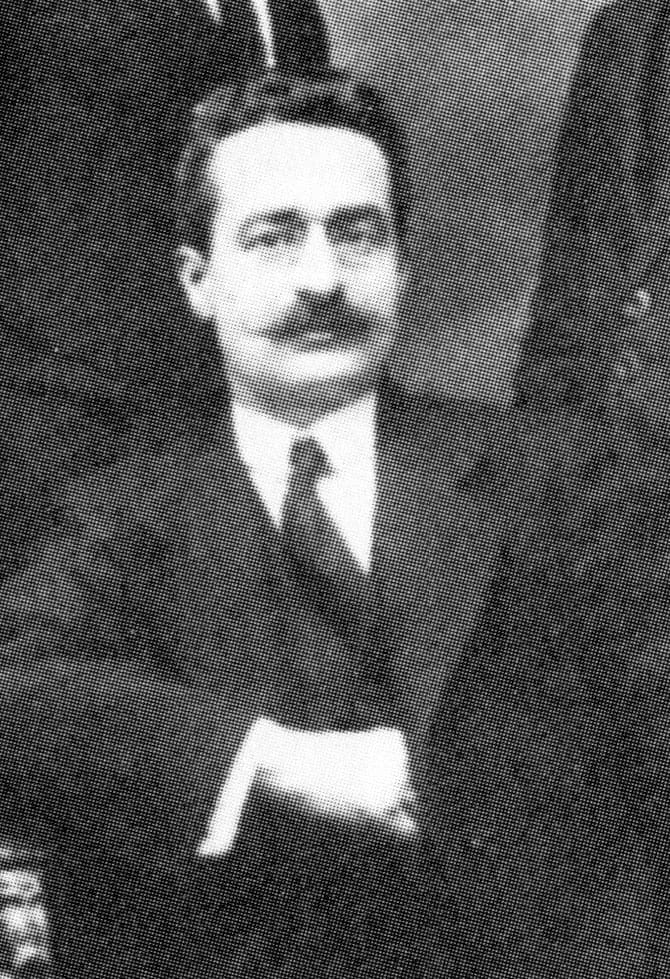
- Feast day
- November 16, as the Jesuits of the Gesù Nuovo in Naples and Lay Witness give it; Vatican News lists him on April 12, the day he died 789
- Born
- July 25, 1880, at Benevento, the seventh of nine children of the magistrate Francesco Moscati 1
Saint Giuseppe Moscati was a Naples hospital physician and research chemist who treated the poor for nothing, often paid for their medicine out of his own earnings, and died suddenly at his work in 1927. 1610 As the news spread, the Holy See's biography says, people passed it on by saying that the holy doctor had died. 1 John Paul II canonized him on October 25, 1987, at the close of the synod of bishops on the laity, and presented him as a concrete realization of the Christian lay vocation. 2
A magistrate's son
He was born at Benevento on July 25, 1880, the seventh of nine children of Francesco Moscati, a magistrate, and Rosa De Luca, of the marquesses of Roseto. 1 Vatican News adds that his grandfather was a magistrate too. 6 In 1881 the family moved to Ancona and then to Naples, where he made his First Communion in 1888 and finished school in 1897, at seventeen, with brilliant marks. 1
Alberto
His family's profession was the law, and he chose medicine. 69 The sources connect the choice to his brother Alberto, a lieutenant in the artillery, who was brought home after a fall from a horse left him with an injury that could not be cured. 19 The Holy See biography and Lay Witness date the fall to 1893; Vatican News puts it in 1892 and says Alberto suffered from epilepsy afterward. 169 For years Giuseppe helped nurse him at home, and the Holy See biography says that there he learned how little human remedies could do, and how much the comforts of religion could. 1
Vatican News offers another reason as well: the windows of the family house looked out on the Hospital of the Incurabili, and he grew up watching its patients. 6 He took his medical degree in Naples on August 4, 1903, with full marks. 1
Hospital, laboratory and lecture hall
From 1904 he served at the Incurabili. 1 In 1911 he won one of six posts of assistant physician in the united hospitals of Naples by open competition, and rose from there to direttore di sala, which the Holy See biography glosses as head physician; Vatican News says he was made head physician at the Incurabili in 1925. 16 During the First World War he directed the military wards, and Lay Witness and Angelus both say he treated some three thousand soldiers. 1910
The university career ran alongside. In 1911 he was qualified to lecture in physiological chemistry, and in 1922 in general clinical medicine, the examining board excusing him from the tests by a unanimous vote. 1 His research, published in Italian and foreign journals, centered on glycogen. 1 Vatican News says he tried out new drugs, among them insulin, which came into use for diabetes from 1922, and that his skill at autopsies brought him charge of the Institute of Pathological Anatomy in 1925. 6 The canonization homily notes that he did not chase appointments, and Lay Witness says he passed up a professor's chair to stay with patients and the young doctors he was training. 29
Vesuvius and cholera
Vesuvius began to erupt on April 8, 1906, Vatican News says, and he went at once to Torre del Greco, where the Incurabili had a small branch, to get the patients out; once the last of them was safe, the building collapsed. 6 The Holy See biography speaks of the hospital at Torre del Greco and of a very courageous personal intervention. 1 Lay Witness and Angelus call the building a nursing home, and Lay Witness says its roof fell in under the ash minutes after the patients had been carried out. 910
When cholera spread through Naples in 1911, Vatican News says, he stayed with the sick without fear of contagion, and his research helped to contain the disease. 6
The doctor of the poor quarters
The Holy See biography says he went looking for the sick in the poorest and most neglected parts of the city, treated them free, and helped them out of his own earnings. 1 Lay Witness says he would send a poor patient home with an envelope holding a prescription and a fifty-lire note. 9 According to Vatican News, a sign in his waiting room told those who could afford it to leave something and those in need to take something, and a laborer he cured of a lung abscess, which others had taken for tuberculosis, was charged one fee: that he go to confession. 6
Before he was thirty, Vatican News says, his quick and exact diagnoses had made him famous, and when people remarked on it he gave the credit to prayer, since God is the author of life and doctors are only his unworthy collaborators. 6 Angelus says he called confession and Communion the "first medicine." 10 He wrote to one of his former students, in Lay Witness's translation: "Remember that you must treat not only bodies, but also souls, with counsel that appeals to their minds and hearts rather than with cold prescriptions to be sent in to the pharmacist." 9
He never married. Vatican News says he chose celibacy to have more time for his patients, and lived in personal poverty after the example of Saint Francis. 6 The homily says he denounced abuses that harmed patients and students alike, and Lay Witness names nepotism and bribery in appointments. 29
Science and charity
The Holy See biography says that for him faith and science could not conflict: as a researcher he served the truth, and truth cannot contradict itself or what God has revealed. 1 In 1978 John Paul II quoted to Italian Catholic doctors a personal note Moscati wrote on October 17, 1922: "Love truth, show yourself as you are, without pretence, fearlessly and bluntly. And if truth costs you persecution, accept it; if torture, bear it." 3 Lay Witness gives a line from another letter, "Not science, but charity has transformed the world," and the canonization homily quotes the same sentence in Italian as something close to his testament. 29
April 12, 1927
He died suddenly on April 12, 1927, while still at work, and the sources differ on the scene. 1610 The canonization homily says death came while he was visiting a sick woman. 2 Vatican News says a heart attack took him in the armchair of his consulting room. 6 Lay Witness tells of a day that began with Mass and Communion and hospital rounds; after the midday meal he felt tired, lay down, and died peacefully. 9 Angelus says he died in his office between appointments. 10
Born in July 1880, he was 46, the age the Holy See biography gives; Vatican News says 47, and Lay Witness "not yet 47." 169 He is buried in Naples, in the Church of the Gesù Nuovo. 8910
Beatification and canonization
Paul VI beatified him on November 16, 1975, during the Holy Year. 110 The miracle accepted for his canonization, Lay Witness reports, was the cure of a young ironworker named Giuseppe Fusco who was dying of leukemia; his mother dreamed of a doctor in a white coat and recognized him when her parish priest showed her a photograph of Moscati. 9
John Paul II canonized him in St. Peter's Square on October 25, 1987, the last Sunday of the synod of bishops on the vocation and mission of the laity, and presented him in the homily as a concrete realization of the Christian lay ideal. 2 Francis, visiting Naples in 2019, counted "the testimony of the holy doctor Giuseppe Moscati" among the city's examples of holiness. 5
What is Saint Giuseppe Moscati the patron saint of?
None of the sources consulted names a patronage for him, so this page does not claim one. 1269 The canonization homily holds him up as an example to imitate, above all for doctors, nurses, volunteers and all who care for the sick, and even for those who do not share his faith. 2 In 2000 John Paul II told a congress of Catholic doctors, "May St Giuseppe Moscati be your example, so that you will never lack the strength to bear witness with consistency, complete honesty and absolute integrity to the 'Gospel of life'." 4 An example is a different thing from a patronage, and the sources stop at the first.
Saint Giuseppe Moscati's feast day
The Jesuits of Italy, who serve the Church of the Gesù Nuovo where he is buried, keep his liturgical memorial there on November 16. 89 Lay Witness gives the same date. 9 November 16 is also the anniversary of his beatification, though no source consulted says that is why it was chosen. 1
Vatican News lists him on April 12, as "St. Joseph Moscati, Physician of Naples," which is the day he died. 67 Both dates are given here, with their sources.
Praying with Saint Giuseppe Moscati
Most of his life happened in rooms that look like anyone's working life: wards, a laboratory, a lecture hall, a waiting room with a sign about fees. 16 The sources describe no visions and no dramatic conversion. They describe a man who went to Mass in the morning and then to work, and who seems to have regarded the two as one day. 69 John Paul II canonized him at a synod on the laity for exactly that ordinariness. 2
His vocation began beside a brother whom medicine could not mend, and the Holy See biography says that is where he learned the limits of what doctors can do. 1 He spent the rest of his life practicing medicine all the same, and gave God the credit when it worked. 6
His care for the poor was concrete and a little unruly: free consultations, money tucked in with prescriptions, a fee paid in confession. 69 It sat alongside a hard standard of honesty, which John Paul II, quoting him, set before Catholic doctors under pressure over their consciences: "Love truth, show yourself as you are." 3
He died at work, at 46 or 47, with no warning that the sources record, and Naples remembered him by the plainest title it had. 169
Saint Giuseppe Moscati, pray for us.
Sources
- 1."Giuseppe Moscati (1880-1927)," biography published by the Holy See for the canonization of October 25, 1987 (Italian).
- 2.John Paul II, Homily for the Canonization of Blessed Giuseppe Moscati, St. Peter's Square, October 25, 1987 (Italian).
- 3.John Paul II, Address to the Italian Catholic Doctors Association, December 28, 1978.
- 4.John Paul II, Speech to the Congress of the Catholic Doctors, July 7, 2000.
- 5.Francis, Address at the Meeting "Theology after Veritatis Gaudium in the Context of the Mediterranean," Naples, June 21, 2019.
- 6."San Giuseppe Moscati, medico di Napoli," Santo del giorno, April 12, Vatican News (Italian).
- 7.Saints of the day, April 12, Vatican News.
- 8."La festa per Moscati," Jesuits of Italy (gesuiti.it), November 18, 2018 (Italian).
- 9.Michael J. Miller, "Joseph Moscati: Saint, doctor, and miracle-worker," Lay Witness (Catholic United for the Faith), March/April 2004, reprinted by the Catholic Education Resource Center.
- 10."Saint of the day: Joseph Moscati," Angelus, November 16, 2022.
Saints to turn to next
Others in this collection who are turned to for some of the same things.
- Saint Aelred of Rievaulx1109 - January 12, 1166 (or 1167)Work and vocationSuffering and illnessStudy and teaching
- Saint Alexander Sauli1533 or 1534 - October 11, 1592Work and vocationPoverty and simplicityStudy and teaching
- Saint André BessetteAugust 9, 1845 - January 6, 1937Suffering and illnessWork and vocationPoverty and simplicity
- Saint Antoninus of FlorenceMarch 1, 1389 - May 2, 1459Poverty and simplicityStudy and teachingWork and vocation