Saint Eusebius of Vercelli
About 283 - August 1, 371
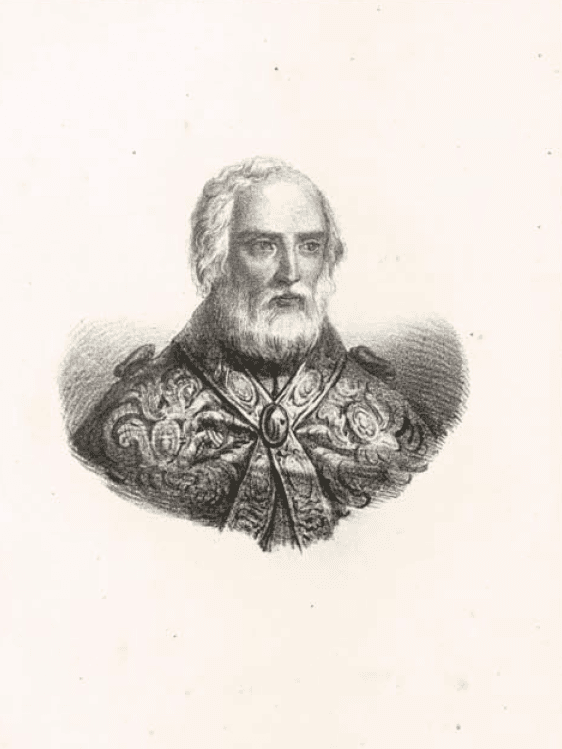
- Feast day
- August 2. The 1909 encyclopedia gives December 16 1
- Wrote, probably
- The Codex Vercellensis, the earliest manuscript of the old Latin Gospels 1
Saint Eusebius of Vercelli was brought into a synod at Milan only after the document condemning Athanasius had been written and was waiting for signatures. 1 He would not sign it. Instead, Franciscan Media says, "he laid the Nicene Creed on the table and insisted that all sign it before taking up any other matter." 2 The emperor threatened to kill him and then exiled him instead, and in Palestine the Arians dragged him through the streets and locked him in a small room until a four-day hunger strike got him out. 2
Clergy who lived together
Franciscan Media opens with an observation about the era rather than the man: "Someone has said that if there had been no Arian heresy denying Christ's divinity, it would be very difficult to write the lives of many early saints." 2 A great deal of fourth-century biography is the record of who signed what.
He came from Sardinia, was a lector at Rome, and in 340 "was unanimously elected bishop of that city by the clergy and the people" of Vercelli, being consecrated by Pope Julius I that December. 1
What he did there was structural and, according to Ambrose, unprecedented in the West. Ott: "he was the first bishop of the West who united monastic with clerical life. He led with the clergy of his city a common life modelled upon that of the Eastern cenobites." 1 For this "the Canons Regular of St. Augustine honour him along with St. Augustine as their founder." 1
Franciscan Media gives his reasoning, which is about formation rather than austerity: he established a community of his diocesan clergy "on the principle that the best way to sanctify his people was to have them see a clergy formed in solid virtue and living in community." 2 The point was that the congregation could watch.
The creed on the table
Pope Liberius sent him with another bishop to the Emperor Constantius to ask for a council that would settle the dispute between Arians and Catholics. 12 It was called, at Milan, and Eusebius did not want to go.
Ott explains the reluctance as foresight: "At first Eusebius refused to attend it because he foresaw that the Arian bishops, who were supported by the emperor, would not accept the decrees of the Nicene council and would insist upon the condemnation of St. Athanasius." 1 Franciscan Media agrees - he went "reluctantly, sensing that the Arian block would have its way, although the Catholics were more numerous." 2 He was outvoted before he arrived.
And he was right about the procedure. Pressed to attend, "he came to Milan, but was not admitted to the synod until the document condemning St. Athanasius had been drawn up and was awaiting the signature of the bishops." 1 They kept him out of the drafting and let him in for the signing.
What he did then is the thing worth remembering. Franciscan Media: "He refused to go along with the condemnation of Saint Athanasius; instead, he laid the Nicene Creed on the table and insisted that all sign it before taking up any other matter." 2 Rather than argue Athanasius' case, he changed the order of business - sign what you already claim to believe, first.
He also told the emperor where the line was: he "reminded the emperor that secular force should not be used to influence Church decisions." 2 Ott records the outcome: "despite the threats of the emperor, refused to attach his signature to the document." 1
Exile
Franciscan Media: "At first the emperor threatened to kill him, but later sent him into exile in Palestine." 2
What happened there is recorded by both. Ott names the man responsible - the Arian bishop Patrophilus, "whom Eusebius calls his jailer" - and says he "treated him very cruelly." 1 Franciscan Media is specific: "There the Arians dragged him through the streets and shut him up in a little room, releasing him only after his four-day hunger strike. They resumed their harassment shortly after." 2
A bishop in his seventies went on hunger strike in a locked room and it worked, and then they started again.
The exile moved on to Cappadocia and then the Thebaid in Egypt, and lasted until the emperor died. 12
Not going home
When the exiled bishops were allowed back in 362, Eusebius did not go. He and his fellow exile stayed in the East "helping to restore peace in the Church." 1
He went to Alexandria to consult Athanasius - the man he had refused to condemn, whom he had presumably never met - and the two of them jointly presided over a synod there. 1 Its decision is the interesting one: it "agreed to deal mildly with the repentant apostate bishops, but to impose severe penalties upon the leaders of several of Arianizing factions." 1 Franciscan Media: he "approved the leniency shown to bishops who had wavered." 2 The man who would not sign was in favor of forgiving the men who had.
Then he went to Antioch to reconcile two factions, and found the job already ruined. His fellow legate Lucifer had gone ahead and consecrated one faction's leader as bishop, "and thus unwittingly had frustrated the pacific design." 1 Ott's "unwittingly" is generous. Eusebius could not fix it, visited other churches, and went home through Illyricum.
Back at Vercelli from 363 he worked with Hilary of Poitiers against Arianism in the West and was "one of the chief opponents of the Arian Bishop Auxientius of Milan." 12
He may also have left something more durable than any of it. "There is preserved in the cathedral at Vercelli the 'Codex Vercellensis', the earliest manuscript of the old Latin Gospels, which is generally believed to have been written by Eusebius." 1 Ott notes that one scholar has attributed the Athanasian Creed to him as well. 1
What is Saint Eusebius of Vercelli the patron saint of?
Saint Eusebius of Vercelli's feast day
The feast of Saint Eusebius of Vercelli is August 2. He died on August 1, 371. 1
The 1909 encyclopedia gives a different date and a different category in the same sentence: "The church honours him as a martyr and celebrates his feast as a semi-double on 16 December." 1 December 16 was his day then, and it is also the day the Canons Regular keep him as their founder. 1
The description is where the sources genuinely part. Ott says the Church honors him as a martyr; Franciscan Media says "Saint Eusebius died peacefully in his own diocese at what was then considered an advanced age." 12 Both are printed. It is possible to be honored as a martyr for what was suffered rather than for how one died, but neither source says that, and this page does not put words in either.
Praying with Saint Eusebius
He is the saint for being outnumbered on a decision that has already been made. He knew before he set out that the synod would go against him, and went; he was kept out of the room until the document was drafted, and came in; and then he declined to sign. 12 Nothing about the situation was winnable and he does not appear to have expected to win it.
The move with the Nicene Creed is worth studying because it is not rhetoric. 2 He did not make the case for Athanasius, which would have been answered. He put a document everyone present claimed to accept on the table and asked them to sign that first. It forced people to choose between their stated position and their actual one, which is the only real leverage a minority ever has.
What he did afterward is the other half. Having refused to condemn a man under pressure, he then supported treating leniently the bishops who had given in - "mildly with the repentant", severely only with the leaders. 12 He drew the line at his own signature and not at other people's failures. Those are separable, and he separated them.
And the four days without food in a locked room, in his seventies, in a foreign country, which worked, and after which the harassment simply resumed. 2 He went back to Vercelli eventually and got on with the work, and may have spent some of the remaining years copying out the Gospels. 1
Saint Eusebius of Vercelli, pray for us.
Sources
Saints to turn to next
Others in this collection who are turned to for some of the same things.