Saint Dorothy of Caesarea
Died c. 300 or 311
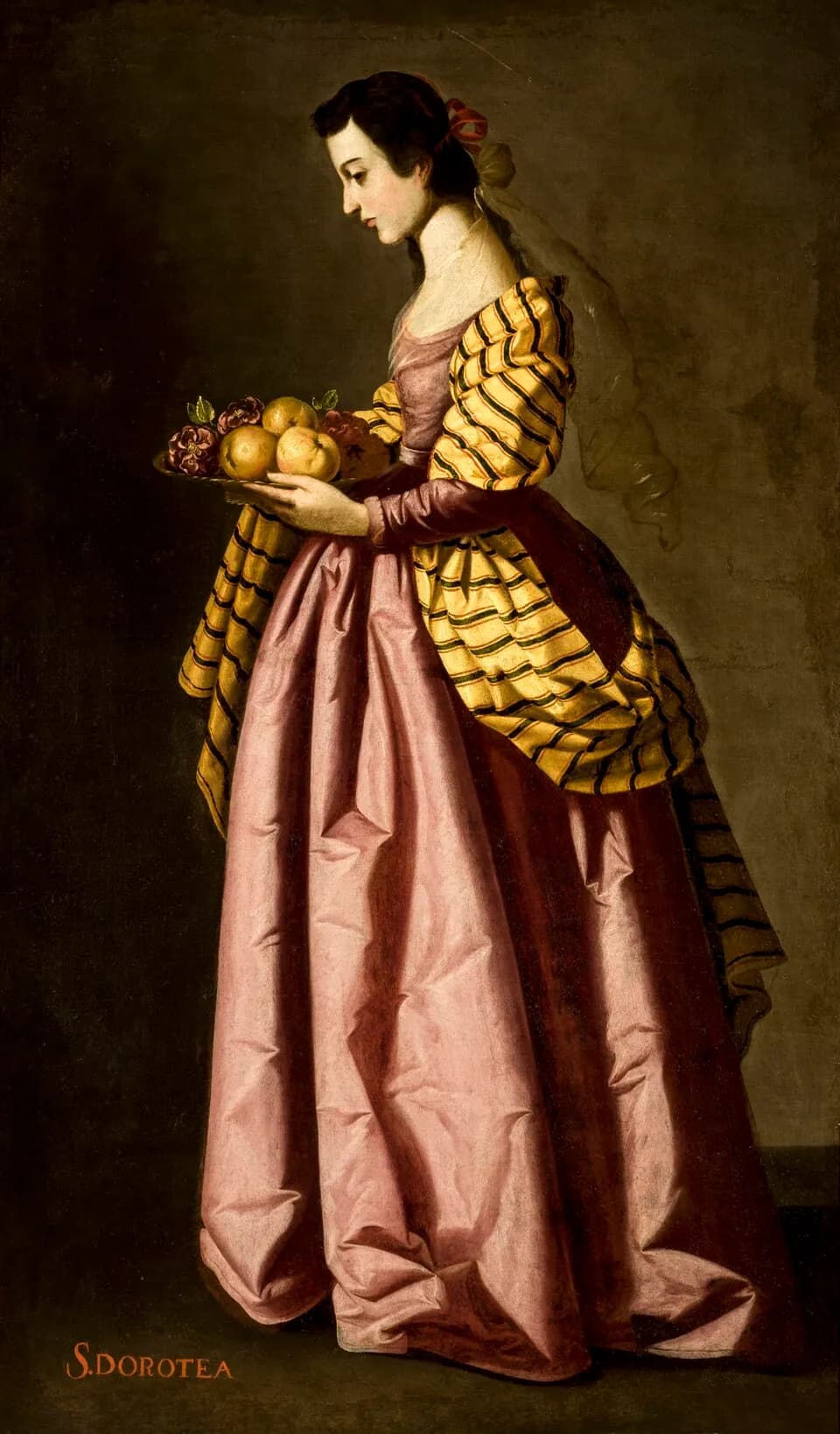
- Patron saint of
- Gardeners 13; Catholic Culture adds brewers, brides, florists, midwives, newlyweds and the town of Pescia in Italy 3
- Died
- February 6, 311, at Caesarea in Cappadocia, according to the 1909 Catholic Encyclopedia 1; about 300, according to Catholic Culture 3
- Historical record
- The story of Theophilus is a legend, later "variously enlarged" 1; Catholic Culture says it "cannot be historically substantiated" 3
- Liturgical calendar
- No longer in the universal calendar; commemorated in the Roman Martyrology on the day of the memorial of Saint Paul Miki and companions 3
- Relics
- Honored in a church dedicated to her in Trastevere, Rome 3
Saint Dorothy, or Dorothea, is a virgin martyr of Caesarea in Cappadocia, remembered for a story in which a young lawyer mockingly asked her to send him fruit from paradise, and received it. The 1909 Catholic Encyclopedia dates her death to February 6, 311, in the persecution of Diocletian, and calls the story of Theophilus a legend; Catholic Culture says plainly that it "cannot be historically substantiated." 13 The devotion is older than any of the retellings. She has been venerated in the West since the seventh century, she is regarded as the patroness of gardeners, and February 6 is still her day. 123
What is known of Saint Dorothy
Not much. Gabriel Meier's entry in the encyclopedia is a single paragraph, which shares its page with a different Dorothea entirely: a fourteenth-century recluse from Montau in Prussia. 1 For the martyr, Meier gives a place, a date and a sequence. She suffered during the persecution of Diocletian, at Caesarea in Cappadocia, on February 6, 311, after being brought before the prefect Sapricius, tried, tortured and sentenced to death. 1
Catholic Culture is more guarded. Its calendar page puts the deaths of Dorothy and of Theophilus at about the year 300, and the excerpt it prints from the liturgist Pius Parsch says she "allegedly suffered a martyr's death under Diocletian." 3 The page counts her among the saints whose story "cannot be historically substantiated" but who are still commemorated in the Roman Martyrology. 3 The two dates are both given here, each with its source, and neither is treated as settled.
Parsch adds a few details that Meier does not. He glosses her name as "the gift of God," and says her relics are honored in a church dedicated to her in the Trastevere district of Rome. 3 On the door of that church, he writes, the names of those who had not received Communion during the Easter season used to be posted. 3
The legend of Theophilus and the fruit from paradise
Meier tells the story briefly. On her way to execution, a pagan lawyer named Theophilus called out to her in mockery: "Bride of Christ, send me some fruits from your bridegroom's garden." 1 Before she died she sent him her headdress by a six-year-old boy, and it was found to be filled with "a heavenly fragrance of roses and fruits." Theophilus at once confessed himself a Christian, was put on the rack, and suffered death. 1 Meier then adds the sentence that governs everything else told of her: "This is the oldest version of the legend, which was later variously enlarged." 1
Pius Parsch's retelling, which Catholic Culture reprints and which he calls "a very edifying story," is one of those enlargements. 3 Dorothy is being led out when she prays, "I thank You, O Lover of souls, for having called me to Your paradise." Theophilus, here a young lawyer and an official of the Roman governor, answers with a joke: "Farewell, bride of Christ, send me apples or roses from your Bridegroom's garden of bliss." She tells him, "I most certainly will." 3
In the few moments she is given to pray before the sword falls, she sees a beautiful youth carrying three apples and three roses in a napkin, and asks him to take them to Theophilus. 3 Later, while Theophilus is laughing about her promise with a friend, a young man stands in front of him holding the apples and roses wrapped in linen: "See, the virgin Dorothy sends you these from the garden of her Bridegroom, even as she promised you." 3 Parsch notes that it was February "and everything in nature was frozen." Theophilus cries out, "Truly indeed, Christ is God," and soon dies a martyr himself for confessing it in public. 3
The two tellings differ on what was sent. In Meier's it is her headdress, carried by a child and smelling of roses and fruit; in Parsch's it is the fruit and flowers themselves. 13 Neither puts them in a basket. The basket that painters gave her belongs to her emblems, not to either text. 3 The Roman Martyrology remembers Theophilus as well, as a martyr in his own right on the same day. 3
How she is shown, and what is done on her day
Meier gives her two emblems: an angel and a wreath of flowers. 1 Catholic Culture lists many more. She appears crowned with flowers, carrying a basket of fruit and flowers, especially roses, or holding apples from heaven on a branch; she is shown in an orchard with the Christ Child in an apple tree, leading him by the hand, or with an angel bringing her a basket of flowers. 3
The customs follow the same imagery. Meier records that "on her feast trees are blessed in some places." 1 Catholic Culture repeats that tradition, and suggests that a family decorate the table with red roses and a bowl of apples and tell the story of Theophilus and Dorothy at dinner. 3
What is Saint Dorothy the patron saint of?
The 1909 encyclopedia gives one patronage: "She is regarded as the patroness of gardeners." 1 It is the only one Meier names.
Catholic Culture gives a longer list: brewers, brides, florists, gardeners, midwives and newlyweds, and the town of Pescia in Italy. 3 Neither source explains how each of these came to her. The florists and gardeners sit naturally beside a story about roses and an orchard, but the sources do not draw that line, and they say nothing at all about the brewers or the midwives. The list is given here as Catholic Culture gives it.
Saint Dorothy's feast day
Her feast is February 6. Vatican News lists "St. Dorothea, Virgin and Martyr" under that date, after Saint Paul Miki and his companions. 2 Catholic Culture lists her for February 6 as a commemoration from the Roman Martyrology, together with Saint Theophilus. 3 It is also the day Meier gives for her death, and his article speaks of her feast. 1
February 6 is not her day in the universal calendar. Catholic Culture's calendar keeps it as the memorial of Saint Paul Miki and his companions, martyred at Nagasaki. 3 Parsch says her feast was introduced into the Roman calendar during the Middle Ages, and Catholic Culture places her among the saints "whose feasts were removed from the Universal Calendar but still commemorated as saints within the Roman Martyrology." 3 No source used gives the year she was removed, so this page does not.
Praying with Saint Dorothy
Begin with how little is known. The encyclopedia gives her a paragraph and calls the best-known thing about her a legend, and the sources do not agree on the year she died. 13 Yet she has been venerated in the West since the seventh century, and the Roman Martyrology still names her on February 6. 13 Both of those things are true, and neither has to be explained away.
Read as a legend, the story is as much about Theophilus as about her. He asks for fruit from paradise as a joke, on the road to an execution. 13 In Parsch's telling she answers the joke as if it were a real request, "I most certainly will," and the answer is kept. 3 The gift is meant for the man who mocked her, and it is what brings him to say that Christ is God. 3
The story does not end well for him by any ordinary measure. In the oldest version Theophilus confesses himself a Christian, is put on the rack, and dies. 1 The roses and apples do not rescue him from what happened to Dorothy; they bring him into it. 13
The devotion that grew up around her is a homely one: trees blessed on her feast in some places, gardeners and florists under her patronage, roses and apples on a family table in February. 13 People who pray to her are taking part in that, with the story understood as a story and the martyr behind it remembered by name.
Saint Dorothy of Caesarea, pray for us.
Sources
Saints to turn to next
Others in this collection who are turned to for some of the same things.