Saint Dominic of Silos
c. 1000 - December 20, 1073
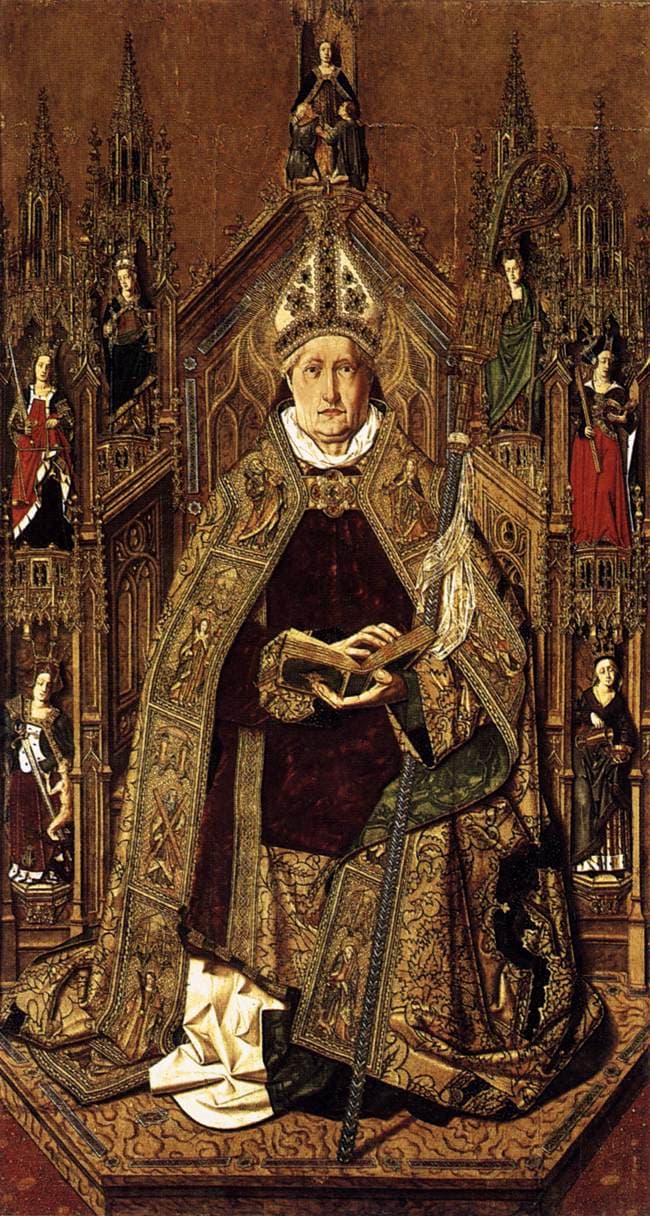
- Born
- Spain, about the year 1000, into a peasant family 2
- Exiled
- With two other monks, after a dispute with the king over property 2
- Known for
- The deliverance of captives, which is what the Roman Martyrology records of him 1
- His staff
- Carried to the royal palace whenever a queen of Spain was in labor, a practice that ended in 1931 2
Saint Dominic of Silos is not the Dominic who founded the Dominicans, and Franciscan Media begins by saying so, because everyone asks. 2 He was a Spanish peasant's son who became a Benedictine abbot, was exiled by his king over a property dispute, and rebuilt an unpromising monastery into one of the most famous houses in Spain. 2 The Roman Martyrology remembers him for something else entirely: "the miracles he wrought for the deliverance of captives." 1
The fields, and then the argument with the king
He was born in Spain around the year 1000 into a peasant family, and as a boy he worked in the fields, "where he welcomed the solitude." 2 That is a small detail and it is the only one the record gives about his childhood, so it is worth not hurrying past: the solitude was not imposed on him later by a rule, it was the thing he already liked.
He became a Benedictine priest and held a series of leadership positions. 2 Then he fell out with the king over property, and the king won. Dominic and two other monks were exiled. 2 The article does not say who was right, and the outcome was the same either way.
The three of them established a new monastery "in what at first seemed an unpromising location." 2 Under his leadership it became one of the most famous houses in Spain, and many healings were reported there. 2 The place is Silos, in Burgos, and it carries his name now rather than the other way round.
What the Martyrology remembers him for
The Roman Martyrology gives him one sentence at December 20, and the sentence chooses its subject: "In Spain the departure from this world of St. Dominic de Sylos, abbot, of the Order of St. Benedict, most renowned for the miracles he wrought for the deliverance of captives." 1
Captives, in eleventh-century Castile, meant Christians held on the other side of a frontier that moved every generation. Ransoming them was an organized work of mercy with its own orders and its own money, and a monastery near the border was where that money came from and where the released tended to arrive. The Martyrology does not explain any of this; it simply records what he was most renowned for, and it is not the healings.
Franciscan Media does not mention the captives at all. 2 That is the ordinary reason for wanting two sources rather than one, and this page has both because the second one exists in a liturgical book rather than a biographical dictionary.
The other Dominic
About a hundred years after his death, a young woman who had suffered difficult pregnancies made a pilgrimage to his tomb at Silos. 2 Franciscan Media tells what happened plainly: "There Dominic of Silos appeared to her and assured her that she would bear another son." 2
The woman was Joan of Aza. The son was Dominic de Guzman, who founded the Order of Preachers. 2 He was named for the abbot at whose tomb his mother had prayed, which is the entire connection between the two Dominics and the reason they are confused.
What followed was a custom rather than a devotion. "For hundreds of years thereafter, the staff used by Saint Dominic of Silos was brought to the royal palace whenever a queen of Spain was in labor." 2 It was still being done into the twentieth century. "That practice ended in 1931," the year the monarchy did. 2
What is Saint Dominic of Silos the patron saint of
He is invoked by women in labor and by women who have had difficult pregnancies, which comes directly from Joan of Aza and from the staff carried to the palace for six centuries. 2 The Martyrology attaches him instead to captives and their deliverance. 1
Those look like two different saints and they are one. Both are about someone held in a situation they cannot get themselves out of, and both were answered at his tomb rather than by his administration.
Saint Dominic of Silos's feast day
Praying with Saint Dominic of Silos
Start with the exile, because it is the hinge and it is treated in one line. He argued with a king about property and lost, and the loss cost him his position and his home. 2 Nothing in the account suggests he had done wrong, and nothing suggests the king reconsidered. He went where he was sent with two other men and a bad location.
The monastery he built there became one of the most famous in Spain. 2 That is the sentence people take from the story, and it is worth resisting for a moment. He did not know it would. He had a site that "at first seemed an unpromising location" and the rest of his life to spend on it. 2
Then the part he had no say in at all. A hundred years after he was dead, a woman who could not carry a child came and prayed, and a boy was born and named after him, and that boy changed the shape of European preaching. 2 Dominic of Silos did nothing to arrange any of it. He had simply been buried in a place people still came to.
The Martyrology's word for what he did is worth keeping: deliverance. 1 Not rescue, which is something you perform, and not release, which is something a jailer grants. Deliverance is what it looks like from inside, to the person who could not get out.
Saint Dominic of Silos, pray for us.
Sources
Saints to turn to next
Others in this collection who are turned to for some of the same things.