Saint Bessarion
Fourth century; died about 400
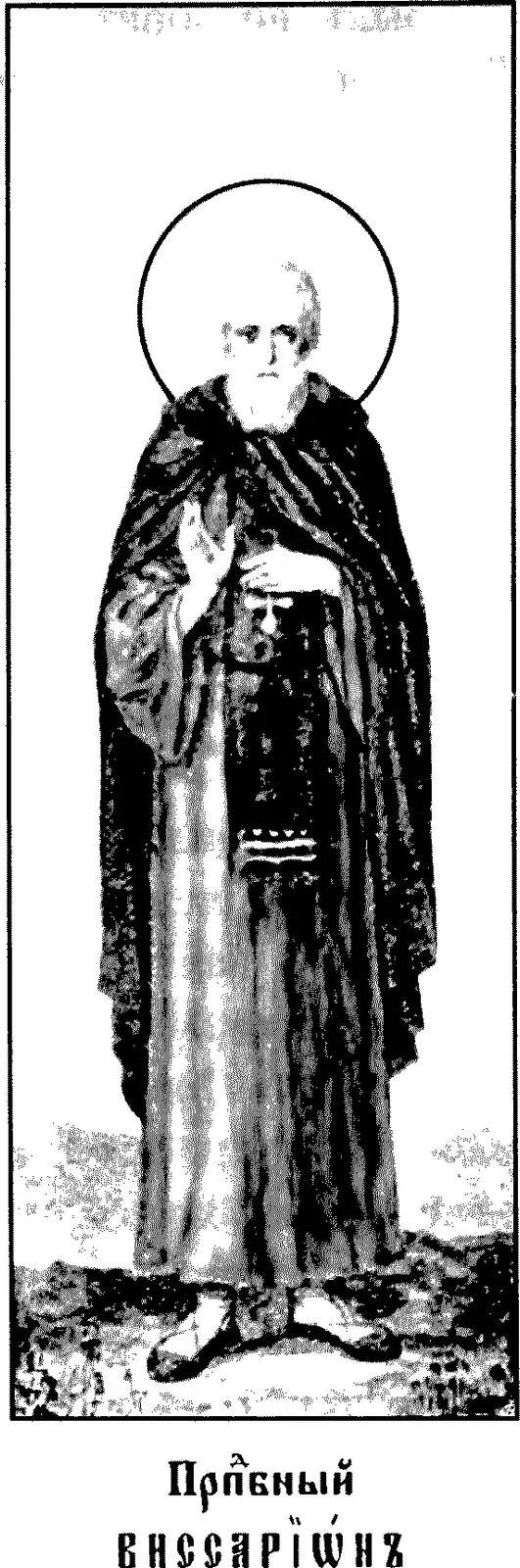
Saint Bessarion was an Egyptian monk of the fourth century, a disciple of Saint Anthony and then of Saint Macarius, who refused to sleep under a roof and spent his life wandering the desert. 34 The Roman Martyrology remembers him on June 6 as an anchorite of Scetis who became a beggar and a pilgrim for the love of God. 5 His disciples remembered his wonders, and a handful of short sayings survive from him. 12
Two men named Bessarion
The name is better known today from Johannes Bessarion, the Greek cardinal who died at Ravenna in 1472, and the Catholic Encyclopedia's article under that name is about him, not the monk. 7 The two are connected all the same. The short modern life that El Testigo Fiel adapts from Thurston's revision of Butler says its facts come from a panegyric on the desert saint written by the great cardinal, who drew on the Greek synaxaries. 4
The rest comes from the desert: his disciples' account of his life, his disciple Dulas's account of his wonders, and a few sayings, read here in Budge's 1907 translation from the Syriac. 12
Like the birds of the air
He was born in Egypt, and as soon as he felt himself called to perfection he went into the desert, first as a disciple of Anthony and afterward of Macarius, according to both katolsk.no and El Testigo Fiel. 34 He would not live under a roof. He moved from place to place and rested where tiredness overtook him, kept a strict silence and fasted hard. 34
His disciples put it in their own way. "The mode of life of the old man was that of the bird of the heavens, and of the things which are in the waters, and of the creeping things of the earth," they said, and he never laid up "possessions in clothes or books." 1 He wandered "like one possessed," naked in the season of frost and burned by the sun, living sometimes among the rocks and sometimes in the open desert. 1 When he came to a place where monks lived together, he sat down outside the gate. A later collection counts him among the fathers "who lived with wild beasts in the deserts." 12
Everything he owned, katolsk.no says, was a tunic, a cloak and a book of the four Gospels, which he always carried under his arm. 3 Meeting a naked beggar one day, he gave the man the only garment he had and walked on with nothing but the book. An official who saw him asked who had stripped him. Bessarion held up the Gospels and answered that this book had. A few days later he sold the book to ransom a prisoner who was about to be sold into slavery. 3
The beggar at the gate
His disciples remembered one visit to a monastery in particular. He sat down outside the door and wept and wailed "after the manner of one who had been saved from a storm," and a brother who came out took him for a beggar and invited him in to eat. 1 Bessarion answered that he could not live under a roof "until I find the possessions of my house which I have lost," for "pirates fell upon me at sea, and a storm rose up against me, and I have been shorn of my riches, and from being a man of high degree I have become the object of contempt." 1
The brother, moved, brought him bread and told him God would restore his country, family and riches. Bessarion only cried out the louder. He did not know, he said, whether he would ever find what he had lost; it seemed to be moving farther away, and he rested on the hope "that, peradventure, I may be worthy of mercy in the day of judgement." 1
Later monks asked what the story meant, and the answer in Budge's second volume reads it as a parable: the thieves are devils, the lost riches the virtues, his "parents" the Father, the Son and the Holy Spirit. Bessarion already had those riches, the answer says, and sat weeping for the monks inside who lacked them, "as if it had been on his own" behalf. 2
Wonders on the road
Dulas, his disciple, told most of the wonders, and Budge's chapter of them reads like a traveler's notebook. 1 Once by a lake Dulas was thirsty; the old man prayed and told him to drink, and the water was sweet. Dulas filled every vessel he had in case he was thirsty again, and Bessarion asked him why. "May God forgive thee," he said, "for here, and there, and everywhere, God directeth us." 1
He crossed the river Chrysoroan on foot with his hands stretched out in prayer. Asked how far up his legs he had felt the water, he said, "As far as my ankles I felt the water, but all the rest of it was solid beneath my feet." 1 On a road at evening he asked God to hold the sun in place until he reached the man he was going to see, and it was held. 1 Dulas once found him standing in prayer with his hands raised to heaven for four days and four nights; afterward, on the road, the old man stepped a stone's throw away, prayed, and came back with his garment full of water drawn from the air. 1 They came to Abba John at Lycus, and there Bessarion said that a decree had gone out from the Lord "that all the temples of the idols be blotted out," and at that time, Dulas says, they were uprooted. 1
A father left his paralyzed son weeping at the door of the cell and walked away. "Rise up, hasten after him, and overtake him," Bessarion told the boy, and he got up and ran after his father. 1 The clergy of a church, unable to free a possessed man, sat him in the old man's usual seat before dawn; when Bessarion came in and was asked to raise him, he struck the man with his fist and said, "Rise up and get thee forth," and the man was healed. 1
The modern lives tell the same kind of story more briefly: he made salt water fresh, brought rain in a drought, walked on the Nile and fought with demons, and his admirers compared him to Moses, Joshua, Elijah and John the Baptist. 34
Silence and the sinner in church
A brother living in a community asked him what to do. "Keep silence, and consider thyself to be nothing," Bessarion said. 2 Another saying is a single sentence about his own practice: "I stood up for forty nights and did not sleep." 2 The modern lives tell of a different feat, forty days of Lent spent without food, standing in a thornbush. 34
Once a brother who had sinned was put out of the church by the priest, and Bessarion got up and walked out with him. "If ye have judged that this man who hath committed only one offence is not fit to worship God," he said, "how very much less fit am I, who have committed many sins, to do so?" 2
Thais
The Syriac collection Budge translated gives Bessarion the conversion of Thais, a famous courtesan. 1 He came to her dressed as a man of the world, and when she told him that God could see them in any room, he asked, "If thou knowest that God is, and [that there will be] kingdom and judgement, why dost thou destroy men in this manner?" 1 She burned everything she had earned in the middle of the city and went with him to a house of sisters, where she lived walled in a cell for about three years. 1
He went to ask Anthony whether she had been forgiven, and Anthony's disciple Paul saw in a vision a couch prepared in heaven, and heard that it was "not for Anthony, thy father, but for Thais the harlot." 1 She lived fifteen days after Bessarion let her out. 1 Budge himself notes that the Greek versions of this story name the monk Paphnutius, or Serapion, so it is given here as the Syriac tradition tells it and no more. 1
His death
What is Saint Bessarion the patron saint of?
Saint Bessarion's feast day
Saint Bessarion's feast day is June 6. 45 The current Roman Martyrology, as the Italian bishops print it, commemorates him that day at Scetis in Egypt as an anchorite "che fu mendicante e pellegrino per amore di Dio," who was a beggar and a pilgrim for the love of God. 5 El Testigo Fiel prints the same entry in Spanish. 4
The older date was June 17. The 1897 English edition of the Martyrology has, that day, simply "St. Bessarion, anchoret," and El Testigo Fiel gives June 17 as his date in the earlier calendar. 46 katolsk.no still lists June 17, and adds that the Greeks keep him on June 6 and that he is kept on February 20 in the East. 3
Praying with Saint Bessarion
Bessarion owned nothing but what he wore and a book of the Gospels, and katolsk.no says he gave away the clothes and then sold the book. 3 The Martyrology sums him up in two words, beggar and pilgrim, and his disciples' account bears that out. 15
He did not count himself above the sinner the priest sent out. He walked out of the church with him, and the counsel he gave a brother was to keep silence and count himself as nothing. 2
The wonders his disciple remembered are told plainly, often with a small rebuke attached: the old man asking why Dulas had filled every vessel when God gives water here, there and everywhere. 1 And the clearest picture left of him is a man sitting outside a monastery gate, weeping for riches he did not expect to find again, and resting on the hope of mercy in the day of judgment. 1
Saint Bessarion, pray for us.
Sources
- 1.The Paradise or Garden of the Holy Fathers, Vol. I, "Of Abba Bessarion," "Of the wonderful things which Abba Bessarion wrought," "Of the blessed woman Thais or Thaisis," and the translator's introduction, trans. from the Syriac by E. A. Wallis Budge (London: Chatto & Windus, 1907), Internet Archive.
- 2.The Paradise or Garden of the Holy Fathers, Vol. II, the sayings of the fathers and the questions and answers, trans. from the Syriac by E. A. Wallis Budge (London: Chatto & Windus, 1907), Internet Archive.
- 3."Den hellige Bessarion av Egypt (-~400)," katolsk.no, the saints database of the Catholic Church in Norway (in Norwegian).
- 4."San Besarión, eremita," Santoral, El Testigo Fiel, adapted from Herbert Thurston's revision of Butler's Lives of the Saints (in Spanish).
- 5.Roman Martyrology, entry for June 6, "San Bessarione, anacoreta," Santo del giorno, Conferenza Episcopale Italiana (in Italian).
- 6.The Roman Martyrology (Baltimore: John Murphy Company, 1897), June 17, Internet Archive.
- 7.Umberto Benigni, "Johannes Bessarion," The Catholic Encyclopedia, Vol. 2 (New York: Robert Appleton Company, 1907), via New Advent.
Saints to turn to next
Others in this collection who are turned to for some of the same things.
- Saint Agnes of Bohemiac. 1200-1205 - March 1281 or 1282Poverty and simplicityPrayer
- Saint Aidan of Lindisfarnec. 590 - August 31, 651Poverty and simplicityPrayer
- Saint Alexius of RomeFifth century, by traditionPoverty and simplicityPrayer
- Saint André BessetteAugust 9, 1845 - January 6, 1937PrayerPoverty and simplicity